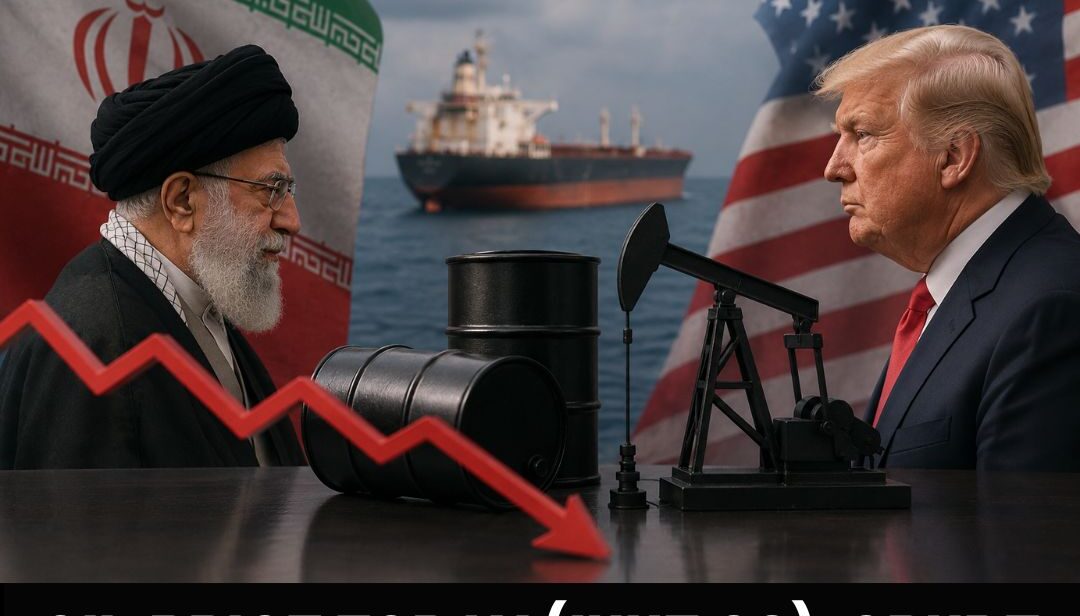
Crude oil prices slid to their lowest level in four months on Friday, with US benchmark crude tumbling nearly four percent toward 69 dollars a barrel as tanker traffic through the Strait of Hormuz shipping accelerated sharply. Brent crude followed the same path, dropping to around 72 dollars a barrel, its weakest mark since February 27, just before the United States and Israel launched their war against Iran.
The decline capped a brutal week for energy markets. Both major benchmarks recorded a weekly drop of more than ten percent, the steepest single week decline in a month, as the prospect of a fully reopened Strait of Hormuz pushed traders to price in a much looser global supply picture than the one that has defined the market since February.
Why Crude Oil Price Is Falling
The core driver behind the selloff is simple: ships are finally moving again. Volumes through the Strait of Hormuz, the narrow chokepoint between Iran and Oman through which roughly a fifth of the world’s oil passes, surged this week as vessels resumed open navigation following progress on the US Iran peace framework. Persian Gulf exports have climbed back to an estimated 75 percent of pre-war levels, a remarkable recovery from the trickle of traffic that defined the conflict’s worst months.
Saudi Arabia added further downward pressure on prices by restarting tanker loadings at its Ras Tanura terminal, one of the largest oil export facilities in the world. Other Gulf producers, including the United Arab Emirates, Kuwait, and Qatar, are also ramping up supply, though many are still struggling to secure enough tankers to move the additional barrels. Iraq, meanwhile, is pushing OPEC for a higher production quota to recover sales lost during the months of disrupted Hormuz shipping.
Analysts caution that much of the price move reflects sentiment rather than confirmed fundamentals. “Crude’s slide is entirely sentiment driven,” one market strategist told Al Jazeera, noting that traders are front running the prospective full normalization of flows and may be pricing in a best case scenario that does not fully account for the logistical hurdles or the risk of renewed geopolitical tensions still facing the region.
A Volatile Recovery, Not a Straight Line
The path back to lower prices has not been smooth. Earlier in the week, crude had briefly climbed back above 70 dollars a barrel after a tense exchange of strikes between the US and Iran around the strait. Iran targeted a container ship on Thursday, prompting American retaliation the next day, and Washington struck again on Saturday after Tehran hit a vessel carrying Qatari bound oil. Both sides ultimately agreed to pause further attacks ahead of resumed peace talks, with US and Iranian officials scheduled to meet in Doha this week specifically to address Hormuz shipping and related issues.
President Trump separately accused Iran of violating the ceasefire by firing drones at vessels transiting the strait, a reminder that despite the broader de-escalation, the security situation around Hormuz remains fragile. Shipowners have responded accordingly: while traffic has picked up meaningfully, hundreds of vessels reportedly remain stranded in the Persian Gulf as operators wait for greater certainty before committing to transit.
What Forecasters Are Watching Next
The US Energy Information Administration had assumed as recently as its prior outlook that the Strait of Hormuz would remain largely closed through the summer, projecting Brent would average around 105 dollars a barrel in June and July under that scenario. The much faster than expected reopening now underway suggests that forecast is likely to be revised downward, with the EIA’s own models showing prices could fall toward an average of 79 dollars a barrel in 2027 once flows through the strait are fully restored and shut in production comes back online.
For now, the combination of resuming Hormuz shipping, an active though shaky ceasefire, and rising output from Gulf producers is doing what months of diplomacy could not: pulling oil prices back down to earth. Whether that decline holds will depend largely on whether the fragile truce around the strait survives the coming weeks of technical negotiations between Washington and Tehran.
For ongoing tracking of how the Iran War ceasefire is reshaping global energy markets, see our continuing Strait of Hormuz coverage.
References & Sources
- Trading Economics, “Crude Oil — Price, Chart, Historical Data, News“
- Trading Economics, “Brent Crude Oil — Price, Chart, Historical Data, News“
- Al Jazeera, “Oil prices continue slide amid hopes for peace, opening of Strait of Hormuz“
- U.S. Energy Information Administration, “Short Term Energy Outlook“