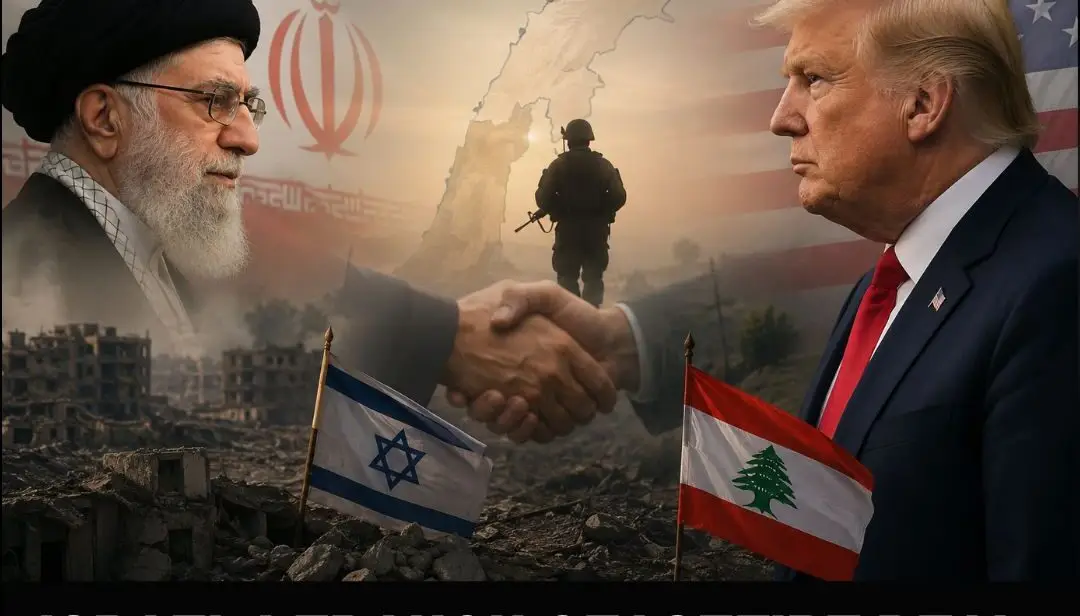
After four days of marathon talks in Washington, Israel and Lebanon have signed a new framework agreement aimed at ending the deadliest round of fighting between the two countries in decades. The deal, brokered by US Secretary of State Marco Rubio and signed on June 26, ties any Israeli withdrawal from southern Lebanon directly to the disarmament of Hezbollah, a condition the group has already rejected outright.
The agreement caps months of grinding diplomacy that unfolded alongside the broader Iran War, which began on February 28 when the United States and Israel launched strikes on Tehran. Hezbollah, Iran’s most powerful regional proxy, joined the fighting soon after, opening a parallel front that left more than four thousand people dead and displaced over a million Lebanese civilians.
What the New Framework Actually Says
According to the text released by the US State Department, the agreement describes a “sequenced process” under which the Lebanese army will gradually restore “effective sovereign authority over all Lebanese territory,” but only as Hezbollah’s disarmament is independently verified. Crucially, the deal does not set a fixed date for Israeli forces to leave the roughly twenty percent of Lebanese territory they currently occupy.
Israeli Prime Minister Benjamin Netanyahu was blunt about that point in a video statement following the signing. “We will maintain the buffer zone until Hezbollah disarms and as long as there is a threat to the State of Israel,” he said, framing the arrangement as a rebuke to Iranian influence in Lebanon. An Israeli envoy reinforced the message a day later, saying the IDF withdrawal is not bound to a fixed timetable but rather to the pace of Hezbollah disarmament.
In practical terms, the talks did produce a partial concession. Israeli forces have agreed to begin pulling back from two areas inside the six mile buffer zone in southern Lebanon, handing control to the Lebanese army once those zones are cleared of Hezbollah infrastructure. It is a far smaller step than what Beirut had pushed for, and well short of the full Israeli withdrawal Hezbollah has demanded since the fighting reignited in March.
Hezbollah Calls the Deal “Null and Void”
Hezbollah was not a party to the negotiations and was not present at the table in Washington, despite being a principal combatant in the war. Leader Naim Qassem responded to the framework with some of his harshest language yet, calling it “humiliating, shameful, and a surrender of sovereignty.” He argued that linking Israeli withdrawal to his group’s disarmament “crosses all red lines” and insisted any lasting truce should instead follow the terms of the broader Iran US memorandum signed on June 15, not a separate Lebanon specific deal negotiated without Hezbollah’s input.
That rejection echoes a pattern that has played out repeatedly since fighting resumed. An earlier ceasefire proposal reached in early June, which would have required Hezbollah to fully halt operations and withdraw fighters from south of the Litani River, was also rejected within a day of being announced, with Qassem describing the demand as tantamount to “surrender, defeat and achieving the enemy’s goals.” Lebanese President Joseph Aoun, who has pushed to restrict Hezbollah’s military role since taking office, has called previous iterations of the truce Lebanon’s “last chance” for a comprehensive settlement.
A Conflict Years in the Making
The current war traces back to October 2023, when Hezbollah opened a front against Israel in solidarity with Hamas following the Gaza war’s outbreak. A ceasefire reached in November 2024, after Israel’s invasion of southern Lebanon and the killing of longtime Hezbollah leader Hassan Nasrallah, never fully held. Hezbollah used the lull to rebuild its arsenal, while Israel carried out near daily strikes it said targeted the group’s renewed infrastructure. Fighting escalated sharply again in March 2026, intertwined with the wider Iran War and disputes over Strait of Hormuz shipping that briefly saw Iran close the waterway entirely, citing what it called Israeli violations of its own ceasefire terms.
What Comes Next
With Hezbollah rejecting the framework and Iran withholding the leverage that might rein the group in, the agreement’s durability remains in serious doubt. United Nations peacekeepers in southern Lebanon have already suffered casualties amid the porous truce, and analysts warn that without Hezbollah’s buy in, the deal risks becoming, as one Middle East scholar put it, an agreement that exists only on paper. The coming weeks, as the Lebanese army attempts to take control of the first cleared buffer zones, will offer the clearest test yet of whether Washington’s sequenced approach can hold where previous ceasefires failed.
For continuing analysis of how the Lebanon front connects to the wider Iran War and the Strait of Hormuz negotiations, see our related coverage of Trump’s Iran deal and Gulf allies’ reaction.
For the full text of the framework agreement released by the State Department, read the original Al Jazeera explainer on the Israel Lebanon deal.
References & Sources
- Al Jazeera, “Israel Lebanon deal ties ceasefire to Hezbollah disarmament: Will it work?”
- The Times of Israel, “Israeli envoy says IDF withdrawal not based on fixed timetable, but Hezbollah disarmament“
- NPR, “Hezbollah rejects ceasefire deal agreed on by Israel and Lebanon“
- Axios, “Israel, Lebanon agree to full ceasefire, but Hezbollah rejects it“
- Wikipedia, “2026 Israel Lebanon ceasefire“
- Wikipedia, “2026 Lebanon war“