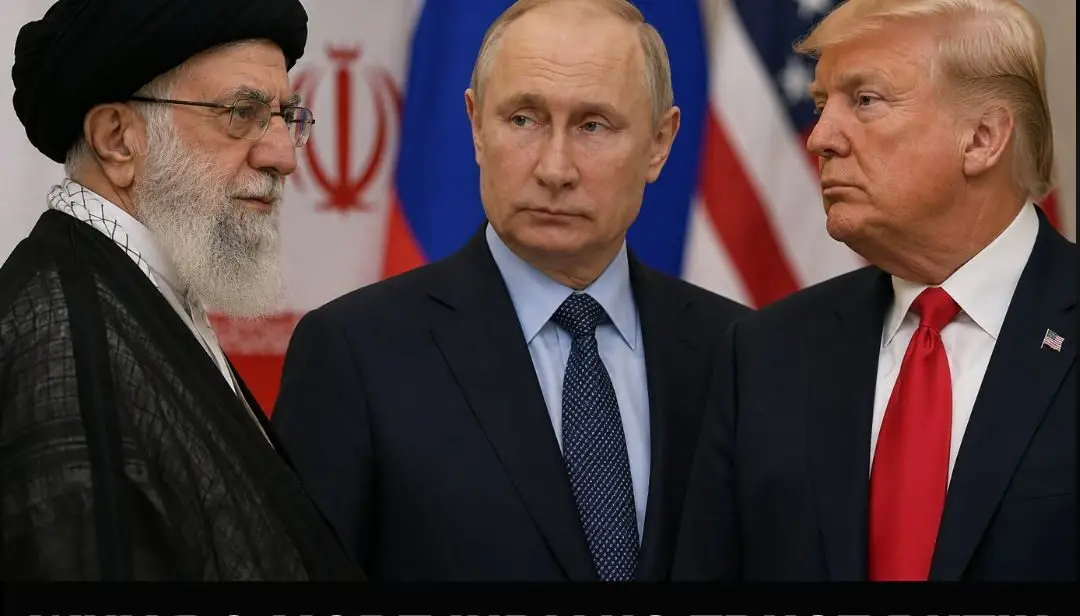
For the first time in years, a major international survey shows that more Indians trust Russian President Vladimir Putin than US President Donald Trump to handle world affairs responsibly. The finding, buried inside Pew Research Center’s sprawling 2026 global opinion survey, has stunned analysts and reignited debate over whether Trump is no better than Putin in the eyes of one of America’s most important strategic partners.
The numbers are stark. Just 39 percent of Indians surveyed expressed confidence in Trump’s ability to do the right thing in world affairs, down sharply from 51 percent only a year earlier. Putin, by contrast, was trusted by 51 percent of Indian respondents, putting the Russian leader ahead of his American counterpart by a wide margin in the world’s most populous democracy.
A Historic Drop in Trust
Pew’s findings are based on interviews with 42,151 people across 36 countries, conducted between February 8 and May 13, 2026. In India alone, 3,566 adults were interviewed across thirteen languages, making the sample one of the more comprehensive snapshots of Indian public opinion in recent years.
Globally, the picture for Trump is even bleaker. A median of just 23 percent of respondents across the surveyed countries said they trust Trump’s leadership on the world stage, while roughly three in four expressed no confidence at all. Confidence in Trump fell in sixteen of twenty four countries tracked over time and did not improve in a single one.
India’s drop is part of that broader trend, but it carries particular weight given the strategic relationship Washington has spent two decades building with New Delhi. Analysts note that the thirty six percent of Indians who said they have no confidence in Trump nearly matches the thirty nine percent who do, signaling a country now genuinely split rather than firmly aligned with Washington’s worldview.
The Iran War Factor
Much of this shift cannot be separated from the fallout of the Iran War. Trump’s decision to join Israel in striking Iran in February 2026 triggered months of conflict that disrupted global energy markets and rattled allies far beyond the Middle East. The closure and later contested reopening of the Strait of Hormuz, the corridor through which roughly a fifth of the world’s oil moves, hit Indian consumers directly through higher fuel prices and shipping costs.
Ipsos polling conducted during the conflict found that a large majority of Indian households began cutting expenses and stocking up on essentials as the war dragged on, with energy costs becoming a daily concern rather than a distant geopolitical story. For a country that imports the overwhelming majority of its crude oil, a war that threatened the Strait of Hormuz was never just an American or Middle Eastern problem. It was felt at the pump and in household budgets across Indian cities.
Even inside the United States, skepticism about the war’s outcome runs deep. A Newsweek commissioned poll found only twenty five percent of Americans believe the US actually won the war, despite the ceasefire and a memorandum of understanding that reopened Hormuz to commercial shipping. Roughly eighty one percent of those polled said they think the fragile peace is likely to collapse and the war could resume.
How Trump Compares Globally
The India numbers fit into a larger pattern Pew identified across the survey. In Germany, only sixteen percent of respondents had confidence in Trump, a figure nearly identical to the fifteen percent who trusted Putin, while seventy two percent of Germans said they trusted French President Emmanuel Macron instead. Pew researchers noted that in several European countries, Trump’s ratings were so low they essentially matched, rather than exceeded, ratings for authoritarian leaders like Putin or Israeli Prime Minister Benjamin Netanyahu.
The pattern was even more pronounced among Muslim majority publics. Among Palestinians in the West Bank and East Jerusalem, just four percent expressed confidence in Trump, compared with roughly four in ten who trusted Putin and a similar share who trusted Chinese President Xi Jinping.
Israel stood out as a clear exception to the global trend, with eighty one percent holding a positive view of the United States and sixty six percent expressing confidence in Trump specifically, reflecting the closeness of the two governments throughout the Iran conflict.
What It Means for India and Washington
For New Delhi, the survey lands at an uncomfortable moment. India has spent years deepening defense and trade ties with Washington while maintaining its traditional relationship with Moscow, a balancing act that has only grown more delicate since the Iran War strained global energy supplies and tested how reliable American partnership really is.
Whether this dip in trust is a temporary reaction to a costly war or the start of a longer term shift in how Indians view American leadership remains to be seen. Pew has tracked similar confidence swings before, often tied closely to specific conflicts rather than permanent realignments. But with the next round of US India strategic talks approaching and Strait of Hormuz tensions still simmering beneath a fragile ceasefire, the numbers give both governments something to think about.
For more on how the Iran ceasefire is reshaping regional alliances, read our continuing coverage of the Gulf allies’ reaction to Trump’s Iran deal.
References & Sources
- Pew Research Center, “Three in four people worldwide have overwhelmingly low confidence in Trump” (2026 Global Survey)
- Goodreturns, “Pew survey finds low global confidence in Donald Trump on world affairs in 2026“
- Dailyhunt, “Three in four people worldwide have ‘overwhelmingly low’ confidence in Trump: Pew Survey“
- Newsweek, “Only 25% of Americans Think US Won Iran War, New Poll Shows”
- Ipsos, “The Iran Conflict” global tracking survey
- Pew Research Center, “Americans Broadly Disapprove of U.S. Military Action in Iran“