Share This Article
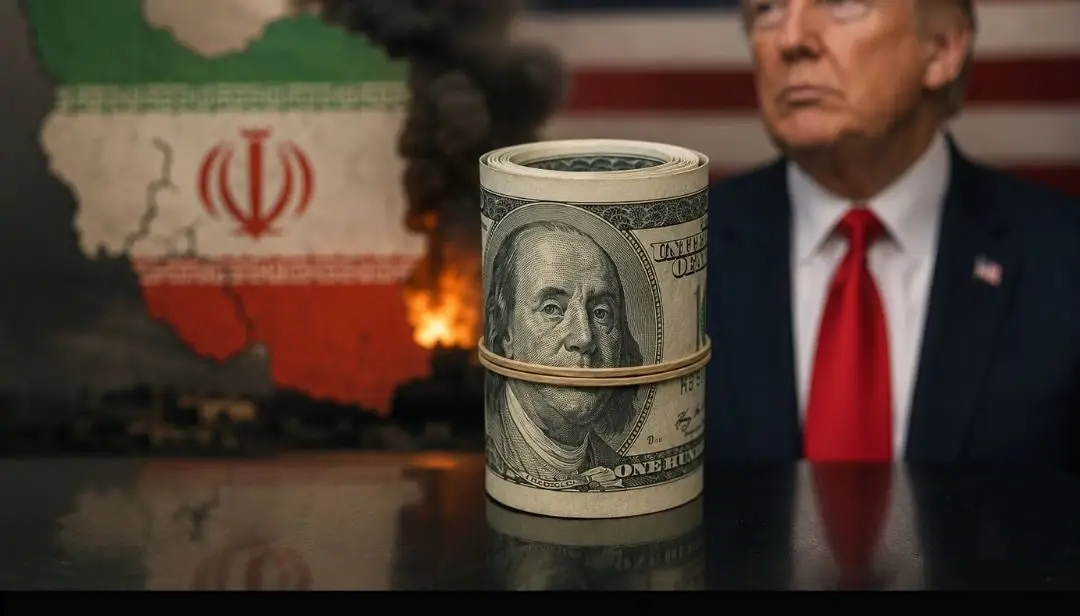
Global financial markets have spent three months absorbing one of the most disruptive geopolitical shocks in modern history. The US-Iran war has killed thousands, shut the Strait of Hormuz, driven oil to $120 a barrel at its peak, and rattled supply chains across four continents. Emerging market currencies have collapsed. Brent crude has swung by more than $30 in a single month. Equity markets have lurched between crisis pricing and ceasefire optimism on an almost daily basis.
And through all of it, the US Dollar Index has been sitting in a narrow band between 98.9 and 99.5 hovering near 10-month highs, stubbornly refusing to break in either direction.
CNBC reported on June 2 that the dollar remained steady as markets await progress on Middle East peace talks — a headline that has appeared, with only minor variation, for weeks. That steadiness is not an accident or an oversight. It reflects a specific and coherent set of forces that are keeping the dollar anchored even as the world it prices moves beneath it.
Force One: Safe-Haven Demand Still Flows to the Dollar
The most fundamental reason the dollar holds during geopolitical crises is the same reason it has held during every major crisis for eighty years: when fear rises globally, money moves to US Treasuries. That flow requires dollars. The demand for the currency increases precisely because investors are worried and their worry expresses itself as a flight to the asset they trust most, which denominates in dollars.
The Iran war has generated sustained safe-haven demand. FXStreet reported that the DXY neared 10-month highs in March as Middle East tensions escalated sharply. That safe-haven bid has moderated as ceasefire negotiations have progressed, but it has not disappeared because the ceasefire has not been signed, the deal remains “still TBD” in Vice President Vance’s own words, and the risk of renewed escalation is priced into every trading session.
Force Two: The Fed Is Being Pushed Toward Tighter Policy
Oil supply disruptions are inflationary. A Brent crude price that surged 55 percent from pre-war levels to nearly $120 a barrel at its peak is a direct injection of inflation into the US economy through fuel costs, freight costs, and the cascading price increases that run through supply chains when energy gets expensive. CEPR analysis estimated the Iran war has raised US headline inflation by approximately 0.6 percentage points and core inflation by 0.2 percentage points in 2026 alone.
That inflationary pressure has recalibrated Federal Reserve rate expectations. Markets are currently pricing the odds of a Fed rate hike in December above 60 percent a sharp shift from the rate-cut expectations that dominated in early 2026. Morgan Stanley noted that higher-for-longer US rates make dollar-denominated assets more attractive to global capital, providing a persistent bid under the currency even as geopolitical uncertainty weighs on risk appetite more broadly.
Force Three: The US Economy Is More Insulated Than the Rest
The United States has limited direct exposure to the Strait of Hormuz disruption compared to economies in Asia and Europe. The US is the world’s largest oil producer, with substantial domestic supply insulating it from the worst of the Hormuz-driven price spike. CBS News reported that while the Iran war has dented the US economy raising gas prices, pushing inflation higher, and introducing supply chain friction — the damage is meaningfully less severe than what has been absorbed by import-dependent economies like Japan, South Korea, India, and the eurozone nations.
That relative resilience shows up in the data. Weekly US jobless claims have fallen while manufacturing activity rose to a four-year high in May 2026 indicators that suggest the American economy is absorbing the shock better than its peers. When the dollar’s value is measured against other currencies, the relevant question is not whether the US economy is performing well in absolute terms but whether it is performing better than the alternatives. On that measure, it is.
Bloomberg’s analysis identified the US economy’s relative insulation as one of five key reasons global markets have held up despite the Iran war a list that also includes the speed of ceasefire negotiations, China’s demand-side cushioning of oil prices, the breadth of diplomatic engagement, and the structural depth of US capital markets.
Force Four: Emerging Market Pain Strengthens the Dollar Comparatively
The dollar’s steadiness looks even more pronounced when viewed against what is happening to other currencies. UNCTAD reported that the Hormuz disruption is deepening global economic strain across trade, prices, and finance and that strain is falling disproportionately on emerging market economies with high energy import dependency and limited reserve buffers. The Philippine peso dropped to a record low of 61.567 per dollar in April 2026. India’s rupee hit all-time lows. The Pakistani rupee, Sri Lankan rupee, and Egyptian pound have all weakened sharply.
That broad-based emerging market currency weakness is itself a form of dollar strength not because the dollar is gaining purchasing power domestically, but because it is gaining relative value against the currencies of economies the crisis is hitting hardest. The DXY, which measures the dollar against a basket of major currencies, reflects this dynamic directly.
The Reversal Risk
The dollar’s resilience is not unconditional. Bloomberg reported that the dollar wiped out its entire Iran war gains on a single day in April when Tehran signaled the Hormuz could be open a preview of what a genuine ceasefire deal would do to the currency. If Trump signs the MOU, the Strait reopens, oil falls sharply, inflationary pressure eases, and the Fed’s rate-hike path softens the safe-haven bid, the inflation premium, and the relative resilience argument all weaken simultaneously.
Invezz noted that as Iran deal hopes rise, the dollar index steadies near 99 rather than pushing higher the market is already pricing in partial resolution. A full deal, credibly signed and implemented, would be dollar-negative in the short term. That is not a reason to avoid a deal. But it is a reason to understand why the dollar’s current steadiness is not a vote of confidence in the status quo it is a balance between crisis premium and peace expectation, held in tension for as long as the negotiations themselves remain unresolved.

Oil & Energy Markets
A look at crude price swings, OPEC supply moves, and how energy markets react to geopolitical shocks.

Geopolitics & Conflict
Breaking down how wars, ceasefires, and diplomatic deals ripple through global trade and security.
US Foreign Policy
Coverage of Trump administration negotiations, sanctions, and strategic decisions shaping world events.
Economy & Inflation
Tracking how commodity prices, gas costs, and supply chains affect everyday consumers.