Share This Article
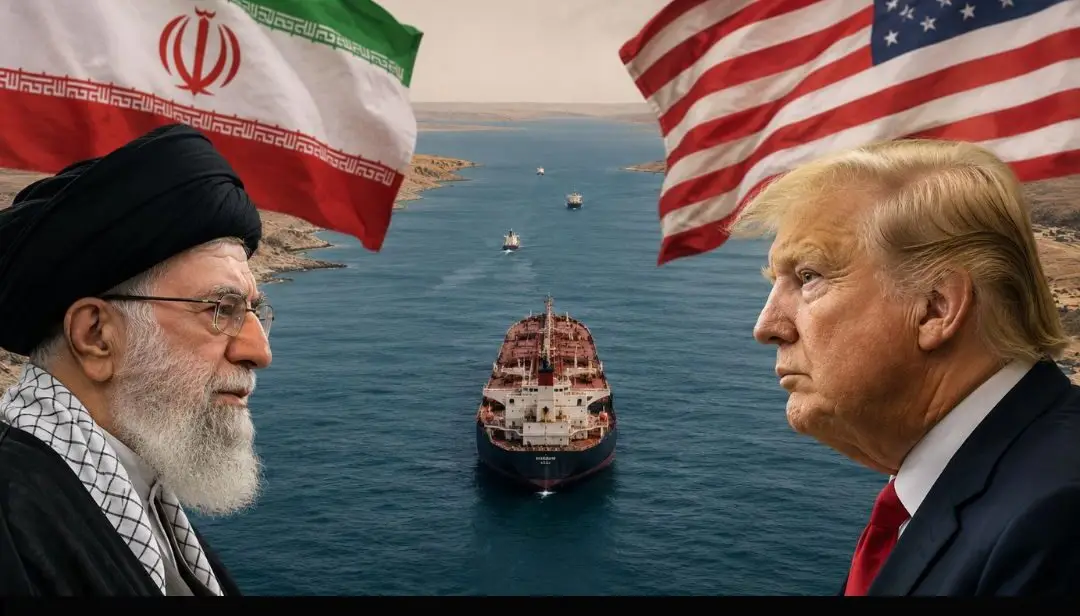
The numbers from the Strait of Hormuz are stark enough to demand a response beyond diplomacy alone. Since the US-Iran war began in February 2026, there have been 21 confirmed attacks on commercial shipping in the strait and surrounding waters. Ten seafarers have been killed. Approximately 20,000 civilian seafarers remain stranded aboard around 2,000 vessels in the Persian Gulf, unable to transit safely in either direction. Iran is charging up to $2 million per vessel for passage through what international law designates as a universal maritime corridor. And the world’s shipping industry operators of the vessels carrying one-quarter of global seaborne oil trade and one-fifth of its LNG is operating without a coherent legal framework for what to do next.
The International Maritime Organization has now stated plainly what the crisis has exposed: “Fragmented responses are no longer sufficient.”
What International Law Actually Says and Why It Isn’t Enough
Under the United Nations Convention on the Law of the Sea and the principle of “transit passage,” international straits used for global navigation must allow the vessels of all nations to move continuously and freely without requiring permission from the coastal state. No country can legally convert an international waterway into a unilateral toll corridor. No country can impose mandatory permit systems on foreign-flagged commercial vessels exercising innocent passage.
Chatham House analysis makes the legal picture clear: Iran’s imposition of transit fees and its newly created Persian Gulf Strait Authority which requires vessels to submit detailed ownership, crew nationality, cargo, and voyage plan information before receiving clearance violates established international maritime law. The Conversation noted that the US and Iran are operating in “very different legal waters” Washington asserting UNCLOS rights, Tehran asserting sovereign authority over what it frames as a security perimeter rather than an international passage.
Legal rights, as analysts at Just Security observed, offer limited comfort when military pressure is the enforcement mechanism. Iran has demonstrated its willingness to seize vessels that do not comply the MSC Francesca and Epaminondas were both taken by IRGC forces in April and to fire on those that attempt non-compliant passage. The law says ships can transit freely. The guns say otherwise.
The IMO’s Call and What It Amounts To
The International Maritime Organization has been more vocal about the Hormuz crisis than any previous chokepoint disruption in its history. IMO Secretary-General Arsenio Dominguez has condemned attacks on commercial vessels, called for immediate establishment of a safe maritime framework, and briefed foreign ministers from more than 40 countries on the escalating crisis. The IMO is participating in a UN-led Task Force on the Strait of Hormuz and has proposed an IMO-developed maritime evacuation framework built on coastal state cooperation and operational coordination.
Safety4Sea reported that the IMO specifically called for a safe-passage framework as a “provisional and urgent measure” language that acknowledges both the immediacy of the human crisis and the limits of what the IMO can achieve unilaterally. The organization has no enforcement capacity. It can condemn, propose, coordinate, and brief. It cannot compel Iran to stand down its IRGC naval vessels or force the US to modify its naval blockade posture.
The Manila Times reported that ship operators are demanding exactly what the IMO is trying to build “a framework, a set of rules, a regulation, whatever tells us exactly how we can go in and get out.” The Jerusalem Post reported that shipping chiefs are conditioning any resumption of normal Hormuz operations on the existence of clear, enforceable rules of engagement not assurances, not diplomatic statements, but operationally specific guidance with legal backing.
Industry’s Operational Response
In the absence of rules, the shipping industry has been adapting through rerouting and workarounds. Maersk has redirected key Middle East services around the Cape of Good Hope and is relying on transhipment hubs at Salalah Port. Hapag-Lloyd has introduced revised feed-based networks that bypass direct Arabian Gulf calls entirely. MSC launched new Europe–Red Sea–Middle East services using ports at Aqaba, King Abdullah, and Jeddah. Euronews reported that bypassing the Hormuz chokepoint has become global trade’s next top strategic priority.
Those workarounds have costs. Cape of Good Hope routing adds 10 to 14 days to voyage times and significantly higher fuel and operational expenses. UNCTAD’s analysis of Hormuz disruption implications for global trade estimated billions in daily losses to the global economy. Marine war risk insurance premiums have surged to levels that make some cargoes economically unviable to move at all.
The Structural Problem the Crisis Has Exposed
What the Hormuz crisis has revealed is a structural gap in how the international community governs critical maritime chokepoints during armed conflict. UNCLOS provides rights. The IMO provides coordination. Neither provides enforcement. AGBI analysis described maritime rules as being “under strain as chokepoint tensions spread” a formulation that understates the problem. The rules are not merely strained. They are being openly violated by a state actor with the military capacity to enforce its violations, and the international community’s response has been fragmented precisely because no single framework exists for a coordinated multilateral reply.
PBS NewsHour reported that shipping firms are being “whipsawed by changing stances and risks” a description that captures the operational reality of an industry that depends on predictability being forced to operate in its absence. Even if a US-Iran ceasefire agreement is signed in the coming days, shipping executives have made clear that the return to normal Hormuz operations cannot be instantaneous. Mines must be cleared. Rules of engagement must be established. Insurance frameworks must be rebuilt. Trust between vessels, coastal states, naval forces, and the international legal order must be reconstructed.
The crisis has not just disrupted global shipping. It has demonstrated that the existing rules were never adequate for a world in which major powers are willing to use strategic chokepoints as weapons. New rules are not an aspiration. They are an operational necessity and the window to design them, while the crisis is still fresh and the political will for reform is at its highest, is now.

Oil & Energy Markets
A look at crude price swings, OPEC supply moves, and how energy markets react to geopolitical shocks.

Geopolitics & Conflict
Breaking down how wars, ceasefires, and diplomatic deals ripple through global trade and security.
US Foreign Policy
Coverage of Trump administration negotiations, sanctions, and strategic decisions shaping world events.
Economy & Inflation
Tracking how commodity prices, gas costs, and supply chains affect everyday consumers.