Share This Article
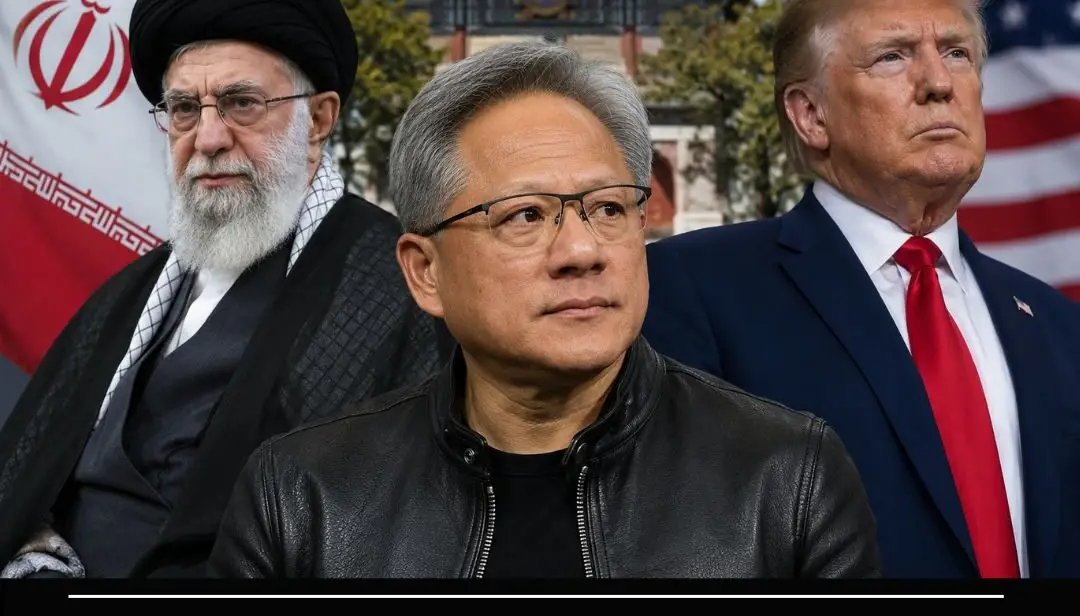
Jensen Huang has spent years arguing that cutting China off from Nvidia’s chips would only accelerate Beijing’s push to build its own. Now the Nvidia CEO has joined the advisory board of Tsinghua University’s School of Economics and Management one of China’s most politically connected institutions and critics in Washington are asking a sharper question: has the head of America’s most strategically important semiconductor company crossed a line?
The appointment, first reported by the Financial Times on May 27, places Huang alongside an extraordinary roster of American tech executives. Apple CEO Tim Cook serves as chair of the board. Elon Musk, Satya Nadella of Microsoft, Michael Dell, and Mark Zuckerberg are fellow members. Tsinghua is no ordinary university it is the alma mater of senior Chinese Communist Party officials and has longstanding ties to state research programs, including those with military applications. That backdrop transforms what might otherwise read as a conventional academic advisory role into something far more politically charged.
The Context: Chips, China, and a Fragile Deal
Huang’s Tsinghua appointment comes just weeks after he traveled to Beijing as a late addition to President Trump’s trade delegation in mid-May 2026 a trip that yielded preliminary agreements on Nvidia’s H200 chip sales to Chinese customers. The timing is not incidental. As US-Iran talks dominate diplomatic bandwidth and the Strait of Hormuz blockade reshapes global energy flows, the Trump administration has been simultaneously pursuing an Iran deal and attempting to monetize American technological advantage through Chinese market access. Nvidia sits at the center of both calculations its chips power the AI infrastructure that every major power, including China, is racing to build.
China once accounted for roughly one-fifth of Nvidia’s annual revenue before US export controls tightened in 2022. Huang has been blunt about his view: the bans, he has argued publicly, did not slow China down they pushed Beijing to accelerate domestic chip development, ultimately helping companies like Huawei and DeepSeek. His lobbying for a more permissive export framework, his presence on Trump’s China delegation, and now his Tsinghua board seat form a coherent commercial strategy. Whether that strategy is compatible with US national security law is a separate question entirely.
Congress Pushes Back
Senators Elizabeth Warren and Jim Banks raised alarms before Huang even boarded the plane to Beijing. In a formal letter to Huang, the senators warned that his China visit could “undermine US export controls and legitimize companies that cooperate closely with the PRC’s military and intelligence services.” Warren subsequently called for Huang to testify before Congress about the terms of any chip sales agreements reached during the trip.
Senator Chris Coons pressed Commerce Secretary Howard Lutnick in a separate letter on whether the administration had fully assessed the national security implications of H200 chip exports to Chinese entities. The concern is not abstract: advanced AI chips are dual-use technology. The same hardware that trains large language models for consumer applications can optimize missile guidance systems, power surveillance networks, and accelerate nuclear weapons simulation.
Tsinghua University itself has been flagged in prior US government assessments as an institution with deep links to People’s Liberation Army research programs. Accepting a board seat there is a categorically different act from selling chips through commercial channels it places an American CEO in a formal advisory relationship with an institution whose research agenda is partially shaped by the Chinese state.
The Defense: Engagement Over Isolation
Huang’s supporters — and there are many in Silicon Valley argue that commercial engagement with China’s technology ecosystem is preferable to ceding the field entirely. If American executives withdraw from Chinese universities, the advisory roles do not disappear; they are filled by researchers from countries with fewer reservations about technology transfer to Beijing. The argument is strategically coherent, if politically uncomfortable.
Semafor reported that Huang was initially left off Trump’s China delegation specifically to avoid “awkward conversations” about chip export policy a detail that underscores just how sensitive the administration considers the Nvidia-China relationship.
A Question Without a Clean Answer
Jensen Huang is not a spy. He is a CEO maximizing market access for a company whose products happen to define the cutting edge of artificial intelligence. But America’s export control regime exists precisely because the line between commerce and security is not always clean and Tsinghua University sits very close to that line.
With an Iran deal potentially days away and the Strait of Hormuz on the verge of reopening, Washington’s attention is stretched. Jensen Huang may be betting that now is exactly the right moment to lock in his China position before the geopolitical weather changes again.

Oil & Energy Markets
A look at crude price swings, OPEC supply moves, and how energy markets react to geopolitical shocks.

Geopolitics & Conflict
Breaking down how wars, ceasefires, and diplomatic deals ripple through global trade and security.
US Foreign Policy
Coverage of Trump administration negotiations, sanctions, and strategic decisions shaping world events.
Economy & Inflation
Tracking how commodity prices, gas costs, and supply chains affect everyday consumers.