Share This Article
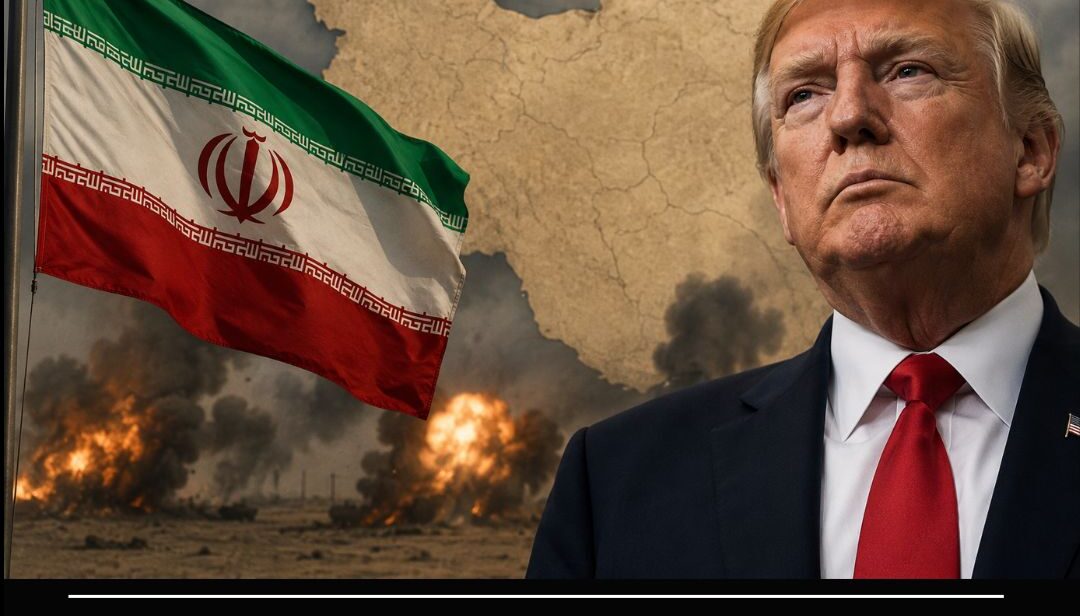
The United States Senate voted 50-47 on May 19 to advance a war powers resolution that would direct President Donald Trump to “remove United States Armed Forces from hostilities within or against Iran” the first time in eight attempts that such a measure has successfully cleared a procedural hurdle in the upper chamber. Four Republicans defected. Democrats cheered. Critics of the US-Iran war declared a historic rebuke.
Then reality set in. The resolution still needs to pass a final Senate vote, clear a Republican-controlled House, and survive the near-certain presidential veto of a commander-in-chief who has shown no hesitation in wielding executive power at its outer limits. The arithmetic of that path is daunting. The symbolism is real. But symbolism, as US-Iran talks edge toward a potential peace framework, may be all this Senate action ultimately delivers.
The Vote: A Milestone With No Destination
CBS News confirmed that the procedural advancement was the eighth attempt at a war powers resolution since the war began February 28 and the first to succeed. Four Republicans Rand Paul of Kentucky, Susan Collins of Maine, Lisa Murkowski of Alaska, and Bill Cassidy of Louisiana, whose last-minute flip was the decisive vote crossed the aisle to join nearly all Democrats in pushing the measure forward.
The resolution, led by Democratic Senator Tim Kaine of Virginia, invokes the War Powers Resolution of 1973, which requires a president to seek congressional authorization for military action within 60 days of its commencement. CNBC reported that the Iran war passed that threshold weeks ago meaning, by the letter of the law, the president is already operating without legal sanction.
Al Jazeera confirmed that the vote to advance the resolution was cast as a “rare rebuke” of Trump’s war authority one that reflects genuine congressional discomfort with a conflict the president launched without authorization, has managed without consultation, and is now attempting to end on his own terms.
Trump’s Constitutional Escape Hatch
The Trump administration’s response to the war powers challenge rests on a legal argument that is either brilliantly creative or genuinely absurd, depending on who you ask. Defense Secretary Pete Hegseth argued that the April 8 ceasefire “paused or stopped” the 60-day clock meaning the war powers deadline no longer applies because the president effectively declared hostilities “terminated.”
NBC News confirmed that Trump declared he does not need congressional authorization for the Iran conflict at all challenging the War Powers Resolution itself as unconstitutional on separation-of-powers grounds. The White House formalized this position in an official release framing the conflict as a decisive success driven by “clear and unchanging objectives.”
Harold Koh, Yale Law professor and former Obama State Department official, told MS Now that the administration was effectively “trying to rewrite the war powers resolution and add a pause button” a legal invention with no statutory basis. But legal inventiveness has rarely stopped this administration, and a veto pen makes the constitutional debate largely academic. As Washington Post reported, the resolution faces a “steep climb” through the House and would require two-thirds majorities in both chambers to override a veto — a threshold the current congressional math makes functionally impossible.
The “Forever Wars” Accusation And Its Contradiction
Democratic critics have framed the Iran war as exactly the kind of open-ended military commitment Trump promised to end. The “starting new forever wars” charge lands with particular force because Trump campaigned explicitly on an anti-interventionist platform promising to keep America out of new conflicts and bring troops home from old ones.
Salon documented the irony with sharp precision: Trump’s anti-war claims have “blown up in his face” after launching a conflict in Iran without congressional approval, without a clear exit strategy, and without the consultation of allies the precise pattern of executive overreach he spent years criticizing. POLITICO reported that Turning Point USA chapters in battleground states are seeing “dissension and dismay” among Trump’s Gen Z supporters who took his “no new wars” pledge seriously.
Yet the “forever war” framing faces a factual challenge from the other direction. The Iran war began February 28. A potential deal is being negotiated in Doha as of this writing. Three months is not Afghanistan. The comparison to the 20-year post-9/11 military campaigns which consumed trillions, lost thousands of American lives, and ended in humiliating withdrawal collapses under scrutiny when applied to a conflict that has, so far, avoided a single US combat death and produced a genuine ceasefire within six weeks.
The Nuclear Justification: Where Critics Have Stronger Ground
Where the Senate attack on Trump’s Iran policy lands with greater force is on the question of what the war was supposed to achieve and whether it has.
PBS NewsHour’s fact-check of Trump’s justifications found that Trump referenced nuclear weapons over 20 times in a single April 1 speech yet US intelligence assessments indicate that the time Iran would need to build a nuclear weapon has not changed since before the war began. PBS’s follow-up fact-check of victory claims confirmed that new reporting indicates the war “has failed to deal any damage to Iran’s currently existing nuclear program.”
The Arms Control Association labeled Trump’s Iran nuclear policy “chaotic and reckless” a critique that focuses not on whether the war was legal but on whether it was effective. MS Now’s opinion piece argued directly: “Trump said his war was supposed to stop a nuclear Iran. He’s failing.” The CSIS analysis of US options on the Iran nuclear challenge noted that Iran’s enrichment capacity and stockpile remain intact — the precise problem the war was sold as solving.
Why the Senate Attack Falls Flat For Now
The Senate war powers resolution is a genuine expression of congressional unease. It reflects real constitutional concerns about executive overreach, real public anxiety about sustained military engagement, and real frustration that a war launched without authorization has now produced an Iran war peace deal being negotiated by the same president, on his own terms, without congressional input.
But it falls flat as a practical constraint for three reasons. First, it cannot survive a veto. Second, if a deal is signed this week reopening the Strait of Hormuz and establishing a 60-day negotiating framework, the political ground shifts immediately it becomes vastly harder to argue for withdrawing from a conflict that is, nominally, ending. Third, NPR noted that Trump retains enormous latitude on what comes next from recommencing strikes to accepting a partial deal to walking away from negotiations entirely and no congressional resolution changes that calculus while Republicans control the House.
The Senate’s “forever wars” attack on Trump’s Iran policy is a warning shot, a political marker, and a constitutional argument worth having. It is not, for now, a constraint on what the president does next.

Oil & Energy Markets
A look at crude price swings, OPEC supply moves, and how energy markets react to geopolitical shocks.

Geopolitics & Conflict
Breaking down how wars, ceasefires, and diplomatic deals ripple through global trade and security.
US Foreign Policy
Coverage of Trump administration negotiations, sanctions, and strategic decisions shaping world events.
Economy & Inflation
Tracking how commodity prices, gas costs, and supply chains affect everyday consumers.