Share This Article
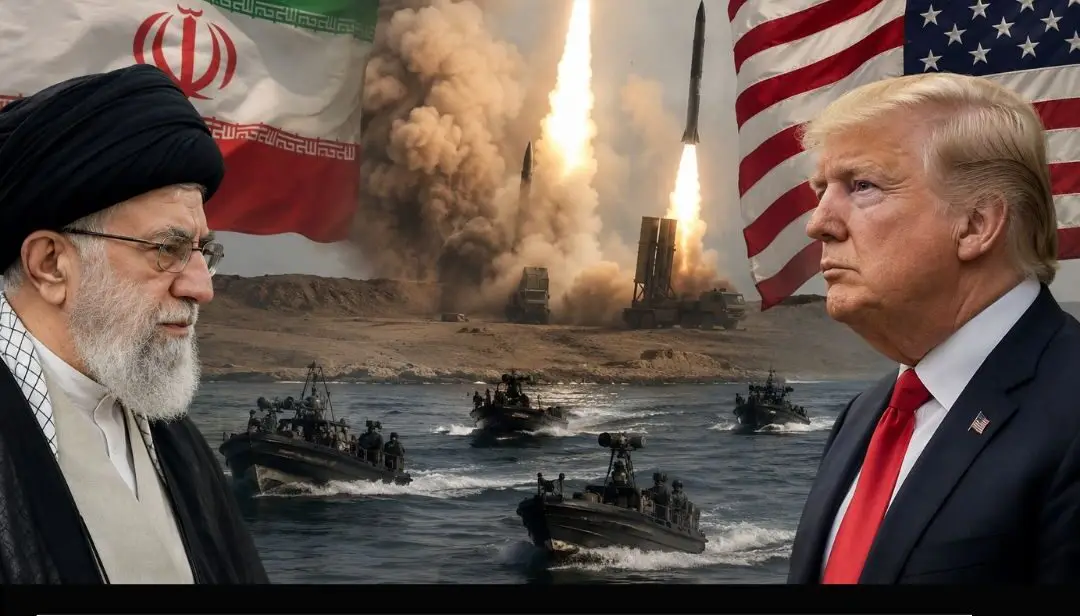
In the most significant military escalation since the ceasefire took effect, US forces carried out a wave of “self-defense strikes” against Iranian targets in southern Iran on Monday destroying two Islamic Revolutionary Guard Corps boats caught laying mines in the Strait of Hormuz and striking a surface-to-air missile site in Bandar Abbas that had been targeting American warplanes. The strikes detonated a new crisis inside an already fragile peace process just hours after Iranian negotiators arrived in Doha for talks aimed at finalizing a war-ending deal.
The US-Iran war had come closer than at any point to a negotiated resolution. Then the mines went into the water.
What Happened: A Timeline
The sequence of events unfolded rapidly across Monday night and Tuesday morning local time, according to multiple US military and intelligence sources.
The mine-laying incident: US surveillance assets detected two IRGC vessels operating in the Strait of Hormuz and actively deploying sea mines into the waterway the same mines that have helped enforce Iran’s de facto blockade of one of the world’s most critical energy chokepoints since March 4.
The SAM site engagement: Simultaneously, a surface-to-air missile installation at Bandar Abbas Iran’s principal southern naval base and the gateway to the Persian Gulf locked onto and targeted US warplanes operating in the area. US forces responded with strikes on the launch site.
The kinetic response: CENTCOM spokesman Captain Tim Hawkins confirmed the operation with a terse statement: “US forces conducted self-defense strikes in southern Iran today to protect our troops from threats posed by Iranian forces.”
CNN’s live war updates confirmed that three explosions were heard in Bandar Abbas in the early hours of Tuesday morning local time. Iran’s semi-official Fars News Agency reported similar detonations near Sirik and Jask — two additional coastal positions along Iran’s strategic southern coastline overlooking the Strait.
The IRGC Responds: “Reciprocal Response Is Certain”
Tehran did not stay silent. Within hours of the strikes, the Islamic Revolutionary Guard Corps issued a formal statement that drew a direct line between the US military action and what it described as ceasefire violations and issued an unambiguous warning.
“The Islamic Revolutionary Guard Corps warns against any violation of the ceasefire by the aggressive US military, and considers its right to reciprocal response to be legitimate and certain,” the statement read.
India TV News reported that Iran’s foreign ministry separately accused the US of committing ceasefire violations in the Hormozgan region over the preceding 48 hours citing “repeated naval harassment against Iranian commercial vessels” and vowed it would “not hesitate in defending the Iranian people with the slightest delay.”
PressTV’s earlier reporting from May 9 had already foreshadowed this moment: Iran had previously reaffirmed red lines and vowed a “decisive response” to any new US attack in the Persian Gulf a threshold the Monday strikes have now formally crossed, at least in Tehran’s framing.
What It Means for the Peace Talks
The strikes landed at the worst possible diplomatic moment. Republic World confirmed that an Iranian delegation had arrived in Doha, Qatar for US-Iran talks coordinated through Qatari mediators just hours before the military action raising immediate questions about whether the strikes would torpedo negotiations that officials on both sides had been describing as days from conclusion.
The White House moved quickly to contain the damage. President Trump, in a social media post on Monday, insisted that US-Iran talks were “proceeding nicely” framing the strikes not as an escalation but as a measured self-defense action consistent with the ceasefire framework. Fox News confirmed Trump’s language tied the strikes directly to his broader ultimatum: “It will only be a Great Deal for all or, no Deal at all Back to the Battlefront and shooting, but bigger and stronger than ever before.”
BusinessToday’s analysis captured the consensus among analysts: the ceasefire is “holding barely.” Two senior US officials confirmed to reporters that the strikes do not indicate the ceasefire is over, and that “US Central Command continues to defend our forces while using restraint during the ongoing ceasefire.”
IBTimes UK reported the episode illustrates the profound difficulty of maintaining a ceasefire between two heavily armed adversaries who remain in active proximity across one of the world’s most contested waterways with no formal verification mechanism, no ceasefire monitoring body, and no agreed definition of what constitutes a violation.
The Bandar Abbas Context
The targeting of a SAM site at Bandar Abbas carries significance beyond the immediate exchange. Bandar Abbas is the headquarters of Iran’s Naval District 1 and the primary base for the IRGC Navy’s fast-attack boat fleet the same asymmetric naval force that has enforced the Hormuz blockade through mine-laying, harassment of commercial vessels, and swarm tactics against larger warships.
The Jerusalem Post reported that US forces struck targets in southern Iran with the specific justification of protecting American troops from imminent threats a framing designed to invoke the legal right of self-defense under international law while avoiding characterization of the strikes as an offensive resumption of hostilities.
International Crisis Group’s Strait of Hormuz flashpoint tracker had previously flagged the risk of exactly this scenario: that IRGC units operating in the Strait would take actions that triggered US military responses, creating escalatory cycles that neither side’s political leadership could easily control even when both were nominally committed to a ceasefire.
The Stakes: A Deal or a War Resumed
The events of Monday night have clarified, with brutal directness, what the Strait of Hormuz crisis actually is: not a frozen conflict but an active, volatile military confrontation in which both sides are simultaneously negotiating and shooting. The IRGC boats that went into the water with mines were not rogue operators acting without orders. The SAM site that targeted US warplanes was not a malfunction.
PBS NewsHour’s reporting on the ceasefire’s fragility described the Hormuz situation as a test of whether the ceasefire framework can survive the continued physical presence of two hostile militaries in the same narrow waterway and Monday’s events suggest the answer is: only barely, and only for now.
The Washington Post confirmed that both sides were still working toward a 60-day ceasefire extension framework but with the IRGC now publicly threatening retaliation and Iran’s foreign ministry accusing Washington of ceasefire violations, the diplomatic window that officials described as “days away” may be narrowing faster than either side anticipated.
A deal, or the battlefront bigger and stronger than ever before. The choice, as Trump framed it, is still on the table. But Monday’s strikes just made that table a great deal harder to sit at.

Oil & Energy Markets
A look at crude price swings, OPEC supply moves, and how energy markets react to geopolitical shocks.

Geopolitics & Conflict
Breaking down how wars, ceasefires, and diplomatic deals ripple through global trade and security.
US Foreign Policy
Coverage of Trump administration negotiations, sanctions, and strategic decisions shaping world events.
Economy & Inflation
Tracking how commodity prices, gas costs, and supply chains affect everyday consumers.