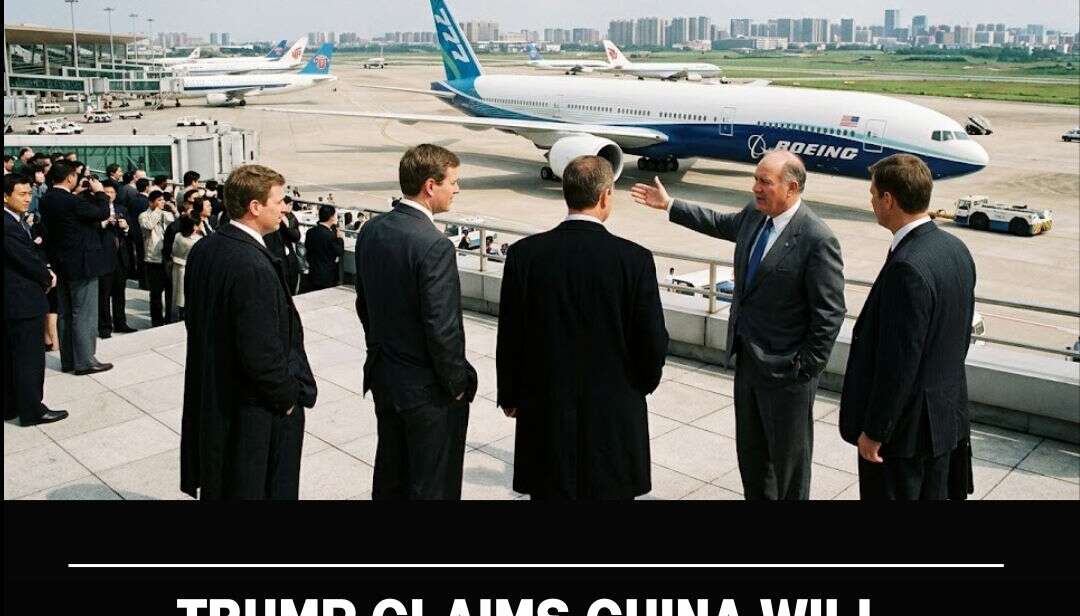
Standing before reporters on Air Force One as he flew home from Beijing, Donald Trump delivered the headline he had flown 7,000 miles to announce: China is buying 200 Boeing jets. “Boeing wanted 150 — got 200,” Trump said with characteristic satisfaction. “A lot of jobs.” The deal, announced on May 14, 2026 following Trump’s
Standing before reporters on Air Force One as he flew home from Beijing, Donald Trump delivered the headline he had flown 7,000 miles to announce: China is buying 200 Boeing jets. “Boeing wanted 150 — got 200,” Trump said with characteristic satisfaction. “A lot of jobs.”
The deal, announced on May 14, 2026 following Trump’s two-day summit with Chinese President Xi Jinping, marks Boeing’s return to the Chinese aviation market after nearly a decade of effective exclusion — a freeze driven by trade war retaliation, the 737 MAX crisis, and geopolitical tension that cost the American planemaker one of the world’s most lucrative aviation markets. Trump added that China had reserved the right to expand the order to as many as 750 aircraft — a figure that, if realised, would represent one of the largest commercial aviation deals in history.
Boeing CEO Kelly Ortberg accompanied Trump to Beijing personally, alongside Elon Musk, Tim Cook, and Jensen Huang — a delegation that underscored exactly how much American corporate power was riding on the summit’s trade outcomes.
The Deal’s Details — and Its Gaps
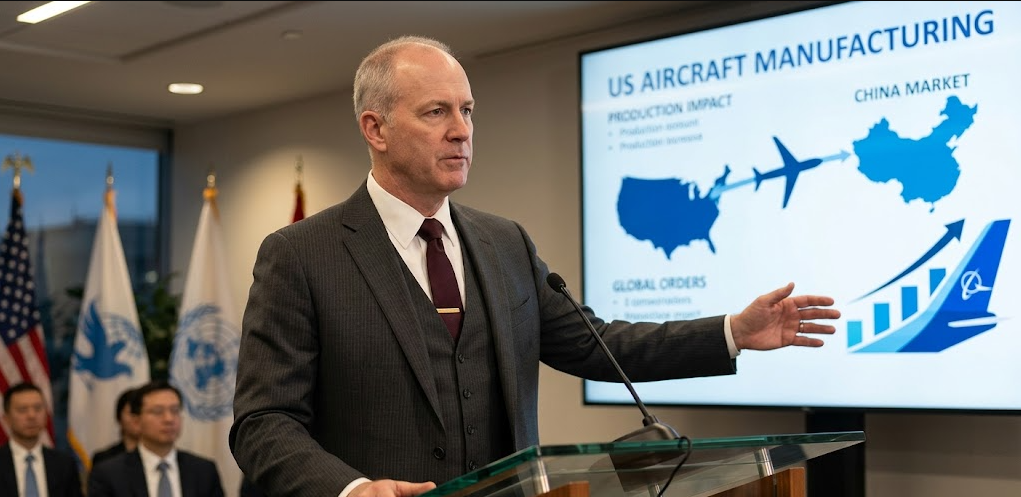
The announcement came with significant caveats. Trump confirmed the 200-aircraft figure but did not specify which models are included, which Chinese airlines would receive them, or when deliveries would begin. Bloomberg and aviation analysts noted that Boeing had been hoping for a deal covering as many as 500 737 MAX jets and 100 wide-body aircraft, making the 200-plane announcement both a genuine win and something less than the full breakthrough the manufacturer sought.
The US Iran war and the resulting strain on US-China relations had made any Boeing deal uncertain heading into the summit. China had been buying overwhelmingly from Airbus since 2017 — a deliberate strategic pivot that reflected both the 737 MAX grounding and Beijing’s use of aircraft procurement as a geopolitical lever.
The question of whether the 200 planes are 737 MAX narrow-bodies — valued at roughly $100 million each at list price — or larger 777X or 787 Dreamliner wide-bodies at up to $400 million each, matters enormously to Boeing’s balance sheet and production planning. That ambiguity, along with ongoing safety litigation in US courts related to the 737 MAX, saw Boeing stock fall more than 4% on the day of the announcement — a sobering market signal that investors want details, not just presidential declarations.
Why Every US President Champions Boeing
The question embedded in Trump’s triumphal announcement — why do US presidents, regardless of party, consistently fight for Boeing’s international sales? — has a straightforward answer rooted in economic geography and political arithmetic.
Boeing is America’s largest manufacturing exporter, contributing approximately $97 billion annually to the US economy and supporting more than one million American jobs across its direct workforce, supply chain, and affiliated industries. Approximately 85% of Boeing’s workforce and 80% of its supply chain spending are concentrated in the United States.
In Washington State, where Boeing’s commercial aircraft operations are anchored in Everett and Renton, aerospace manufacturing accounts for over 30% of the state’s manufacturing jobs — 194,000 direct and indirect positions generating nearly $20 billion in labour income annually. In South Carolina, where the 787 Dreamliner assembly line was established in North Charleston, Boeing has committed over $1 billion in expansion investment, creating thousands of well-paying manufacturing jobs in a state that is politically significant.
The Israel-Iran war has made the domestic jobs argument even more potent. With US gas prices at $4.50 per gallon, inflation at 3.8%, and Trump’s approval rating at a second-term low of 34%, the ability to announce “a lot of jobs” from a China deal is not just economic policy — it is political oxygen.
Every American president since the end of the Cold War has used foreign visits to China as an occasion to announce Boeing orders, because the political optics are irresistible: American workers building American planes sold to the world’s largest aviation market. Obama announced a $38 billion Boeing deal during his 2009 China visit. Trump’s first term produced a commitment for 300 aircraft in 2017. The pattern is bipartisan and deeply structural.
Boeing’s Long Road Back to China
The nine-year effective exile from meaningful Chinese orders has been one of the most painful chapters in Boeing’s modern history. The 737 MAX crashes of 2018 and 2019 — which killed 346 people and grounded the aircraft globally — coincided with the eruption of the US-China trade war, giving Beijing both a safety rationale and a commercial incentive to pivot toward Airbus. China became Airbus’s single most important customer during the period when Boeing was locked out.
The 200-plane announcement, however incomplete in its details, signals that diplomatic normalisation between Washington and Beijing has reached a point where aviation commerce can resume. For Trump, it is a jobs headline. For Ortberg, it is the beginning of a commercial recovery. For Boeing’s 170,000 US employees, it is a reminder of why Washington has always kept the world’s most politically connected aircraft manufacturer flying.
Market Analysis
A quick snapshot of market trends, customer behavior, and competitor movements.