Share This Article
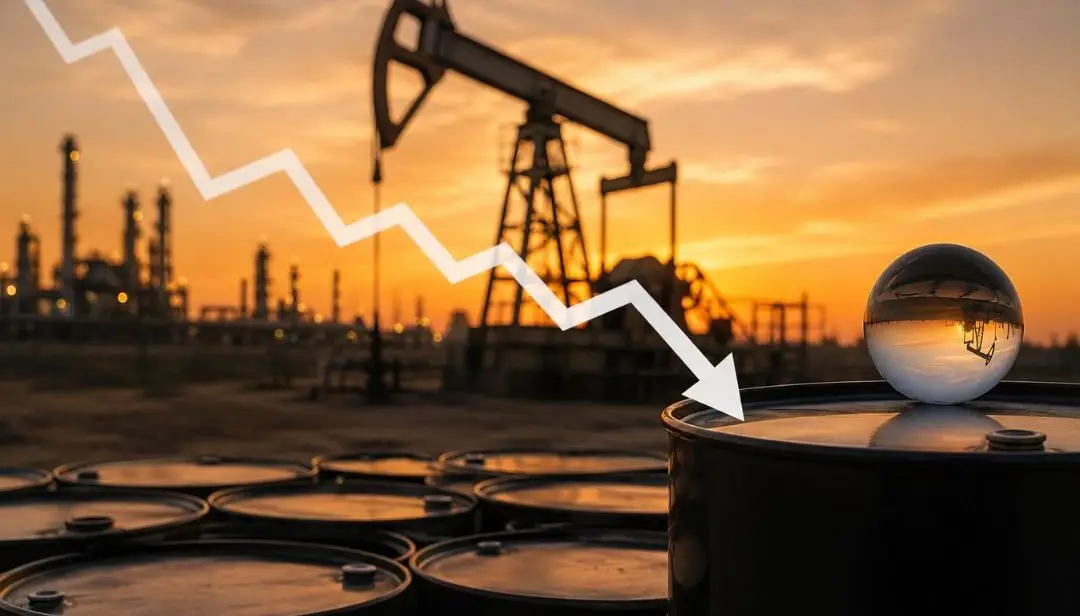
London / Washington / Beijing – May 15, 2026 – After months of spiking fuel costs, panic buying, and an Oil Expert market that the International Energy Agency called “the largest supply disruption in the history of global energy,” a rare note of optimism is emerging from the world’s top energy analysts. One prominent voice drawing on data from the IEA, Goldman Sachs, and the U.S. Energy Information Administration is now making a bold call: oil prices will begin to ease within the next 30 days.
The forecast arrives at a pivotal moment. Brent crude sits at $106.89 a barrel as of May 15, down sharply from its wartime peak of $138 on April 7. The US-Iran War, now in its 75th day, has shattered 13 million barrels per day of global supply and effectively closed the Strait of Hormuz the chokepoint through which 20 percent of the world’s traded oil normally flows. Yet cracks are appearing in the crisis, and the markets are watching.
The Expert Case for a Price Retreat
The prediction is grounded in converging signals. Goldman Sachs has revised its Q4 2026 Brent forecast down to $60 a barrel. J.P. Morgan puts the 2026 average at the same figure. The EIA projects prices falling to $89 by year-end as Middle Eastern production gradually recovers. Even the World Bank’s base-case scenario $86 for 2026 implies a sustained retreat from current levels.
The key variable is geopolitical velocity. “If tensions ease by mid-2026,” analysts at multiple institutions agree, prices could fall sharply as suppressed demand snaps back and alternative supply routes already being developed at pace begin to compensate for Hormuz losses. The inventory cliff identified by JPMorgan around April 20, when pre-conflict oil buffers were fully depleted, has now passed. Markets are running on current production alone, which paradoxically makes any diplomatic breakthrough far more price-sensitive.
Put simply: the gap between crisis-peak pricing and fundamental reality is wide enough that even partial good news could move prices by double digits within weeks.
Here are Some Related Blogs to Read
- NATO chief calls US strikes on Iran “absolutely necessary”
- Will gold rally as US-Iran tensions escalate
- Oil jumped but the market stayed calm
- 5 takeaways from Tuesday’s 2026 primaries
- US tariff system reset across 60 economies
- Trump tariffs Section 122 surcharge expires
- Trump had deliberately paused Hormuz operations to force Iran into a deal
- JD Vance claims Hegseth has been misleading Trump on the Iran war
- Iran has been digging out hidden missile stockpiles after rejecting Trump’s peace offer
- US Navy destroyer just fired on and seized an Iranian cargo ship
- Iran and Israel’s spy war is heating up amid claims of stolen F-15 secrets
- he’s now clashing with his own SCOTUS picks back home
Beijing Bingo: The Summit That Changed the Equation
Enter the Beijing bingo moment. Donald Trump’s May 14–15 state visit to China framed by many as a humbling of American foreign policy may prove to be the most consequential energy event of 2026. In what observers are calling a diplomatic masterstroke by Xi Jinping, China agreed to purchase U.S. oil, soybeans, and liquefied natural gas, while Xi publicly endorsed keeping the Strait of Hormuz “open and free of tolls.”
The significance cannot be overstated. China is Iran’s largest trade partner and top oil buyer. Beijing holds approximately 360 million barrels in strategic and commercial reserves the world’s largest stockpile. When Xi speaks about Hormuz, Tehran listens.
The Council on Foreign Relations noted bluntly that at the Beijing bingo summit, “China will have the upper hand.” But for energy markets, the direction of that leverage applied toward de-escalation is precisely what analysts needed to see. Trump’s confirmation that Xi invited him back to Beijing in September further signals a diplomatic channel that could accelerate a durable ceasefire in the US-Iran War, removing the single biggest structural driver of elevated crude prices.
The global oil expert View: What the Data Actually Says
The mr global oil expert consensus synthesising IEA, Goldman, EIA, and World Bank modelling points to a 30-day window where three conditions are converging. First, the US-Iran War ceasefire, described by Trump as on “massive life support,” is nonetheless holding at a functional level. Second, the Beijing bingo summit has injected fresh diplomatic capital into the Iran negotiations. Third, demand destruction is real: global oil consumption fell by an estimated 1.7 million barrels per day in Q2 2026 as businesses and consumers absorbed the shock of $1.16-per-gallon price increases at the pump and a 95 percent rise in jet fuel costs.
Demand destruction, ironically, is the market’s self-correcting mechanism. When prices destroy their own demand, equilibrium eventually re-establishes itself and the world’s leading commodity analysts are signalling that re-establishment is now in sight.
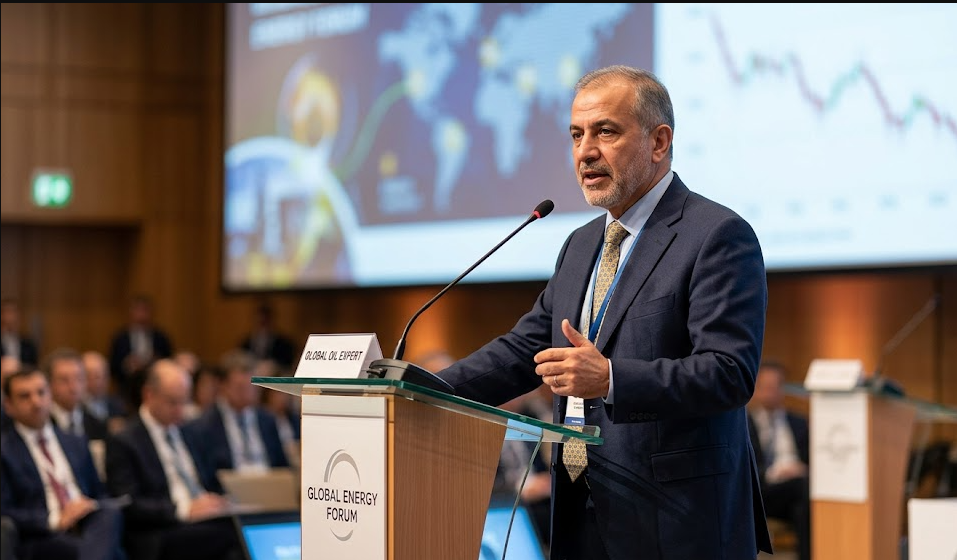
IEA Executive Director Fatih Birol warned in April that “oil prices are not reflecting the severity of the problem” and that a further spike remained possible. That spike did not materialise. Instead, diplomacy slow, transactional, and imperfect is beginning to fill the void.
One Month. One Window.
The arithmetic is straightforward. If the US-Iran War ceasefire holds through June, if the Beijing bingo diplomatic track produces even modest progress on Hormuz, and if OPEC+ resumes planned production increases in Q2 as Goldman Sachs models suggest, prices could be back at $85 or below before summer ends.
That is not a guarantee. Birol’s warning “the vase is broken, and it will be very difficult to put the pieces back together” is a reminder that infrastructure damage across 80-plus energy facilities in Iran, Saudi Arabia, the UAE, and Kuwait will take years to repair fully. A structural floor under oil prices may persist well into 2027.
But for drivers, businesses, and central banks desperately trying to contain 5.1 percent inflation across developing economies, even a partial easing of the crude price premium would be significant relief.
The next 30 days, every energy market analyst agrees, will be decisive.

Oil & Energy Markets
A look at crude price swings, OPEC supply moves, and how energy markets react to geopolitical shocks.

Geopolitics & Conflict
Breaking down how wars, ceasefires, and diplomatic deals ripple through global trade and security.
US Foreign Policy
Coverage of Trump administration negotiations, sanctions, and strategic decisions shaping world events.
Economy & Inflation
Tracking how commodity prices, gas costs, and supply chains affect everyday consumers.