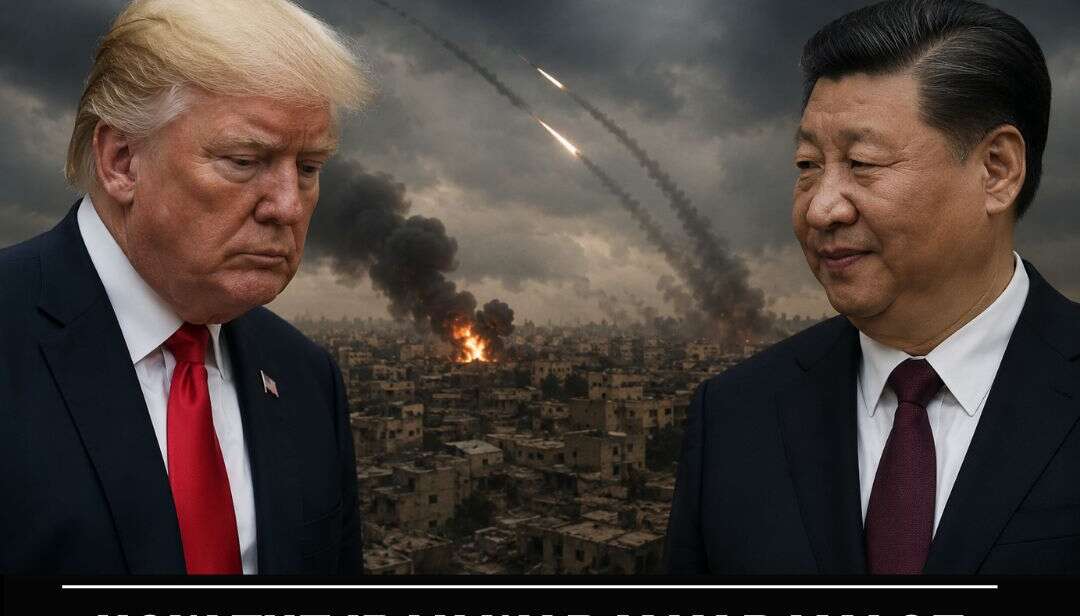
Donald Trump built his political brand on strength, leverage, and the art of the deal. But as he lands in Beijing for his summit with Xi Jinping, a war he promised would be over in weeks has dragged into its eleventh week — and the man waiting for him at the negotiating table knows it.
Donald Trump built his political brand on strength, leverage, and the art of the deal. But as he lands in Beijing for his summit with Xi Jinping, a war he promised would be over in weeks has dragged into its eleventh week — and the man waiting for him at the negotiating table knows it.
The Xi-Trump summit on May 14–15 is the most consequential bilateral meeting between the United States and China in years. On paper, it was supposed to be Trump’s moment — arriving in Beijing as the president who had just ended a major war, flush with geopolitical capital and ready to extract concessions from Xi on trade, technology, and Taiwan. Instead, analysts across Washington, London, and Singapore are asking the same uncomfortable question: has theIran war turned what was meant to be Trump’s greatest leverage point into his greatest liability?
The War That Wouldn’t End
Trump’s team initially projected the military campaign against Iran — launched jointly with Israel on February 28, 2026 — would be resolved within four to six weeks. Seventy-six days later, the Strait of Hormuz remains largely closed, the US naval blockade of Iran is still in place, a one-page peace memorandum is still being reviewed in Tehran, and the ceasefire Trump declared last month is, by his own words, “on life support.”
The prolonged stalemate has reshaped the diplomatic geometry in ways that favour Beijing. As CNN’s political analysts put it bluntly: the open-ended Iran war is “a recipe for the United States being seen in Beijing as somehow weaker, at least more distracted than it might otherwise have been.”
One widely cited observation now circulating in foreign policy circles captures Beijing’s strategic position with precision: “The US is fighting without winning. China is winning without fighting.”
Xi’s Hand Is Stronger Than It Should Be
The structural advantage China enjoys going into these talks is significant — and the Iran war has amplified every element of it.
China is Iran’s largest trading partner and purchases more than 80% of Iran’s shipped crude exports, giving Beijing unique leverage over Tehran that Washington urgently needs but cannot command on its own. If Trump wants China to pressure Iran into accepting the nuclear deal memorandum, he must ask Xi for a favour. And in geopolitics, asking for favours is the opposite of arriving with leverage.
Meanwhile, the US stock market may be at record highs, but America’s real economy is telling a different story. Gas prices have surged to a national average of $4.48 per gallon, diesel is up nearly 50% since the war began, and inflation has jumped to 3.3% — its highest level since May 2024. Trump and Congressional Republicans have been forced to float suspending the federal gas tax in a rare act of economic damage control, a measure that signals vulnerability more than strength.
The political data is equally damning. Trump’s approval rating has fallen to 34% — the lowest of his second term, according to a Reuters/Ipsos poll. An NPR/PBS/Marist survey put disapproval at 59%. Critically, 81% of US respondents — including 79% of Republicans — say gas prices are creating financial strain for their households. By a 63-37 margin, Americans blame Trump personally for the price spike. In midterm election terms, Democrats now lead by 52-42% on a generic congressional ballot — a gap that historically signals a wave election.
Trump arrives in Beijing not as a president at the peak of his power. He arrives as a president under domestic siege.
What Xi Is Actually After
China enters the summit with a crisp, well-prepared list of demands — and the patience to wait for them.
On Taiwan, Beijing wants Washington to shift from “non-support” to active “opposition” to Taiwanese independence — a linguistic concession that would carry enormous political weight in China. On trade, Beijing wants tariff reductions, the removal of Chinese companies from US sanctions lists, and relaxed restrictions on high-end technology exports. On Iran, China has signalled it may help push Tehran toward a deal — but only in exchange for tangible movement on its other priorities.
That last point is the sharpest edge of Xi’s leverage. Trump needs China’s help to exit a war he cannot end alone. Xi knows it. Every concession Trump makes in Beijing — on Taiwan, on tariffs, on tech — will be read by allies in Tokyo, Seoul, Taipei, and Canberra as evidence that America’s security commitments can be traded away when Washington is under pressure.
The Strongman Paradox
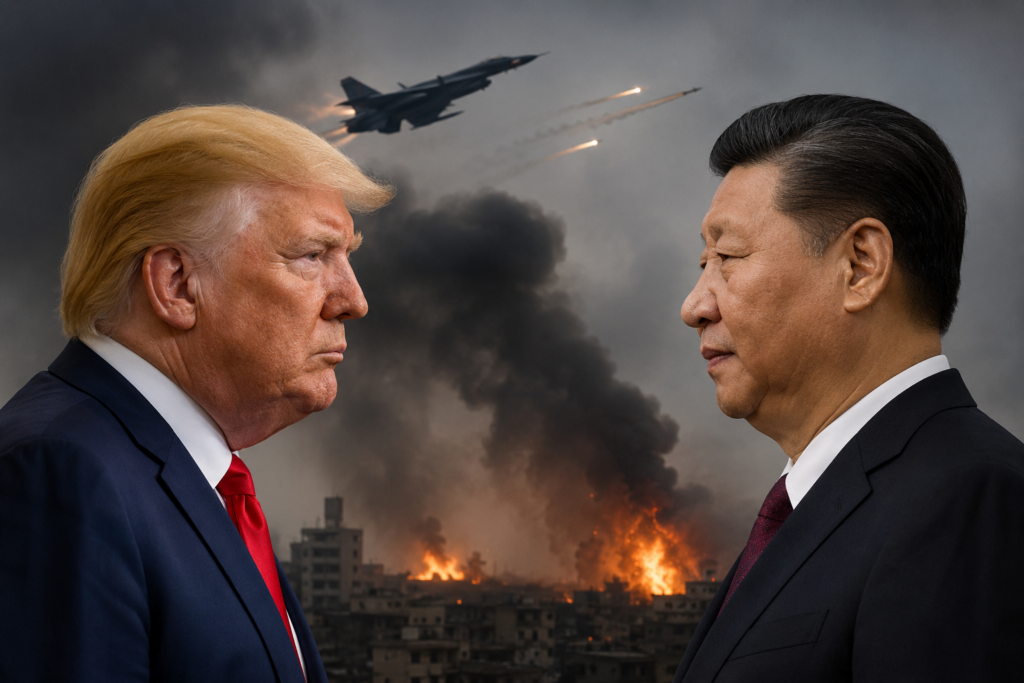
There is a deep paradox at the heart of this summit. Trump has consistently positioned himself as the “strongman” leader — the one who deals from strength, who doesn’t blink, who makes others come to him. But the Iran war has created a situation where the strongman needs something from his adversary, his domestic political standing is eroding, and his negotiating timeline is defined not by his own strategic calendar but by a conflict he cannot close.
Xi Jinping, by contrast, has spent ten weeks doing almost nothing — calling for peace, meeting Iran’s foreign minister, urging restraint — while China’s renewable energy exports hit record highs, its global standing as a responsible power rose, and its leverage over both Washington and Tehran compounded quietly in the background.
Trump promised to bring the art of the deal to Beijing. What he has brought instead is a war that hasn’t ended, an economy that is hurting, and a need for Chinese help that Xi did not need to manufacture. The strongman showdown may have already been decided before the two leaders sit down.
Market Analysis
A quick snapshot of market trends, customer behavior, and competitor movements.