Riyadh / Washington / Beijing — For eight decades, the relationship between Saudi Arabia and the United States has been the load-bearing pillar of Middle Eastern geopolitical order — an alliance built on the foundational exchange of American security guarantees for reliable Saudi oil flows, and sustained through crises, contradictions, and ideological tensions that would
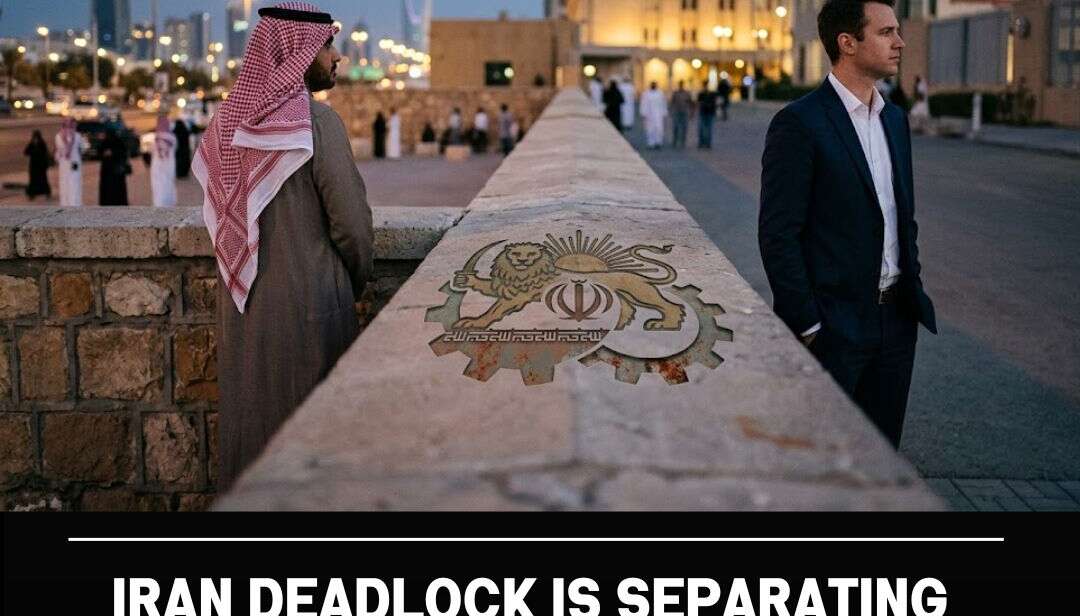
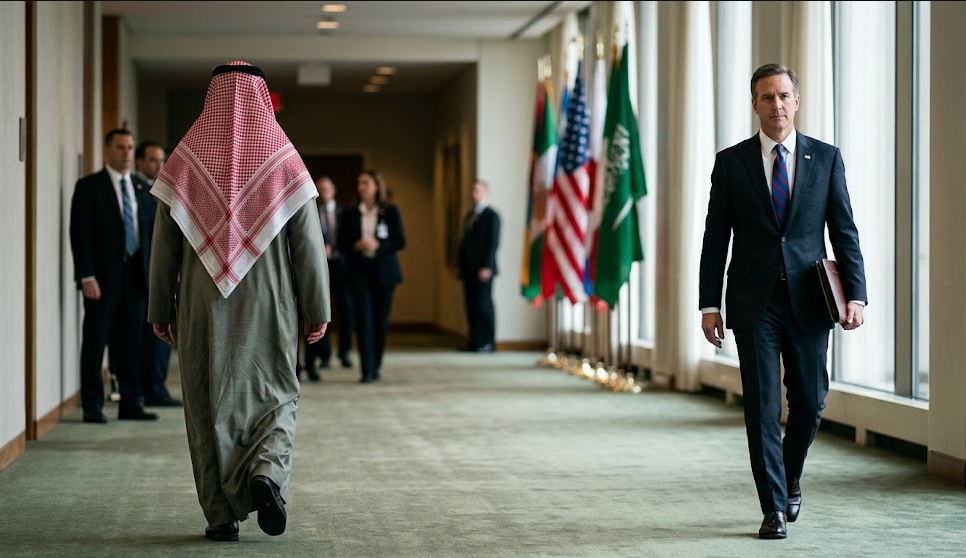
Riyadh / Washington / Beijing — For eight decades, the relationship between Saudi Arabia and the United States has been the load-bearing pillar of Middle Eastern geopolitical order — an alliance built on the foundational exchange of American security guarantees for reliable Saudi oil flows, and sustained through crises, contradictions, and ideological tensions that would have destroyed lesser partnerships. That pillar is cracking. Not dramatically, not irreversibly, not yet — but the Iran deadlock that has consumed Washington’s Middle Eastern policy bandwidth is exposing fracture lines in america saudi Arabia relations that neither capital has found a credible way to repair, and that China is watching with the patient, strategic interest of a power that has been waiting for exactly this moment.
How the Iran Deadlock Became a US-Saudi Fault Line
To understand why the Iran crisis is separating Saudi Arabia and the United States, it is necessary to understand how differently the two capitals experience the threat Iran represents — and how differently they have experienced Washington’s management of it.
For Saudi Arabia, Iran is not a geopolitical abstraction or a nuclear nonproliferation concern. It is an existential civilisational adversary operating active proxy networks on multiple Saudi borders simultaneously — in Yemen through the Houthis, in Iraq through Shia militia networks, in Bahrain through destabilisation operations, and in the kingdom’s own Eastern Province through agitation among its Shia minority population. Every day that Iran’s regional power projection continues unchecked is a day that Saudi security planners assess as a day of compounding strategic vulnerability.
Washington’s management of the Iran crisis — oscillating between maximum pressure and diplomatic engagement, never fully committing to either track long enough to produce a decisive outcome — has generated in Riyadh a frustration that has been building for years and has now reached a level that senior Saudi officials are no longer willing to express only in private.
“We were told maximum pressure would produce a deal or a collapse,” one senior Saudi official told a regional security forum recently. “We are still waiting for either.”
Are the United States and Saudi Arabia Still Allies?
The formal answer to whether are the united states and saudi arabia allies remains yes — defence agreements, intelligence sharing arrangements, weapons sales frameworks, and the foundational security architecture of the relationship remain technically intact. But alliance is not merely architecture. It is expectation, trust, and the shared confidence that your partner’s actions will reflect your shared interests rather than consistently prioritise their own domestic political calculations at your strategic expense.
By that measure, the US-Saudi alliance is experiencing its most serious stress test since the 2003 Iraq War — a conflict that Riyadh opposed, watched destabilise its northern neighbour, and assess as the original sin that empowered Iran’s regional ascendancy by eliminating the one Arab state whose military had historically served as a counterweight to Persian power.
The current Iran deadlock has revived every Saudi grievance from that period and added new ones. The Biden administration’s Iran diplomatic engagement was conducted, Saudi officials felt, without adequate Saudi consultation. The Trump administration’s current approach — simultaneously threatening military action and pursuing a diplomatic framework — has left Riyadh uncertain about whether the outcome it most needs, a fundamentally weakened Iranian regional posture, is actually Washington’s objective or merely its rhetorical backdrop.
The quiet but devastating Saudi assessment, shared among Gulf Cooperation Council partners, is that Washington’s Iran policy is primarily shaped by American domestic politics, Israeli security requirements, and global oil market management — with Saudi Arabia’s specific security interests a secondary consideration that receives attention when convenient and deferral when not.
China Moves Into the Space
Into the trust deficit between Saudi Arabia and the United States, China has moved with a strategic deliberateness that should alarm Washington far more than it currently appears to.
The Chinese Saudi Arabia relationship has been transformed in the past three years from a primarily economic partnership — centred on oil purchases, infrastructure investment, and technology supply chains — into something approaching a comprehensive strategic engagement that touches areas of Saudi national interest that Washington once considered exclusively its own domain.
The March 2023 China-brokered normalisation agreement between Saudi Arabia and Iran — achieved without American involvement and announced in Beijing — was the most visible symbol of this transformation. But it was not the most significant. More consequential, in the long run, are the defence cooperation frameworks that Riyadh and Beijing have been quietly developing: drone technology transfers, satellite surveillance cooperation, and the early-stage discussions around Chinese participation in Saudi Arabia’s Vision 2030 strategic industrial development that would embed Chinese technology and expertise in the kingdom’s most sensitive future infrastructure.
Chinese Saudi Arabia engagement has also moved into the currency domain. Saudi Arabia’s willingness to discuss oil sales settled in Chinese yuan — the petrodollar arrangement’s most significant challenge since its 1970s establishment — signals a Riyadh that is actively building optionality against dollar dependence in ways that would have been unthinkable a decade ago.
What Riyadh Actually Wants
The Saudi position on Iran is not complicated. Riyadh wants one of two outcomes: either a US-Iran agreement that produces a genuinely and verifiably weakened Iranian regional posture — reduced proxy funding, constrained missile programs, diminished Hezbollah and Houthi operational capacity — or a continuation of maximum pressure that maintains Iran in a state of strategic overextension and economic stress sufficient to limit its regional ambitions.
What Saudi Arabia does not want — and what it fears the current diplomatic process may produce — is a US-Iran nuclear deal that relieves economic pressure on Tehran, restores Iranian oil export revenues, and allows the Islamic Republic to simultaneously sign a nuclear framework and continue funding the proxy infrastructure that directly threatens Saudi security.
That fear is not irrational. The 2015 JCPOA did not demonstrably constrain Iranian regional behaviour — in Saudi assessment, it funded it, by freeing up revenues that Tehran directed toward Hezbollah, the Houthis, and Iraqi militia networks in the years following sanctions relief.
If the current US-Iran framework repeats that pattern — nuclear constraints purchased at the price of regional licence — Riyadh’s assessment of America Saudi Arabia relations as a genuinely protective alliance will not survive it intact.
The Path Back — If One Exists
American officials who track the US-Saudi relationship closely argue that the alliance’s foundations remain strong enough to absorb the current strain — that Riyadh’s China engagement is hedging rather than pivoting, and that the kingdom’s ultimate security dependence on American military architecture has not fundamentally changed.
That argument has merit. No Chinese security guarantee can currently substitute for American military presence in the Gulf. No Chinese diplomatic framework can match the depth of intelligence sharing and interoperability that decades of US-Saudi defence cooperation have built. And Saudi Arabia’s own internal security establishment remains deeply integrated with American training, doctrine, and equipment in ways that cannot be rapidly unwound.
But alliances erode not when they break but when the weaker partner concludes that the stronger partner’s commitments are conditional, its attention is finite, and its strategic priorities will consistently trump shared interests when the two diverge.
Saudi Arabia and the United States are allies. Whether they remain the kind of allies whose partnership can anchor Middle Eastern stability — or become the kind whose relationship is managed rather than trusted — depends on whether Washington resolves the Iran deadlock in a way that reflects Saudi security interests as seriously as it reflects its own.
The space between those two outcomes is where China is already operating. And it is getting larger.
Market Analysis
A quick snapshot of market trends, customer behavior, and competitor movements.