Tehran / Washington — Inside Iran’s labyrinthine power structure, where factions within factions operate behind layers of ideological allegiance and institutional loyalty, a specific and dangerous bloc has emerged as the single greatest internal threat to any US-Iran diplomatic agreement. They are known, with a mixture of reverence and alarm depending on who is speaking,
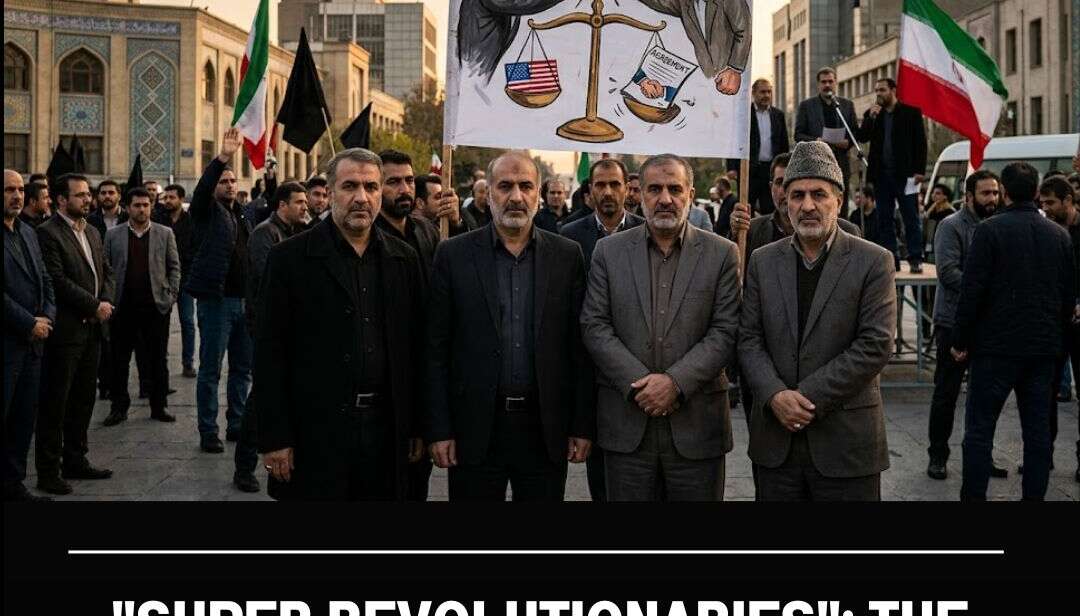
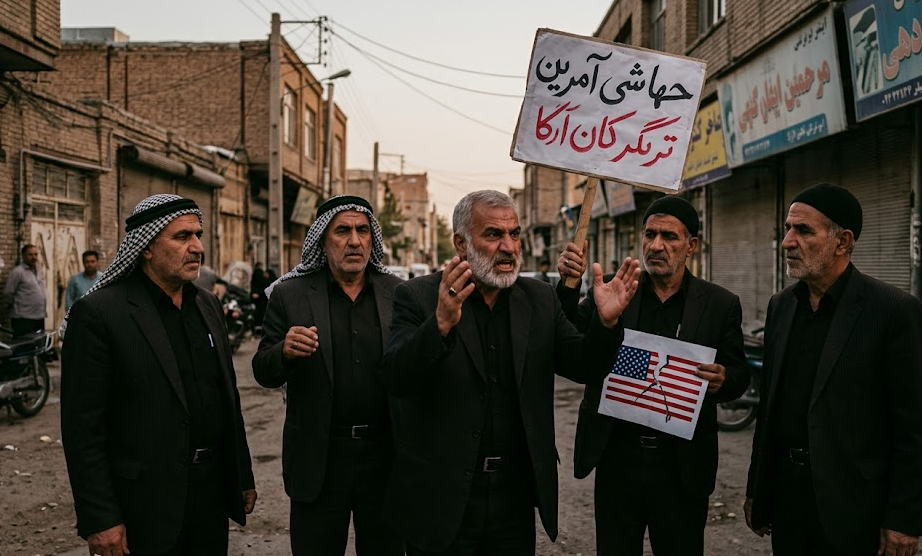
Tehran / Washington — Inside Iran’s labyrinthine power structure, where factions within factions operate behind layers of ideological allegiance and institutional loyalty, a specific and dangerous bloc has emerged as the single greatest internal threat to any US-Iran diplomatic agreement. They are known, with a mixture of reverence and alarm depending on who is speaking, as the “Super Revolutionaries” — a loose but operationally coherent network of extremist hardliners who view any negotiated settlement with Washington not merely as a policy mistake but as an act of civilisational betrayal that must be stopped at any cost.
Understanding who they are, what power they actually hold, and why they are more dangerous now than at any previous moment in the Islamic Republic’s history is essential to understanding why every diplomatic breakthrough in the current US-Iran war negotiations remains perpetually one provocation away from collapse.
Who the Super Revolutionaries Are
The term “Super Revolutionaries” — used by Iranian reformists, pragmatists, and Western analysts alike — refers not to a single organisation but to an ideological tendency that cuts across several of Iran’s most powerful institutions. Their common denominator is a maximalist reading of Ayatollah Khomeini’s original revolutionary vision: that the Islamic Republic’s foundational purpose is resistance to American hegemony, and that any accommodation with Washington represents an abandonment of that purpose so fundamental it invalidates the revolution itself.
Institutionally, their strongest base is within the IRGC’s ideological and political directorate — the officers and commissars responsible for maintaining revolutionary fervour within the corps. They also have significant representation among the most conservative elements of the Assembly of Experts, the judiciary’s hardline wing, and the Basij paramilitary forces whose social control function gives them direct leverage over Iran’s domestic political environment.
Prominent figures associated with Super Revolutionary thinking include elements of the Paydari Front — a parliamentary faction that has consistently opposed every diplomatic opening Iran has attempted, from the 2015 JCPOA to the current back-channel exchanges with Washington. Their most vocal parliamentary voice, Hamid Rasaei, has described the current negotiations as “treason dressed in diplomatic clothing.”
What They Actually Believe
To dismiss Super Revolutionaries as simple warmongers is to fundamentally misunderstand them — and to underestimate them. Their worldview is internally coherent, historically grounded in the Islamic Republic’s founding mythology, and genuinely believed rather than merely performed.
They hold that the United States is an irredeemably hostile power whose strategic objective is not a negotiated settlement with Iran but the Islamic Republic’s eventu al dissolution — and that any agreement Washington offers is therefore either a trap designed to extract concessions before the next round of pressure, or a weakening mechanism designed to erode Iran’s deterrent capacity from within. From this premise, opposition to any deal is not extremism. It is rational self-preservation.
They also hold that Iran’s survival as a revolutionary state has always depended on resistance, not accommodation — that every moment of external pressure survived without capitulation strengthens the Islamic Republic’s legitimacy, while every concession made under duress erodes it. The 1988 ceasefire with Iraq, which Khomeini famously described as “drinking poison,” is their cautionary reference point: a necessary concession that damaged the revolution’s moral authority in ways that still reverberate.
The Tactics of Sabotage
What makes Super Revolutionaries genuinely dangerous to the current diplomatic process is not merely their ideology but their demonstrated capacity and willingness to act on it through concrete operational sabotage.
Their toolkit is well-established and was deployed with devastating effect during the JCPOA period. They use the IRGC’s operational independence to conduct military provocations missile tests, proxy escalations, maritime incidents timed specifically to destabilise diplomatic atmospheres and give hardliners in Washington ammunition to argue that Iran cannot be trusted. They operate through sympathetic judiciary and intelligence figures to arrest and prosecute Iranian interlocutors who engage with Western diplomats, eliminating the human infrastructure of negotiation. And they use their media networks — a constellation of hardline news outlets, Friday prayer sermon platforms, and social media channels — to frame any diplomatic progress as national humiliation and mobilise popular pressure against it.
During the current negotiation window, multiple incidents bear the hallmarks of Super Revolutionary operational interference. The IRGC’s recent escalatory naval manoeuvres in the Strait of Hormuz — conducted without apparent coordination with Iran’s Foreign Ministry — are widely assessed by Western intelligence analysts as an unauthorised pressure operation designed to provoke a U.S. military response that would collapse the diplomatic track. Similarly, the arrest of several Iranian academics with foreign university connections in recent weeks is assessed as a judicial hardliner operation targeting the informal back-channel infrastructure that sustains negotiations when formal talks stall.
The Succession Dimension
The Super Revolutionaries’ power and urgency is amplified enormously by the context of Supreme Leader Khamenei’s advancing age and the intensifying succession struggle it has generated. Any diplomatic agreement reached under Khamenei’s remaining tenure would represent a defining legacy act — one that pragmatist and reformist successors could use to justify a fundamentally different Iranian foreign policy orientation in the post-Khamenei era.
For Super Revolutionaries, this is existential. A successful US-Iran deal does not merely resolve a specific conflict. It potentially closes the door on the maximalist resistance ideology that justifies their institutional power, their budgets, their operational autonomy, and their social status within the Islamic Republic’s hierarchy. They are not simply opposing a negotiation. They are fighting for the character of the state that will exist after Khamenei is gone.
Why Washington Needs to Understand This
American negotiators and policymakers who treat Iran as a unitary actor — one government making coherent decisions toward defined objectives — consistently misread the negotiation environment and are repeatedly blindsided by provocations that appear to contradict Iran’s own stated diplomatic interests.
The Super Revolutionaries are not a fringe. They are an embedded, institutionally powerful, operationally capable faction within a fractured state — and their capacity to torpedo any agreement is real, demonstrated, and currently active.
Every diplomatic signal from Tehran’s Foreign Ministry must be read alongside the question of whether the IRGC’s ideological directorate, the Paydari Front’s parliamentary bloc, and the judiciary’s hardline apparatus will permit that signal to be followed through. In many cases, historically, the answer has been no.
Reaching a durable US-Iran agreement means not just persuading Iranian pragmatists that a deal serves Iran’s interests. It means either outmanoeuvring the Super Revolutionaries institutionally or ensuring that whatever agreement is reached is structured in ways that deny them the political ammunition to destroy it from within.
That is, by any measure, the harder diplomatic problem — and the one that receives the least attention in Washington’s public Iran debate.
Market Analysis
A quick snapshot of market trends, customer behavior, and competitor movements.