Share This Article
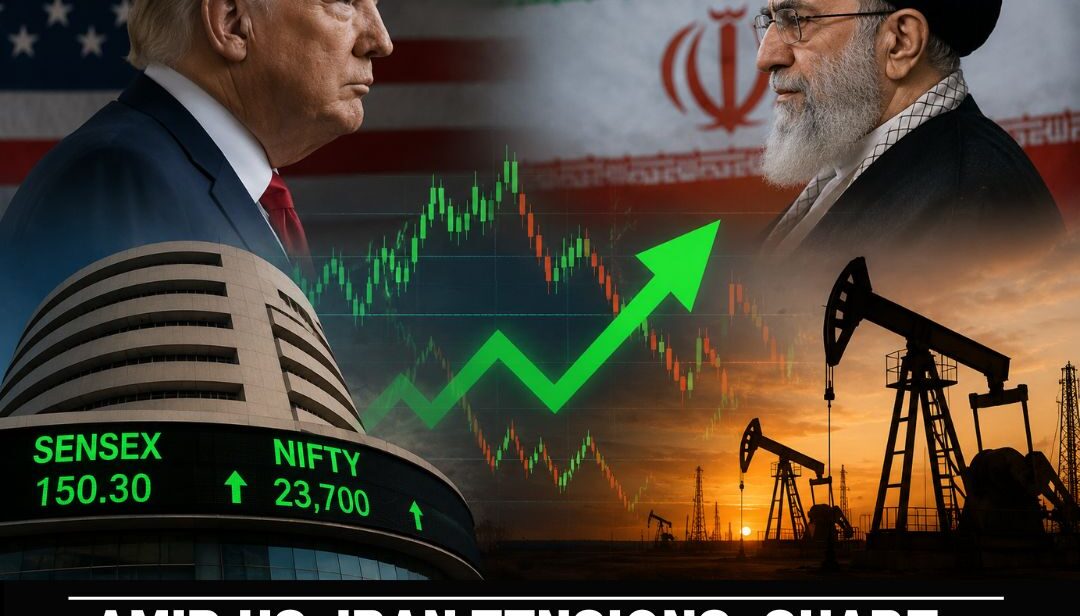
Mumbai, May 22, 2026 — Indian equity markets staged a cautious recovery on Friday, with the Sensex gaining 232 points to close at 75,415 and the Nifty 50 adding 65 points to end at 23,719 testing the critical 23,700 level that has served as both floor and ceiling through weeks of whipsaw volatility driven by the US-Iran tensions that have reshaped every assumption about oil, inflation, and emerging market capital flows since February 28.
The rally was real. So was the uncertainty beneath it. Brent crude sat at $104.52 a barrel elevated, volatile, and entirely dependent on a US Iran war diplomacy track that has now produced five rounds of failed negotiations and a Strait of Hormuz that remains functionally closed for its 84th consecutive day.
What Drove the Rally
The immediate catalyst was the same one that has moved Indian markets in both directions all month: words from Washington about Iran. On May 21, President Trump stated that US-Iran peace negotiations were in their “final stage” and Asian markets responded with broad-based optimism. The Dow Jones surged 645 points to cross 50,000. The S&P 500 climbed to 7,432. As CNBC’s Asia markets coverage confirmed, “Asia markets mostly rose as Trump says negotiations between Iran and the US are in ‘final stage’” a statement that has, in the current environment, approximately the same shelf life as a ceasefire announcement.
By May 22, the optimism had moderated. The fifth round of Rome talks concluded without a breakthrough. Brent crude recovered its previous day’s losses to trade above $104. The Nifty 50’s close at 23,719 was a 65-point gain, but the index had touched the 23,700 handle a level watched closely by technical analysts as both near-term resistance and the threshold above which sustained recovery becomes credible before retreating slightly.
The pattern is familiar to every trader watching Indian equities through the lens of US-Iran tensions: hope-driven intraday rallies, reality-driven afternoon moderation, and a closing print that reflects a market trying to price an outcome nobody can confidently model.
The Sectoral Split: Winners, Losers, and the Crude Oil Divide
The US Iran war‘s economic fingerprints are clearest in India’s sectoral performance. The divide between crude-sensitive and crude-insulated sectors has become the defining structural feature of the 2026 Sensex landscape.
Pharma has been the standout beneficiary. Nifty Pharma surged 2.30 percent to a 52-week high of ₹24,634 on May 14, with Gland Pharma posting a single-session gain of 14.88 percent on May 18. Export-oriented pharmaceutical companies earn in dollars and spend in rupees a structural double benefit when oil drives both currency weakness and global demand for generic drugs.
IT has been mixed but net positive. Nifty IT gained 3.82 percent on May 19, with Tech Mahindra rising 2.32 percent. The weaker rupee enhances rupee-denominated margins on dollar revenues, though global IT demand uncertainty from the oil-driven inflation shock creates a partial offset.
Oil Marketing Companies have been the clearest victims. BPCL fell 2.91 percent to ₹286.50, HPCL dropped 2.4 percent to ₹368.05, and IOC fell 1.73 percent to ₹137.83 even after the government’s May 15 petrol and diesel price hike. Goldman Sachs downgraded all three: HPCL from ‘buy’ to ‘neutral’ with a 35 percent target cut, BPCL from ‘buy’ to ‘neutral’ with a 22 percent cut, and IOC from ‘neutral’ to ‘sell’ with a 24 percent cut. The arithmetic is brutal: OMCs absorb losses of ₹750–1,000 crore per day on fuel sales below cost, with Nomura estimating a ₹15–20 per litre increase needed just to break even, as BusinessToday reported.
The Rupee: The Market’s Invisible Headwind
Running beneath every Sensex data point is the rupee now trading at 96.64 against the US dollar on May 22, Asia’s worst-performing major currency of 2026 and a direct casualty of India’s oil import bill, which has inflated by over $60 billion on an annualised basis since Brent moved from $70 to $104-plus.
As Aequitas India’s currency analysis noted, the oil-rupee-market triangle has become India’s defining economic feedback loop: higher oil prices increase dollar demand, which weakens the rupee, which compresses FPI returns in dollar terms, which triggers more selling. FPIs have pulled ₹27,000 crore from Indian markets in May alone, adding to a 2026 total exceeding ₹2.2 lakh crore in outflows the worst year for foreign institutional selling since 1993, as Outlook Business confirmed.
Domestic institutional investors DIIs have been absorbing the selling with disciplined consistency, providing the liquidity floor that has prevented the Sensex from a more severe correction. Without DII support, the 150-plus point rally on Friday would likely have looked very different.
What the RBI Is Watching
The Reserve Bank of India held its repo rate steady at 5.25 percent at its last policy meeting, with Governor Sanjay Malhotra warning of “increased upside risks” to inflation from elevated crude, weather shocks, and geopolitics. The RBI’s 2026-27 inflation estimate of 4.6 percent is still within the 2-6 percent target band but only just, and only if oil retreats from current levels.
The central bank’s dilemma encapsulates India’s broader position in the US-Iran tensions era: cut rates to support growth threatened by the oil shock, or hold to defend the rupee and contain import inflation. As BizzBuzz reported, the RBI is currently choosing “wait-and-watch” a stance that markets read as prudent but that also signals the bank has no clean answer to a crisis it did not create and cannot directly resolve.
The Outlook: Nomura’s 29,300 Target and the Iran Variable
Nomura’s year-end Nifty target of 29,300 implying approximately 24 percent upside from current 23,700 levels is premised on the Strait of Hormuz reopening and oil retracing toward $80-85 by Q4 2026, as Business Standard’s analysis confirmed. The bank is overweight on financials, consumer discretionary, real estate, and manufacturing sectors whose recovery trajectories are all downstream of the Iran question being resolved.
PhillipCapital has advised clients to treat US-Iran tensions-driven volatility as a buying opportunity, citing historical patterns showing that geopolitical disruptions are typically followed by strong Sensex recoveries once the triggering event resolves.
The variable neither brokerage can model is Trump who said he was “in no hurry” for a deal on Monday, “final stage” on Thursday, and whose Iran envoys are heading into a sixth round of talks with the same gap on nuclear enrichment and Strait of Hormuz tolls that has blocked every previous round.
Friday’s 150-plus point Sensex gain was a markets-being-markets moment: pricing in hope, discounting history, and waiting for the next headline from Rome.

Oil & Energy Markets
A look at crude price swings, OPEC supply moves, and how energy markets react to geopolitical shocks.

Geopolitics & Conflict
Breaking down how wars, ceasefires, and diplomatic deals ripple through global trade and security.
US Foreign Policy
Coverage of Trump administration negotiations, sanctions, and strategic decisions shaping world events.
Economy & Inflation
Tracking how commodity prices, gas costs, and supply chains affect everyday consumers.