Share This Article
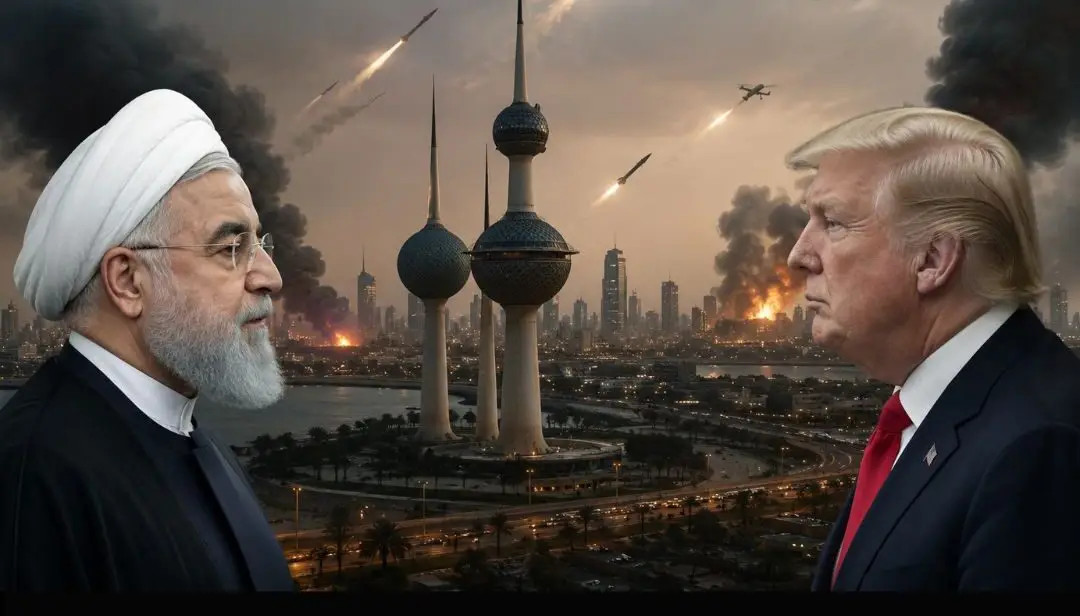
Kuwait is under fire. In the most serious strike on Kuwaiti soil since the conflict erupted in February, Iran launched a coordinated barrage of 13 ballistic missiles and 17 drones at Kuwait on June 3, 2026 killing at least one person, injuring 63, and forcing the closure of Kuwait International Airport in a direct challenge to ongoing US-Iran talks and the fragile ceasefire framework holding the region together.
The attack, confirmed by Kuwaiti armed forces and reported by Al Jazeera and The National, struck vital civilian installations, diplomatic missions, and critical infrastructure with debris from intercepted projectiles raining down on residential neighbourhoods and triggering 36 explosive ordnance disposal incidents across the country. The dead include an Indian national; several more Indian workers are among the injured, prompting New Delhi’s foreign ministry to issue a formal condemnation.
The June 3 Strike: What Was Hit and What It Means
Kuwait’s air defence systems performed, intercepting the full incoming salvo. But interception does not mean impunity. Falling debris caused widespread damage. Kuwait International Airport sustained hits severe enough to force a closure, disrupting what little Gulf aviation traffic was still operating under crisis conditions. Diplomatic missions in the capital were damaged an act that prompted Kuwait’s Foreign Ministry to summon Iraq’s ambassador and hold Baghdad formally responsible for failing to control Iran-aligned militia networks operating from Iraqi territory.
The Organisation of Islamic Cooperation condemned what it called “a flagrant violation of Kuwait’s sovereignty” resulting in death and destruction of vital facilities. Saudi Arabia described the attacks as “treacherous.” The international response was swift but the strikes continued anyway, a pattern now grimly familiar across the Gulf.
This was not a one-off. It was the latest chapter in a campaign that has struck Kuwait repeatedly since the Iran-US war began on February 28, 2026, when US and Israeli forces launched Operation Epic Fury and assassinated Supreme Leader Ali Khamenei. Iran’s retaliatory strikes hit every Gulf state hosting American military infrastructure within hours and have not stopped since.
The Iraqi Militia Factor: Attacks From Basra
A critical dimension of the drone strikes campaign that rarely receives adequate attention is the role of Iraqi-backed militias operating from Basra just kilometres from the Kuwaiti border. Groups including Kataib Hezbollah and Asaib Ahl al-Haq, armed, funded, and directed by Iran’s Revolutionary Guard Corps, have used southern Iraq as a launch platform for rockets and drones targeting Kuwait, Saudi Arabia, and US military installations throughout the conflict.
In April 2026, Kataib Hezbollah supporters stormed the Kuwaiti consulate in Basra, tearing down the Kuwaiti flag and replacing it with militia banners a brazen act of intimidation that underscored how completely Iran-aligned factions have operated beyond Baghdad’s control in the south. Kuwait denied Iraqi allegations that it had fired rockets into Iraq, framing itself explicitly as the victim of a proxy war it never sought.
As The National’s Basra analysis detailed, Basra has become a dual-power zone Iraqi state institutions existing alongside militia networks that answer to Tehran, not Baghdad placing Kuwait in the crosshairs of a conflict it cannot control from its own borders.
US Bases in Kuwait: The Real Target
Kuwait hosts 13,500 US troops the largest American military concentration in the Middle East spread across Ali Al Salem Air Base, Camp Arifjan, and Camp Buehring. All three have been struck or threatened throughout the conflict.
On February 28, Iranian ballistic missiles were intercepted over Ali Al Salem, with satellite imagery later confirming damage to over a dozen structures, aircraft shelters, and runway-adjacent areas. Camp Arifjan sustained the destruction of at least six satellite communication radomes, critically disrupting US Central Command networks. In April, 15 US service members were wounded in an Iranian drone strike on Ali Al Salem. Six US Army Reserve soldiers were killed in a separate Iranian drone strike on a makeshift command centre at Shuaiba Port on March 1.
In response to the sustained threat, the US relocated forces from Camp Arifjan to a temporary base at Bubiyan Island (Camp Al-Adiri). In May, both Saudi Arabia and Kuwait formally lifted previous restrictions on US military use of their bases and airspace — a signal of deepening military alignment as diplomatic solutions remained elusive. Washington, for its part, committed to $193 million in base upgrade construction across Al Jaber, Ali Al Salem, and Camp Doha, signalling a long-term strategic posture in Kuwait regardless of how the Iran talks resolve.
Kuwait’s Oil Infrastructure: A Nation’s Economy Under Fire
The attacks have not spared Kuwait’s economic lifeblood. Iran has struck Mina Al Ahmadi Refinery (346,000 barrels per day capacity) and Mina Abdullah Refinery (454,000 barrels per day capacity) multiple times between March and April 2026. Power and water desalination plants have been hit. Kuwait Petroleum Corporation declared force majeure on delivery contracts, cutting oil output to domestic needs only — a catastrophic loss for a nation whose economy is built almost entirely on hydrocarbon exports.
Kuwait’s government has stated the Strait of Hormuz closure is “beyond catastrophic” and warned of a “domino effect across the global economy” stark language from a country that has historically avoided confrontation and kept its head down in regional disputes.
A Test of the Ceasefire and of US-Iran Talks
The June 3 attack is being read by analysts as a deliberate stress test of the ceasefire. The US and Iran have been edging toward a memorandum of understanding a 60-day framework that would extend the ceasefire, begin reopening the Strait of Hormuz, and set the table for nuclear talks. Trump has publicly claimed the deal is “largely negotiated.” Iran’s Fars news agency has consistently contradicted that characterisation.
Iran attacking Kuwait the same week those talks are supposedly at their most advanced is not a coincidence. It is leverage a demonstration that Tehran retains the ability to inflict pain across the Gulf even while diplomats exchange drafts in Islamabad. For the Gulf states, the message is equally clear: no paper agreement provides security until Iranian missile stockpiles and militia networks are addressed, not just the nuclear file.
As NBC News reported, Iran attacked Kuwait and traded strikes with the US on the same day a pattern that makes the phrase “ceasefire” feel increasingly theoretical.

Oil & Energy Markets
A look at crude price swings, OPEC supply moves, and how energy markets react to geopolitical shocks.

Geopolitics & Conflict
Breaking down how wars, ceasefires, and diplomatic deals ripple through global trade and security.
US Foreign Policy
Coverage of Trump administration negotiations, sanctions, and strategic decisions shaping world events.
Economy & Inflation
Tracking how commodity prices, gas costs, and supply chains affect everyday consumers.