Share This Article
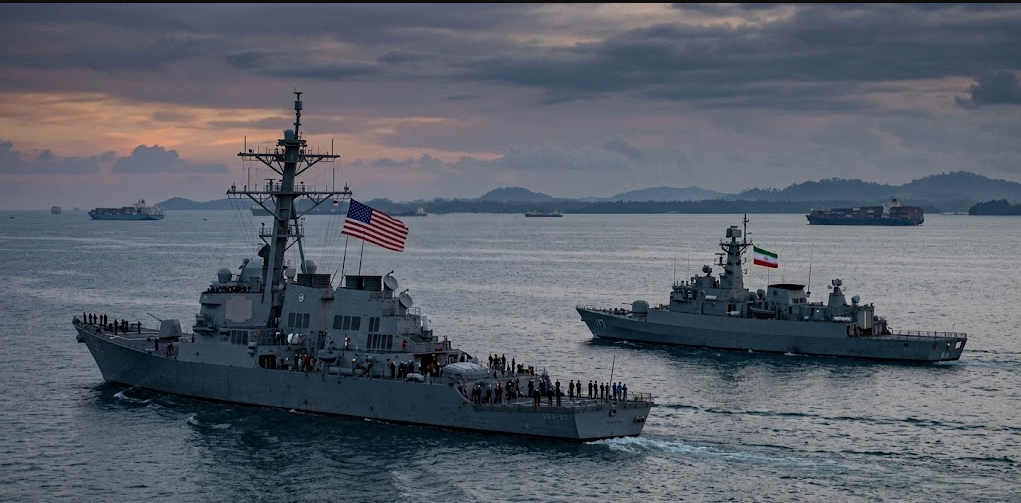
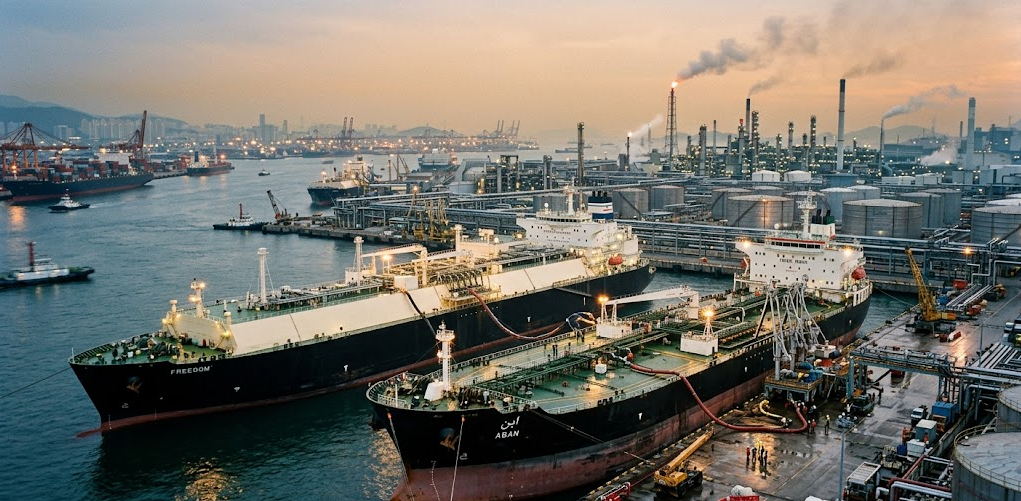
It was not a Persian Gulf intercept. It was not a Strait of Hormuz operation. The oil tanker M/T Tifani capable of carrying two million barrels of crude was stopped in the Indian Ocean, in the waters between Sri Lanka and Indonesia, more than 2,000 miles from the nearest point of the conflict that technically triggered its boarding.
The US and Iran war had just crossed a threshold.
The Tifani intercept, confirmed this week within the U.S. Indo-Pacific Command’s area of responsibility, showed Washington making good on a pledge that had not previously been tested at that range: that any vessel linked to Iran would be subject to interdiction anywhere in the world, not just within the blockade’s original Gulf perimeter. It was a significant demonstration of reach. It was also, analysts say, a significant complication to ending the war.
Here are Some Related Blogs to Read
- Tuesday’s missiles didn’t come out of nowhere, Iran has been digging out hidden missile stockpiles after rejecting Trump’s peace offer.
- Not everyone in Trump’s own camp agrees on strategy, JD Vance claims Hegseth has been misleading Trump on the Iran war.
- This isn’t the only recent flashpoint at sea, a US Navy destroyer just fired on and seized an Iranian cargo ship.
- The strikes haven’t ended Iran’s nuclear ambitions either, US intel says recent strikes did only limited damage to Iran’s nuclear program.
- That brief pause before Tuesday’s attack wasn’t random, Trump had deliberately paused Hormuz operations to force Iran into a deal.
- The missiles are only half the story, Iran and Israel’s spy war is heating up amid claims of stolen F-15 secrets.
- Trump’s fights aren’t confined to Tehran, he’s now clashing with his own SCOTUS picks back home.
“The expansion of the area of conflict thousands of miles from the Persian Gulf could widen the gap to be overcome at any peace talks,” CNN’s analysis noted. “The expanding of the war zone with more far-seas interdictions seems likely to only harden Tehran’s position.”
That assessment has already proven accurate. Within days of the Tifani boarding, Iran refused to send a delegation to a second round of peace talks in Islamabad. The iran us war, which began in the Persian Gulf, is now legally and militarily present in the Indo-Pacific and Tehran has responded to that expansion by moving further from the table, not closer.
The Strategic Military Cost
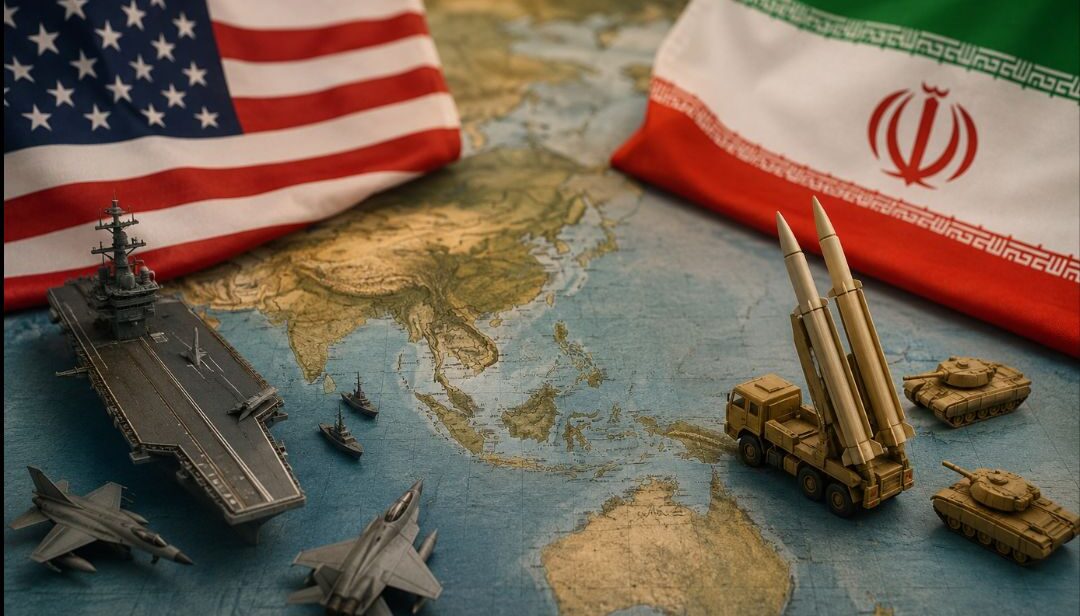
The geographic expansion of the us iran war into the Indo-Pacific reflects something more troubling than a single tanker intercept: a structural reallocation of American military resources that has been quietly alarming U.S. allies across Asia for two months.
Since Operation Epic Fury launched on February 28, the United States has redeployed THAAD launchers from bases in South Korea, withdrawn the USS Tripoli and more than 2,200 U.S. Marines previously stationed at Okinawa, and deployed roughly one-third of its naval surface fleet to Middle East operations. More than 300 Patriot and other interceptors were expended in the first 36 hours of the us war with iran alone munitions that, according to the Payne Institute, could take years to fully replace.
Stars and Stripes and Bloomberg both reported in March that US allies near China were growing increasingly uneasy as the weapons inventory shift accelerated. A Taiwanese lawmaker cut to the point: “U.S. military assets cannot be deployed in two places at the same time.”
The Washington Times reported this week that the commander of U.S. Pacific forces had stated bluntly that “victory over Iran is needed to deter a Chinese attack on Taiwan” framing the Middle East conflict not just as a regional issue but as the variable that will determine whether Beijing reads American deterrence as credible or degraded.
Former U.S. Deputy Secretary of State Kurt Campbell voiced the concern in broader terms, saying he worried that “the military capabilities the United States had patiently accumulated in the Indo-Pacific region might not return in full even after the Iran war ends.”
Asia’s Energy Exposure
The economic stakes of the US and Iran war for the Indo-Pacific region are not abstract. Approximately 80% of Asia’s oil imports transit the Strait of Hormuz. Japan’s exposure is near-total: 93% of its oil imports move through the strait, and Tokyo released 80 million barrels roughly 45 days of domestic demand from strategic reserves in March to prevent a supply panic. A poll by Asahi Shimbun found that 90% of Japanese respondents were “somewhat or greatly anxious” about the conflict’s economic impact.
India faces a different kind of dilemma: it has deep commercial ties to Iran, including investments in the Chabahar Port and historical energy relationships, while simultaneously deepening its strategic partnership with the United States. The Observer Research Foundation assessed the Iran us war as affecting India and the rest of Asia more severely than China a structural asymmetry driven by China’s strategic oil reserves and its continued ability to import Iranian crude through the tollbooth arrangement Iran has formalized for vetted vessels.
China’s position is the most geopolitically complex. It imports approximately 40% of its oil from the Middle East, holds the world’s largest strategic petroleum reserve at roughly 1.4 billion barrels, and has publicly called for a ceasefire while declining to provide military assistance to either party. At least 11.7 million barrels of Iranian crude have moved to China since the war began, with vessels transiting under Iran’s screening protocol. China has simultaneously dialed back pressure on Taiwan’s air defense identification zone a restraint that analysts interpret as strategic patience rather than abandonment of long-term goals.
The Diplomat noted the war is “reconfiguring U.S. force posture in the Indo-Pacific” a process that, once set in motion, does not simply reverse when a ceasefire is signed. Equipment can be redeployed. Readiness gaps, depleted stockpiles, and interrupted training cycles take considerably longer to repair.
Why This Makes Peace Harder
The Indo-Pacific dimension of the iran us war creates a specific diplomatic problem: every new theater the conflict enters gives Tehran a new grievance to attach to its list of preconditions, and gives the IRGC hardliners new evidence that the United States is waging a total war rather than a targeted campaign.
The Tifani was stopped 2,000 miles from the Persian Gulf. To Washington, that is enforcement of the blockade. To Tehran’s military command, that is the United States declaring the entire Indian Ocean a zone of American interdiction authority over Iranian commercial shipping.
Foreign Policy’s analysis of the “strategic aftershocks” of the us war with iran identified Indo-Pacific force reallocation as one of the three most consequential long-term consequences of the conflict alongside nuclear proliferation risk and oil market structural changes. Each of these aftershocks is, by definition, harder to undo than to create
The ceasefire is extended. The blockade operates globally. The peace talks are in limbo. And somewhere between Sri Lanka and Indonesia, the M/T Tifani sits as evidence that the geography of the us and iran war has outgrown the map its architects originally drew.
Oil & Energy Markets
A look at crude price swings, OPEC supply moves, and how energy markets react to geopolitical shocks.

Geopolitics & Conflict
Breaking down how wars, ceasefires, and diplomatic deals ripple through global trade and security.
US Foreign Policy
Coverage of Trump administration negotiations, sanctions, and strategic decisions shaping world events.
Economy & Inflation
Tracking how commodity prices, gas costs, and supply chains affect everyday consumers.