Standing before thousands of faithful in the heart of Cameroon’s war-torn Anglophone region, Pope Leo XIV delivered his most direct condemnation yet of world leaders who wage war while invoking God’s blessing — words that landed in Washington like a thunderclap. The setting was Saint Joseph’s Cathedral in Bamenda, a city that has lived under
Standing before thousands of faithful in the heart of Cameroon’s war-torn Anglophone region, Pope Leo XIV delivered his most direct condemnation yet of world leaders who wage war while invoking God’s blessing — words that landed in Washington like a thunderclap.
The setting was Saint Joseph’s Cathedral in Bamenda, a city that has lived under the shadow of violence since 2017. More than 6,500 people have been killed and 650,000 displaced in the Anglophone separatist conflict that has turned Cameroon’s northwest into one of Africa’s most overlooked humanitarian disasters. Separatist factions announced a 3-day ceasefire specifically in honor of the papal visit — a small, fragile miracle in a region that rarely gets them.
It was in this context, surrounded by survivors and a congregation scarred by years of political violence, that Leo XIV — the first American pope — looked out and said what an increasing number of world leaders refuse to say aloud.
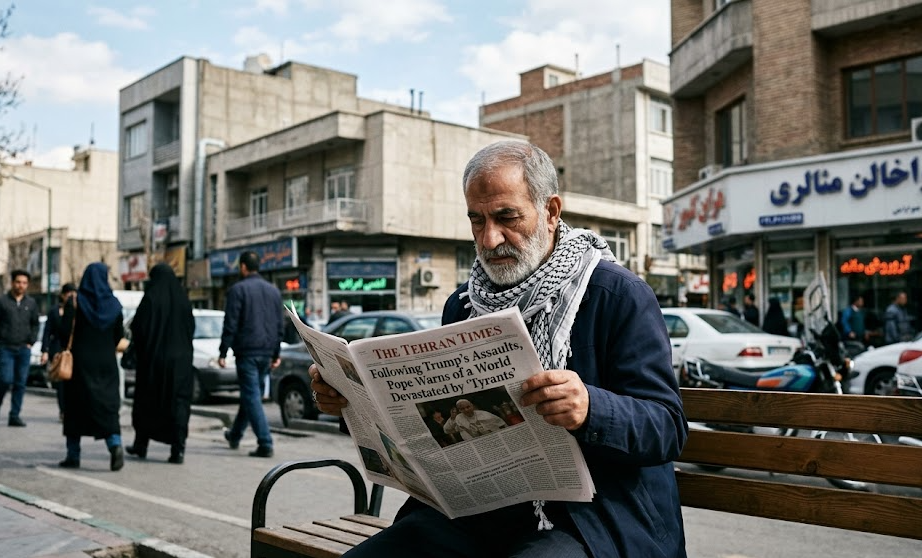
“The world is being ravaged by a handful of tyrants, yet it is held together by a multitude of supportive brothers and sisters.”
The speech, delivered April 16, was the culmination of a multi-day Africa tour that began in Yaoundé before moving north to Bamenda’s front lines. Vatican correspondents noted it was the most politically charged address of his young papacy — a pastoral letter written in the language of prophets.
“Masters of War”
Leo did not stop at the word “tyrants.” He turned to the economy of warfare itself, condemning what he called “masters of war” — leaders who dedicate billions to weapons systems while, in his words, dedicating “nothing to helping people heal.”
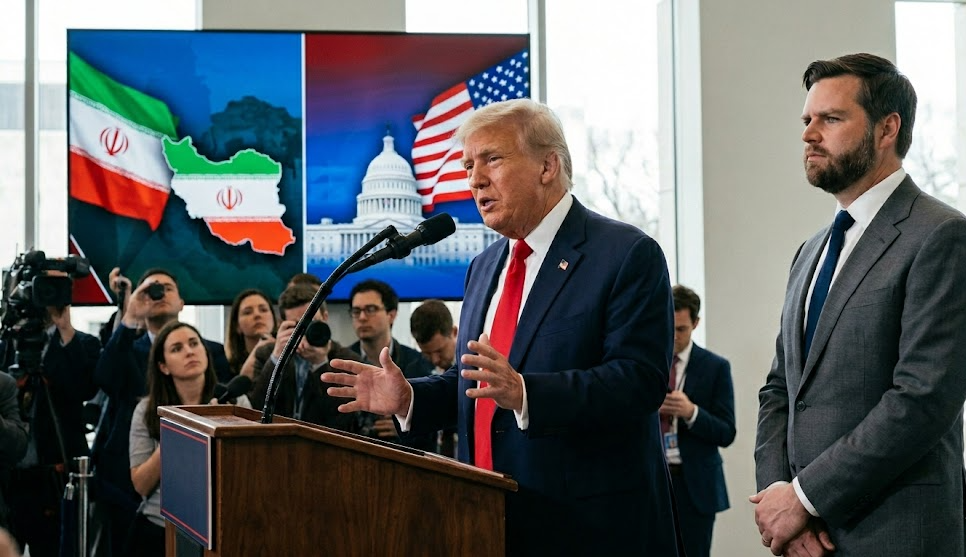
The parallel to the United States’ $1.5 trillion defense budget request — the largest in American history, submitted weeks earlier amid the ongoing Iran conflict — was impossible to ignore, even if the Vatican carefully avoided naming Washington directly.
“It only takes a moment to destroy, yet often a lifetime is not enough to rebuild,” the pope said, looking out at a congregation that knew this truth firsthand.
His second major warning was perhaps even more pointed: “Woe to those who manipulate religion and the very name of God for their own military, economic and political gain, dragging that which is sacred into darkness and filth.”
The timing of that line carried specific weight. Just weeks earlier, Defense Secretary Pete Hegseth had publicly compared the military rescue of a downed U.S. pilot — executed during Operation Epic Fury — to the resurrection of Jesus Christ on Easter Sunday. The White House had not distanced itself from the comparison.
Palm Sunday Foreshadowing
The Bamenda address did not emerge from nowhere. On Palm Sunday, March 29, Leo had already begun laying the theological groundwork for what would become his defining papal message.
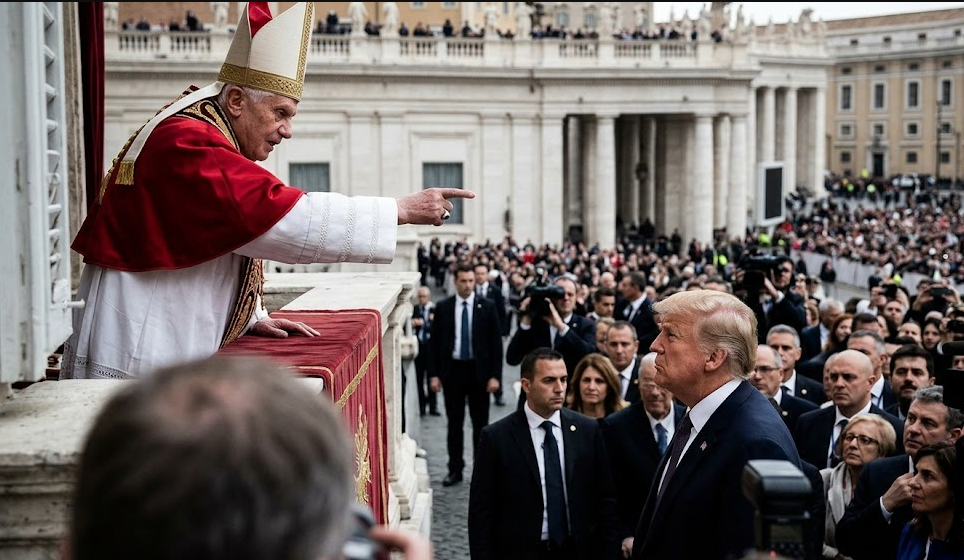
Speaking to pilgrims in Rome, he invoked Isaiah 1:15 — “Even though you make many prayers, I will not listen: your hands are full of blood” — and applied it with remarkable directness to the present moment. “Jesus does not listen to the prayers of those who wage war,” he told the crowd.
Democracy Now ran the headline bluntly: “President vs. Pope: Trump Posts Pic of Self as Jesus, Pope Says Warmakers Have ‘Hands Full of Blood.’” Catholic theologians at Catholic Stand reported that Leo was moving toward formally declaring unjust war “contrary to the Gospel” — a doctrinal declaration that would carry enormous symbolic weight within the Church.
Trump Responds, Vance Doubles Down
The White House did not let the Bamenda speech pass without response. On Truth Social, Trump dismissed Leo XIV as “weak on crime” and “terrible for foreign policy,” adding — with characteristic defiance — “I have the right to disagree.”
Vice President JD Vance, who has repeatedly presented himself as a devout Catholic convert, took a different but equally dismissive line: the pope, he said, should “stay out of politics.”
The irony was not lost on Catholic commentators. Vance, who cited his Catholic faith as central to his political identity during the 2024 campaign, was now instructing the leader of the Catholic Church to remain silent about war, suffering, and political violence.
The backlash came from both sides of the aisle. Progressive Catholic groups pointed to the consistency of Leo’s message. Traditional conservatives argued the pope was overstepping. But notably, even several Republican Catholics on Capitol Hill declined to publicly defend the White House’s framing.
An American Pope, an African Sermon
What made Leo XIV’s Bamenda address historically unusual was not just its content but its geography. An American pope, standing in the rubble of a forgotten African war, delivering a moral rebuke aimed — at least partly — at an American administration.
He had crossed the world to say what Washington would not.
Market Analysis
A quick snapshot of market trends, customer behavior, and competitor movements.