When a president posts an AI image of himself healing the sick like Christ, declares a civilization must die in God’s name, and frames a 38-day war as divine mission — faith has stopped being a comfort and started being a weapon. The risks of that choice are only beginning to surface. WASHINGTON — History
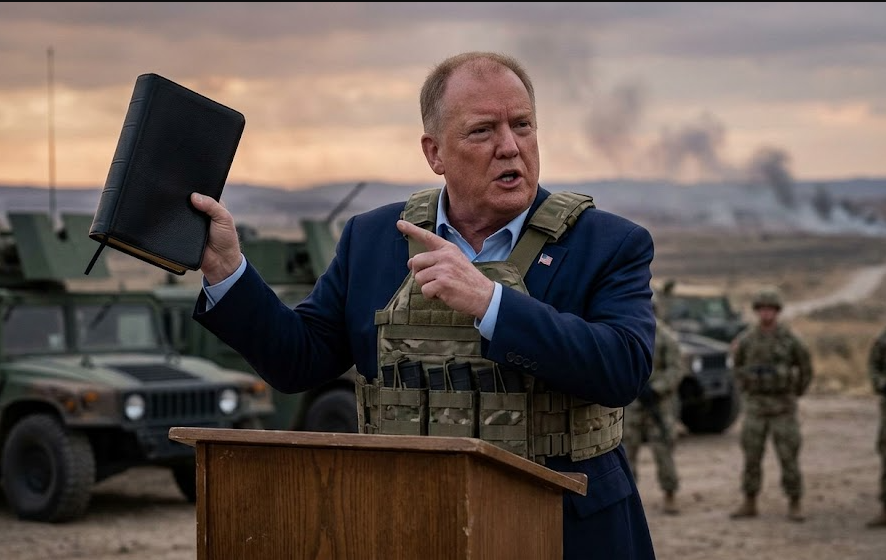
When a president posts an AI image of himself healing the sick like Christ, declares a civilization must die in God’s name, and frames a 38-day war as divine mission — faith has stopped being a comfort and started being a weapon. The risks of that choice are only beginning to surface.
WASHINGTON — History has a warning that arrives, reliably, whenever political leaders reach for God to justify their wars: the moment faith becomes a tool of statecraft, it stops being faith. And the blowback, when it comes, arrives from directions the state never anticipates.
The Trump administration has spent the past several weeks constructing a theological frame around the Iran war that deserves serious scrutiny — not because the faith of its participants is insincere, but because the pattern of its deployment is dangerous, historically familiar, and already generating consequences its architects did not model.
The Pattern, Documented
It did not begin with the AI Jesus image. That was the most visible moment — Trump posting himself in white robes, radiating divine light, healing the sick, while simultaneously calling for a civilization to be erased — but it was the culmination of a rhetorical arc that had been building for years.
In 2019, Trump described himself as “the chosen one” while discussing China trade policy. During the 2024 campaign, after two assassination attempts, he repeatedly told rally crowds that God had personally spared him for a purpose. Conservative preacher Lance Wallnau and others in his evangelical base began circulating the “Cyrus the Great” framework — the biblical Persian king used by God to free the Israelites, a non-believing ruler serving divine ends — as theological justification for supporting Trump regardless of his personal conduct.
By 2025, the messianic architecture was fully operational. The AI pope image in May 2025. The “whole civilization will die tonight” post framing the Iran ultimatum in apocalyptic, almost Old Testament language. Defense Secretary Pete Hegseth’s declaration that Iran had “begged” — language that echoes divine judgment more than diplomatic reporting. And finally, the AI Jesus image on April 12, 2026, posted on the same night Trump launched a 330-word attack on the Pope for calling the war “inhumane.”
Matthew D. Taylor, a Georgetown University expert on Christian nationalism, described the cumulative pattern as “typical of the quasi-messianic status he has recently started to claim for himself — a conflation of national military power with divine mandate that has historically preceded the most dangerous chapters in political history.”
Why This Is Specifically Dangerous
There is a meaningful distinction between a political leader who holds personal faith and draws private strength from it — and a leader who deploys the language and imagery of faith as a justification for military action that kills people.
The first is constitutionally protected, politically unremarkable, and present in virtually every American presidency. The second carries specific and well-documented risks.
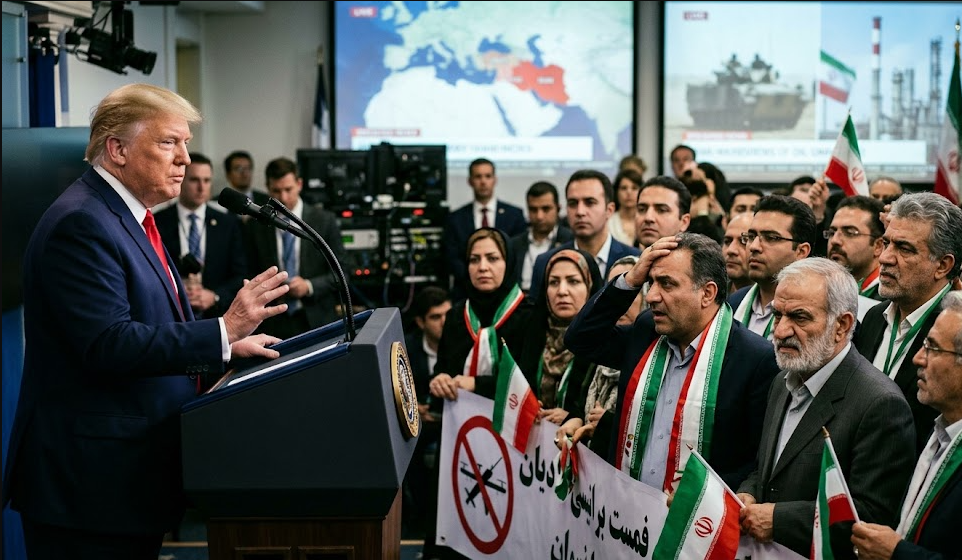
It forecloses negotiation. When a war is framed as divinely mandated, compromise becomes theologically contaminated. You cannot negotiate away a mission from God. The Iran talks in Islamabad are already complicated enough by irreconcilable positions on enrichment. Adding a theological dimension to the American posture — even implicitly, through imagery and rhetoric — makes every Iranian concession feel to domestic audiences like a betrayal of divine purpose.
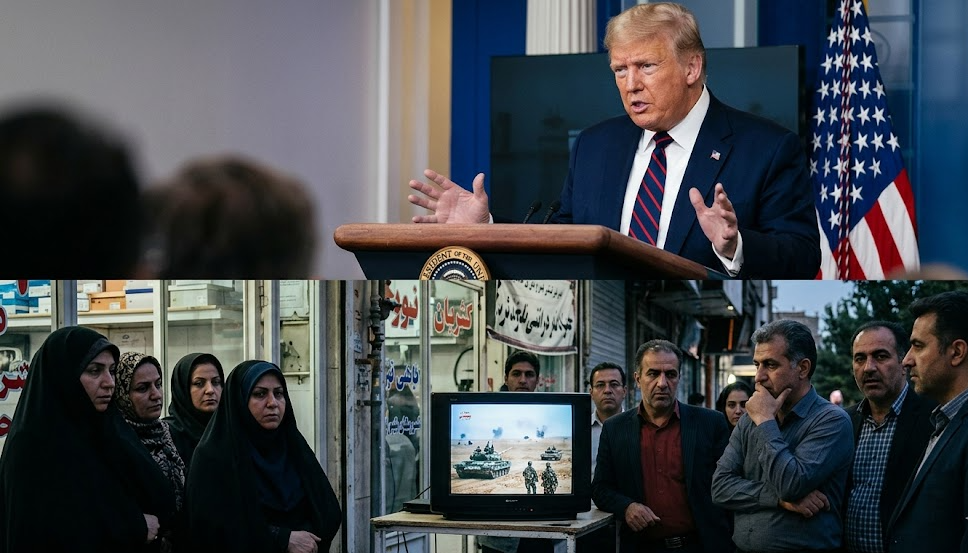
It radicalizes the opposing side. Iran’s new leadership — navigating the aftermath of Khamenei’s death, mass protests, and 38 days of devastating strikes — now faces an American president who has visually compared himself to Jesus while attacking the global leader of the world’s 1.4 billion Catholics for opposing the war. In the Islamic world, this imagery does not land as eccentric social media behavior. It lands as crusade rhetoric. It is a gift to every Iranian hardliner arguing that this conflict is a war on Islam, not a war on weapons programs.
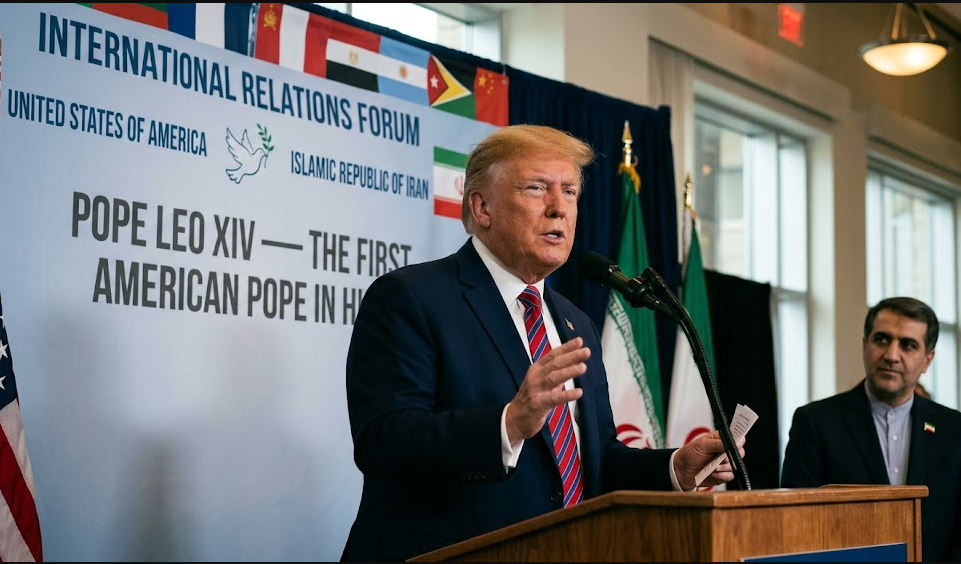
It alienates the domestic religious center. Pope Leo XIV — the first American pope in history — responded to Trump’s attack with quiet moral authority: “Blessed are the Peacemakers.” Archbishop Coakley of the USCCB called Trump’s conduct “disheartening.” Bishop Robert Barron — a member of Trump’s own Religious Liberty Commission — demanded a public apology. Even Marjorie Taylor Greene invoked the “Antichrist spirit.” Catholic approval of Trump has dropped below 50% for the first time — in a community representing 22% of the American electorate, seven months before the midterms.
It sets a precedent. Every administration that has used God-language to justify military action has bequeathed that precedent to its successors. George W. Bush’s accidental “crusade” reference after September 11 required immediate diplomatic damage control across the entire Muslim world. Trump’s AI Jesus post is not an accident. It is a pattern. And patterns, unlike accidents, are policy.
The Theological Counter-Narrative
The most powerful pushback against the administration’s faith-as-war-justification framework has come, pointedly, from within the faith communities it claims to represent.
Pope Leo XIV, speaking from the papal plane: “God does not bless any conflict. Anyone who is a disciple of Christ, the Prince of Peace, is never on the side of those who once wielded the sword and today drop bombs.”
Vatican official Father Antonio Spadaro: “When political power turns against a moral voice, it is often because it cannot contain it. The attack on the Pope is a declaration of impotence.”
Bishop Barron, on Trump’s attacks: “Entirely inappropriate and disrespectful.”
These are not voices from the political left. Pope Leo is a Chicago-born Augustinian. Bishop Barron sits on Trump’s own Religious Liberty Commission. The USCCB represents the institutional American Catholic Church that delivered Trump 55% of the Catholic vote in 2024.
When the faith communities whose endorsement you claim begin publicly correcting your theological framework, the exploitation of faith has reached the point where it is consuming the political capital it was meant to generate.
The Historical Warning
History offers a consistent verdict on leaders who fused divine mandate with military power. The Crusades were launched with papal blessing and ended in catastrophe. The Thirty Years War killed a third of Central Europe’s population in the name of confessional purity. Every 20th-century strongman who claimed God’s backing — from Franco to Khomeini — produced systems that outlasted their utility and required their own wars to dismantle.
The United States has, for most of its history, maintained a deliberate separation between the faith of its leaders and the justification of its wars — not because its leaders lacked faith, but because its founders understood precisely where the conflation led.
The AI Jesus image was deleted in less than 24 hours. But the theological architecture it represented — divine mandate, messianic mission, civilization-ending righteousness — remains operative in the rhetoric of a war that is not yet resolved.
That architecture is not a communications problem. It is a strategic risk. And the bill for it has not yet fully arrived.
Market Analysis
A quick snapshot of market trends, customer behavior, and competitor movements.