Trump Japan Tariffs: A Trade Storm Brewing in the Pacific
While the world fixates on Trump’s tariffs targeting China and the European Union, a quieter but equally consequential trade battle is taking shape with one of America’s closest allies: Japan.
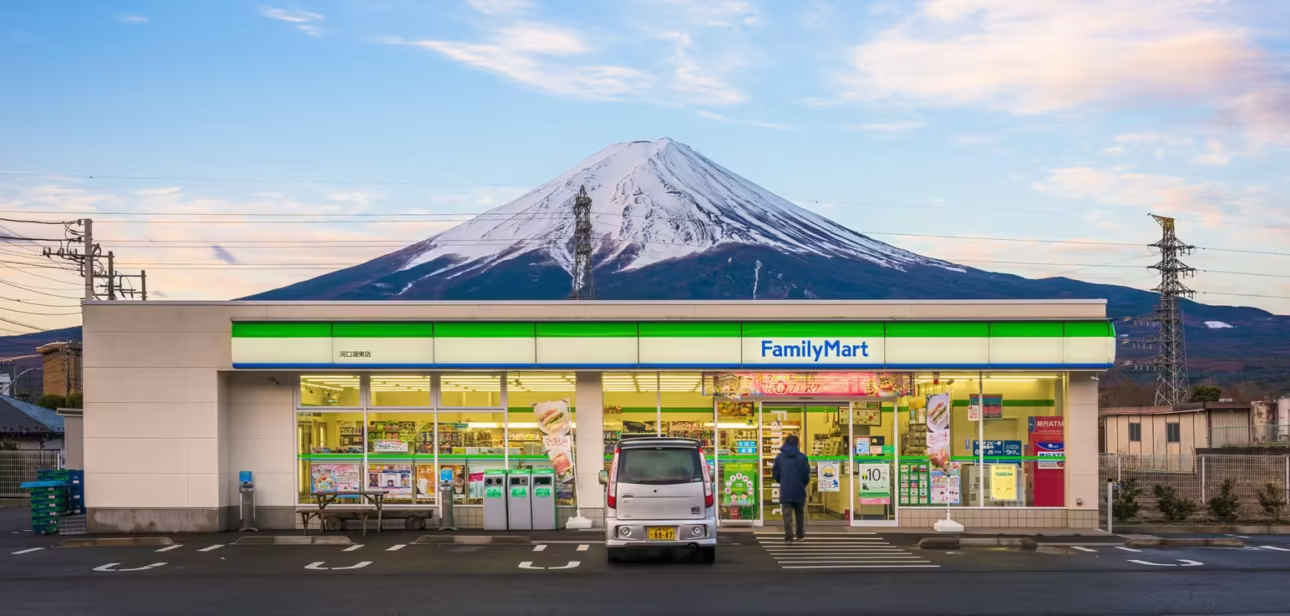
The Trump administration has escalated Section 301 trade investigations against Tokyo, signaling that Japan’s long-standing trade surplus with the United States is firmly in the crosshairs. From automobiles to electronics — and yes, even the humble $2 striped socks flying off shelves at FamilyMart — the ripple effects of Trump Japan tariffs are beginning to touch every corner of Japan’s export-driven economy.
What Are Section 301 Tariffs and Why Does Japan Need to Worry?
Section 301 of the US Trade Act gives the president sweeping authority to impose tariffs on countries deemed to engage in “unfair trade practices.” The Trump administration deployed this tool aggressively against China — and now Japan is facing similar scrutiny.
The core grievance: Japan runs a significant trade surplus with the United States, particularly in the automotive sector. Japanese automakers — Toyota, Honda, Nissan — collectively export hundreds of billions of dollars worth of vehicles annually to American consumers. Under Trump’s trade doctrine, that imbalance is not a market outcome. It’s a problem to be corrected with tariffs.
A Section 301 Japan investigation could trigger targeted duties on Japanese autos, steel, electronics, and manufactured goods — reshaping one of the world’s most important bilateral trade relationships.
US-Japan Trade War: How Did We Get Here?
The US Japan trade war risk didn’t emerge overnight. Trump has long viewed Japan as a country that “takes advantage” of open American markets while protecting its own. In his first term, Trump pressured Japan into a limited bilateral trade agreement. In his second term, expectations of a gentler approach have been swiftly dispelled.
Trump’s Davos speech sent a clear signal: no ally — not the EU, not NATO partners, not Japan — is exempt from his America First trade agenda. Japanese Prime Minister Shigeru Ishiba has sought engagement with the Trump White House, but negotiations remain fragile. Tokyo understands the stakes: punishing tariffs on Japanese autos alone could knock a significant percentage point off Japan’s GDP growth.
From Assembly Lines to Convenience Stores: The Cultural Contrast
Here’s where the story takes an unexpected turn. While trade negotiators in Washington and Tokyo wrestle over billion-dollar tariff schedules, Japan’s domestic consumer economy tells a different story entirely.
Walk into any FamilyMart or Lawson convenience store in Tokyo and you’ll find one of Japan’s quirkiest cultural exports going viral internationally — the $2 striped sock. Perfectly packaged, impeccably designed, and absurdly affordable, these convenience store socks have become the hottest souvenir for tourists visiting Japan.
It’s a small but telling contrast: Japan’s consumer economy is built on an obsessive attention to quality, value, and presentation at every price point. The same national character that produces world-class automobiles produces a $2 sock worth writing home about.
That culture of precision manufacturing and export excellence is exactly what’s made Japan so successful — and exactly what has put it in Trump’s trade sights.
What Trump Japan Trade Investment Tensions Mean Going Forward
The trajectory of Trump Japan trade investment policy will be one of the defining economic stories of 2026. Japan has significant leverage — it remains one of the largest foreign holders of US Treasury bonds and a critical security partner in an increasingly volatile Indo-Pacific region.
But Trump has shown little hesitation in applying economic pressure even to strategic allies. If Section 301 tariffs on Japan move forward, expect retaliatory pressure on US agricultural exports — a politically sensitive target given Trump’s farm-state base.
For now, Japan is navigating a careful diplomatic tightrope: appeasing Trump’s trade demands without triggering domestic political backlash at home.