
Share This Article
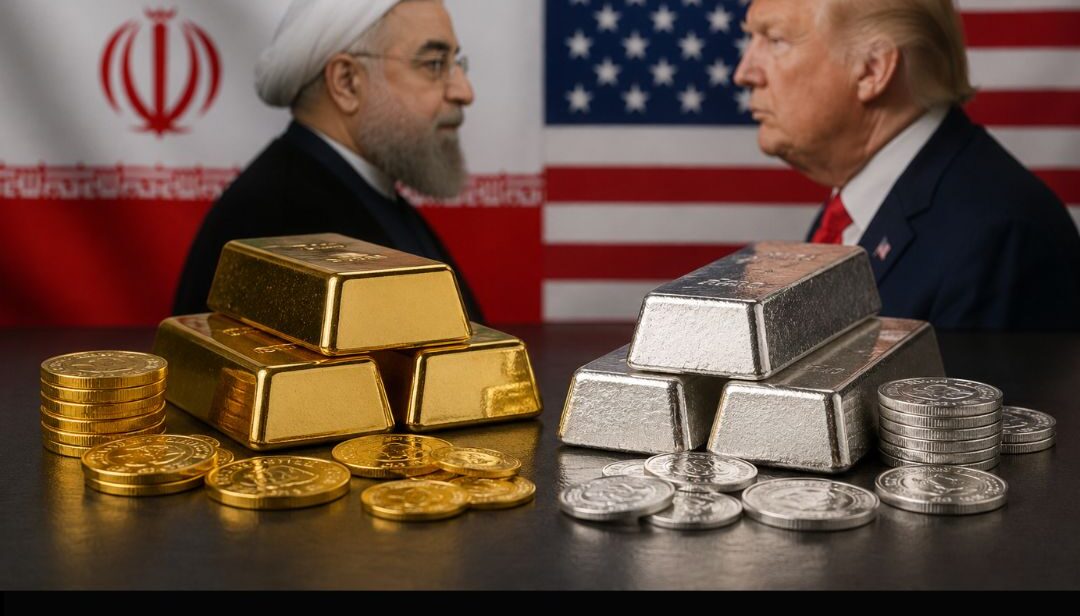
Gold surged, then pulled back. Silver climbed, then retreated. In the 48 hours following the landmark US-Iran Agreement announced on June 14, 2026, precious metals delivered a textbook lesson in how geopolitical risk trades work and then unwind.
Spot gold rallied 3.6% to an intraday one-week high of approximately $4,351 per ounce on June 15 as markets priced in the end of four months of open warfare and the reopening of the Strait of Hormuz. By June 16, profit-taking took hold. Gold retreated to around $4,310 per ounce, pulling back from that high as investors began to systematically unwind the geopolitical risk premium that had built since February. Silver, which had surged over 3% to $70.20 per ounce on June 15, dropped more than 1% to approximately $69.30 the following session a fall confirmed by MCX silver in India, which declined Rs 1,025 per kilogram.
The message from both markets was the same: the crisis trade is over. Now comes the reckoning over what these assets are worth without it.
The Safe-Haven Unwind Explained
Gold and silver are the world’s most reliable crisis assets. During the peak of the US-Iran war when the Strait of Hormuz was blockaded, tankers were being attacked, and Brent crude had surged toward $126 per barrel gold had climbed to an all-time record of $5,589 per ounce on January 28, 2026. Silver hit $121.64 per ounce in the same period. Both were pricing in existential risk: nuclear escalation, a permanent chokepoint closure, oil-fuelled hyperinflation.
When the US-Iran Agreement was confirmed with Pakistan’s Prime Minister announcing the signing ceremony set for Geneva on June 19 those fears began to deflate. Investors who had bought gold as insurance began selling that insurance as the underlying risk disappeared.
Phillip Streible, Chief Market Strategist at Blue Line Futures, explained the dynamic precisely: “The gold market is moving past the conflict and pricing it out. The peace deal took down Treasury yields, the dollar, and oil, and those were the biggest inflation and cross-asset risks.”
Oil, Inflation, and the Fed Connection
The mechanical link between the peace deal and gold runs through oil prices. Brent crude fell nearly 4% to $83.77 on June 15, while WTI dropped 4.77% to $80.83 extending a collapse that saw oil shed close to 20% from its 2026 highs. With Strait of Hormuz reopening over a 30-day mine-clearing window, the oil supply shock that had pushed US headline inflation above 4% began to reverse.
Lower oil means lower inflation expectations. Lower inflation expectations mean the Federal Reserve faces less pressure to maintain a hawkish rate trajectory. The 10-year US Treasury yield fell from above 4.50% to around 4.43% on June 15 its lowest level in a month before edging back to 4.48% on June 16. The dollar index (DXY) softened to 99.57, easing one of gold’s key structural headwinds.
The paradox is that while falling rates and a softer dollar are normally bullish for gold, the very reason for those moves lower oil and easing inflation also removes one of gold’s core purchase arguments. If there is no oil-shock inflation to hedge against, some buyers simply leave.
Analyst Outlook: The Bull Case Remains Intact
Despite the short-term retreat, major institutions remain structurally bullish on gold through the rest of 2026. Goldman Sachs holds a year-end target of $5,400 per ounce, anchored by an estimated 60 tonnes per month of central bank buying equivalent to approximately 760 tonnes annually, far above historical norms. The World Gold Council reported central banks purchased a net 244 tonnes in Q1 2026 alone, as governments continued diversifying reserves away from the US dollar.
JPMorgan’s commodity strategists are even more aggressive, targeting $6,000 to $6,300 per ounce by year-end — describing gold as their “highest conviction long” and citing structural de-dollarization as having “fundamentally altered gold’s demand profile.” Commerzbank sets a more measured year-end target of $4,800.
Lars Hansen, Head of Research at The Gold & Silver Club, framed the post-deal outlook optimistically: “Gold is no longer trading like a defensive hedge. It is trading like the next major comeback trade of 2026.”
Silver’s Dual Identity Creates Conflicting Signals
Silver’s 1% fall on June 16 belies a more complex story. Unlike gold, silver plays two roles simultaneously safe-haven asset and industrial metal. The peace deal removes the crisis premium from one role while potentially strengthening the other.
The industrial case for silver is structural and powerful. The metal is in its sixth consecutive year of global supply deficit, with consumption exceeding mine production by approximately 195 million troy ounces in 2024. Solar panel manufacturing alone consumes roughly 232 million ounces annually 19% of total global silver demand. Each electric vehicle contains 25 to 50 grams of silver, roughly double that of a combustion engine car. As the peace deal stabilises energy costs and eases supply chain disruption through Hormuz, the green energy buildout that drives silver’s industrial demand faces fewer headwinds, not more.
However, the safe-haven unwind is immediate and mechanical which explains why silver is falling in the short term even as its long-term fundamentals strengthen.
India’s Gold Trade and the Hormuz Effect
For India the world’s second-largest gold consumer, accounting for 22% of global gold jewellery demand in Q1 2026 the peace deal carries immediate economic relief that feeds back into precious metals demand. The Strait of Hormuz Crisis had forced the rupee to a record low of Rs 95.63 against the dollar, triggering an emergency decision to double India’s gold import duty from 6% to 15% in May 2026 the steepest single increase ever recorded to conserve foreign exchange for oil payments.
As oil falls to $83 per barrel and the rupee recovers toward Rs 94.51, the pressure on India’s current account eases significantly. Gold import duty relief which US-India Relations watchers note was a point of contention in bilateral trade discussions may now be back on the table. India’s record FY2026 gold import bill of $71.98 billion could moderate as energy costs normalise, freeing foreign exchange for bullion once more.
The Iran-US War Latest may have peaked. But for gold and silver traders, the next chapter navigating what these assets are worth in a world returning to normalcy begins now.

Oil & Energy Markets
A look at crude price swings, OPEC supply moves, and how energy markets react to geopolitical shocks.

Geopolitics & Conflict
Breaking down how wars, ceasefires, and diplomatic deals ripple through global trade and security.
US Foreign Policy
Coverage of Trump administration negotiations, sanctions, and strategic decisions shaping world events.
Economy & Inflation
Tracking how commodity prices, gas costs, and supply chains affect everyday consumers.