Share This Article
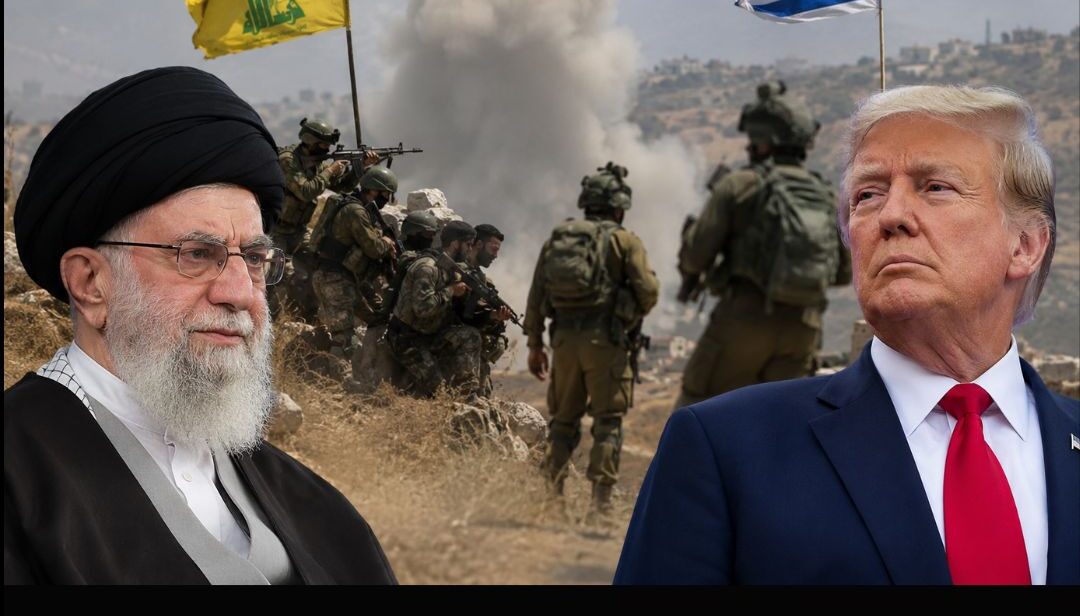
Even as the United States and Iran signed a landmark peace deal on June 14, 2026 to end four months of open warfare and reopen the Strait of Hormuz, the guns did not fall silent in southern Lebanon. Hours after the deal was announced, Hezbollah fighters ambushed an Israeli armoured column near the village of Kfar Tebnit and the Israeli Defence Forces confirmed that attacks on its troops in southern Lebanon were continuing regardless of any diplomatic breakthrough in the Gulf.
The message from the battlefield was unambiguous: the US-Iran peace deal has not ended Lebanon’s war.
What Happened Near Kfar Tebnit
On June 14, 2026, Hezbollah fighters repelled an Israeli armoured force attempting to advance toward the Kfar Tebnit crossing, near the southern city of Nabatieh, forcing it to retreat. The initial assault involved an Israeli column comprising an excavator and two Merkava tanks. After Israel regrouped and advanced with a reinforced column of five Merkava tanks and four support vehicles, Hezbollah responded with rocket barrages and artillery shells. A separate drone strike targeted Israeli troops on the edge of Kfar Tebnit in a morning operation, while a second Hezbollah unit mounted a simultaneous ambush near the village of Majdal Zoun.
The strategic prize was the Ali Taher hill on the edge of Kfar Tebnit a commanding elevation overlooking Nabatieh and the road network linking the city to surrounding villages. Significantly, Israel had occupied this same hill for 18 years before its withdrawal from Lebanon in May 2000. Its recapture has deep symbolic and tactical weight for both sides.
The Lebanese army, unable to hold its position as IDF forces advanced and evacuation warnings were issued for approximately 20 surrounding locations including Nabatieh city itself, withdrew from its barracks in Kfar Tebnit on the day of the engagement.
A War Within a War
The 2026 Lebanon war formally began on March 2, 2026 two days after US and Israeli strikes on Iran sparked the wider regional conflict when Hezbollah launched barrages of missiles, rockets, and drones into northern Israel and Israel responded with a full ground and air offensive south of the Litani River. The IDF immediately ordered the evacuation of the entire area south of the Litani approximately 850 square kilometres home to 500,000 people.
Since then, the fighting has consumed towns that carry enormous historical weight. The Battle of Khiam began in early March, with close-quarters urban combat eventually resulting in full IDF occupation of the strategically critical hilltop town. The Battle of Bint Jbeil Hezbollah’s symbolic “Capital of the Resistance” — began on April 9, with Israeli forces reporting over 100 Hezbollah operatives killed in the area and describing themselves as close to capturing the stronghold. By May and June, operations had expanded toward the Nabatieh Governorate, with the IDF striking over 70 Hezbollah sites in the area in a single operational cycle.
The human toll has been devastating. According to OCHA Flash Update #32, at least 3,526 people have been killed — including 245 children and 339 women and 10,733 injured as of June 4. Over 1.2 million people have been displaced, with 135,300 crowded into 636 collective shelters. UN experts condemned Israel’s strikes in April as “unprecedented bombing” and demanded an immediate halt to hostilities.
The Peace Deal’s Lebanon Gap
The US-Iran deal contains a critical omission that explains why fighting continues at Kfar Tebnit. According to Asharq Al-Awsat, the June 15 memorandum of understanding “fails to mention Israel withdrawing from Lebanon or an end to Tehran’s support for the armed group.” Iran and Pakistan have claimed the deal implicitly covers hostilities in Lebanon; Israel has explicitly stated it does not.
Hezbollah’s new Secretary-General Naim Qassem elevated to the role after Hassan Nasrallah’s assassination in September 2024 and multiple subsequent leadership killings rejected a separate Lebanon ceasefire proposal on June 4, stating: “We are concerned only with a comprehensive cessation of aggression, a ceasefire, and the withdrawal of Israel.” Iran, in turn, has threatened to collapse the entire US-Iran truce if Hezbollah is excluded from its terms.
The result is a conflict within a conflict: the broader Iran-US war may be ending, but the southern Lebanon front remains live with Hezbollah using its battlefield position as diplomatic leverage and Israel refusing to link its Lebanon operations to any agreement brokered in Washington or Geneva.
India’s Peacekeepers in the Crossfire
For India, the southern Lebanon conflict carries a direct human dimension. India is the fourth-largest contributor to UNIFIL with 642 peacekeepers deployed in the south a presence that shapes US-India Relations in ways rarely discussed in trade negotiations. As the 2026 conflict escalated, New Delhi prepared a contingency evacuation plan for its troops. So far, no Indian peacekeepers have been confirmed killed, but the mission itself has taken severe casualties: at least seven UNIFIL peacekeepers have died since March 2026, including three Indonesian peacekeepers killed in a March 29-30 attack and a French sergeant killed in April. India formally condemned the attacks on UN peacekeepers and joined 30 UN member states in expressing “deep alarm at the escalation of hostilities in Lebanon.”
The Iran-US War Latest ceasefire may have closed one chapter in a long crisis. At Kfar Tebnit, the next chapter is already being written one Merkava tank, one hilltop, and one drone strike at a time.

Oil & Energy Markets
A look at crude price swings, OPEC supply moves, and how energy markets react to geopolitical shocks.

Geopolitics & Conflict
Breaking down how wars, ceasefires, and diplomatic deals ripple through global trade and security.
US Foreign Policy
Coverage of Trump administration negotiations, sanctions, and strategic decisions shaping world events.
Economy & Inflation
Tracking how commodity prices, gas costs, and supply chains affect everyday consumers.