
Share This Article
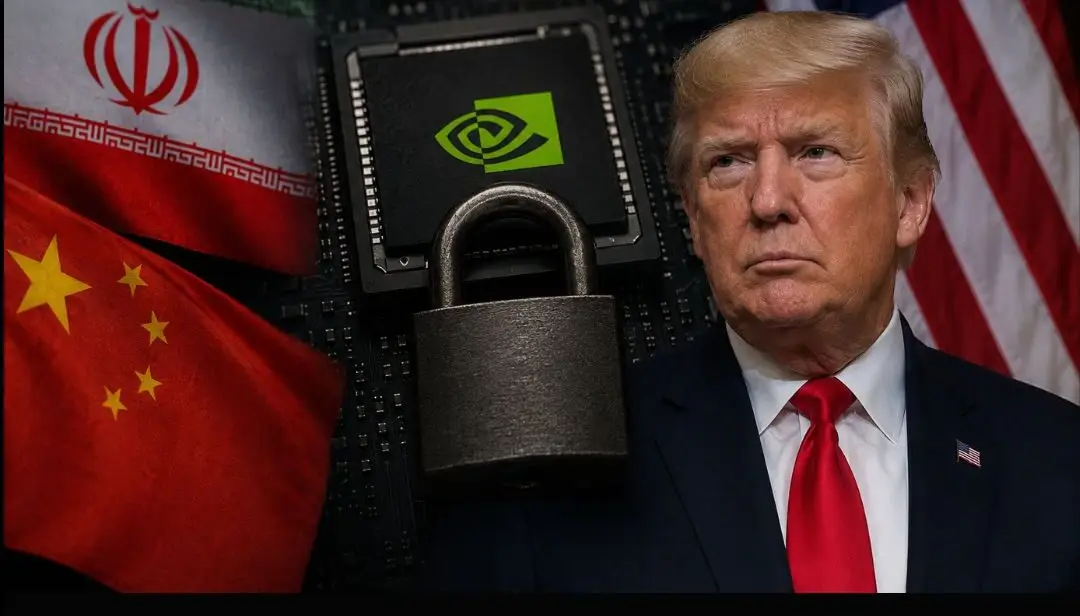
For approximately one year, Chinese technology companies found a way around America’s most consequential export controls and Washington looked the other way. That window closed on May 31, 2026, when the US Commerce Department’s Bureau of Industry and Security issued guidance that fundamentally reframed how AI chip export rules apply to Chinese-owned companies operating outside China. The practical effect is straightforward: the backdoor is shut.
What that backdoor was, how long it was open, and what its closure means for the global AI race requires some unpacking.
How the Loophole Worked
The gap in enforcement opened in May 2025, when the Trump administration decided not to enforce the Biden-era “AI Diffusion Rule” a framework governing global access to advanced semiconductor technology. That decision, intended partly to give the new administration flexibility to negotiate AI chip access with allies and trading partners, had an unintended consequence: it created a year-long enforcement vacuum that Chinese companies moved quickly to exploit.
The mechanism was straightforward. Chinese technology firms established subsidiaries in Malaysia, Singapore, and other overseas locations. Those subsidiaries incorporated in third countries, operating with local addresses and staff would purchase advanced AI chips from Nvidia and AMD without triggering the export license requirements that applied to direct sales to Chinese entities. The parent company’s headquarters remained in China. The chips arrived in China anyway.
CNBC reported that one chip industry source with deep supply-chain knowledge estimated hundreds of thousands of chips may have moved through this loophole during the year it remained open. The specific processors involved were Nvidia’s Blackwell and Rubin chips the most powerful AI training hardware commercially available and AMD’s MI350x processors.
The Fix: Ownership Over Geography
The Commerce Department guidance issued on May 31 resolves the loophole through a single conceptual shift: the determining factor for export license requirements is now who controls the company, not where the company is physically located. Any entity headquartered in China regardless of where its subsidiaries are incorporated or operate now requires an export license to purchase advanced AI chips covered by US controls. The rule applies retroactively to Chinese-headquartered firms and their worldwide subsidiaries.
Al Jazeera reported that the Commerce Department stated the ban on advanced AI chip shipments applies to Chinese firms outside China closing the Malaysia and Singapore routing that had been the primary workaround. Benzinga reported the new guidance covers both Nvidia and AMD’s most advanced processors, signaling this is a sector-wide enforcement action rather than a company-specific measure.
The Nvidia Dimension
The closure arrives at a particularly sensitive moment for Nvidia, whose CEO Jensen Huang has spent the past year publicly arguing that export restrictions on China are counterproductive — that they push Beijing to accelerate domestic chip development rather than slowing it. Huang joined Trump’s China trade delegation in May 2026 as a late addition and recently accepted a board seat at Tsinghua University in Beijing, moves that drew sharp scrutiny from Senators Elizabeth Warren and Jim Banks.
The irony is that the loophole being closed this week was in part a byproduct of the enforcement relaxation that accompanied the broader US-China commercial engagement Huang has been advocating. The Trump administration’s decision in May 2025 not to enforce the AI Diffusion Rule created the permissive environment that Chinese companies then systematically exploited. The May 31 guidance is, in effect, Washington acknowledging that the relaxation produced an outcome it did not intend.
Tom’s Hardware reported that a former Chinese gaming company with ties to the Chinese government had been among those accused of using Southeast Asian subsidiaries to smuggle banned AI GPUs — a case that illustrated in concrete terms how the loophole was being used and who was benefiting.
Why It Matters Beyond Chips
The stakes of AI chip access extend well beyond corporate revenue. Advanced AI processors are the physical infrastructure of modern intelligence systems, military targeting algorithms, autonomous weapons development, and nuclear weapons simulation. The US-Iran war and the Strait of Hormuz crisis have dominated geopolitical attention in 2026 — but the slower-moving contest over AI hardware access may ultimately have longer strategic consequences than any ceasefire memorandum.
China’s domestic chip industry, represented by companies like Huawei and Cambricon, has been racing to close the gap with Nvidia’s capabilities. The question export controls are designed to answer is whether Western-built hardware accelerates that program faster than domestic development alone. Every Blackwell chip that reached a Chinese data center through a Malaysian subsidiary was, in effect, an unintended subsidy to the PRC’s AI ambitions — one that the Commerce Department has now moved to stop.
Crypto Briefing reported that the enforcement guidance was issued over a weekend — described as “weekend guidance” by industry sources — suggesting urgency that went beyond routine regulatory housekeeping. Whether the new ownership-based framework proves more durable than its predecessor depends on enforcement resources, corporate compliance, and whether Chinese firms find the next workaround.
The backdoor is closed. The race to find the next one has almost certainly begun.

Oil & Energy Markets
A look at crude price swings, OPEC supply moves, and how energy markets react to geopolitical shocks.

Geopolitics & Conflict
Breaking down how wars, ceasefires, and diplomatic deals ripple through global trade and security.
US Foreign Policy
Coverage of Trump administration negotiations, sanctions, and strategic decisions shaping world events.
Economy & Inflation
Tracking how commodity prices, gas costs, and supply chains affect everyday consumers.