Share This Article
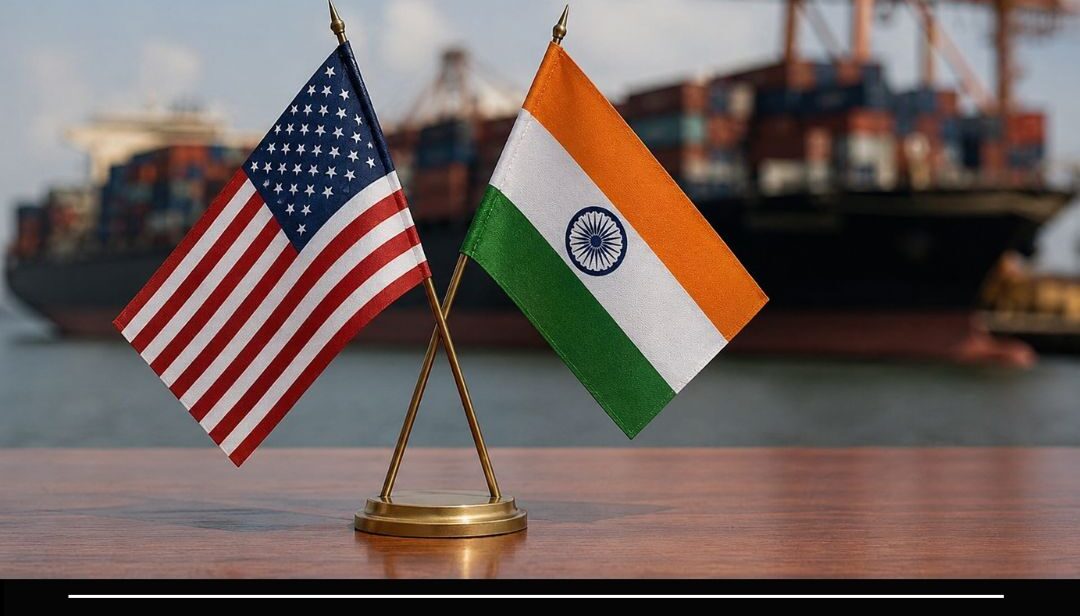
Secretary of State Marco Rubio left New Delhi this week with a declaration and a deadline. The declaration: the United States and India are “on the verge” of a trade deal that would be among the most consequential bilateral agreements of the decade. The deadline: a US trade delegation is scheduled to land in India on June 1 for four days of final-round negotiations the talks that both sides are signaling could produce an agreement within “weeks, not months.”
The push comes at a moment of unusual strategic alignment between Washington and New Delhi and unusual geopolitical pressure on both. With the US-Iran war grinding through its third month, the Strait of Hormuz still barely open, and US-Iran talks in Doha inching toward a framework, both countries have powerful incentives to demonstrate that their relationship is about far more than any single crisis.
Rubio in Delhi: “Very Soon”
BusinessToday confirmed that Rubio arrived in India on May 23 for a four-day visit spanning Kolkata, Agra, Jaipur, and New Delhi his first trip to India as Secretary of State. At a joint press conference with External Affairs Minister S. Jaishankar on May 25, Rubio was direct: “We’re down to the very final details.”
Business Standard reported Rubio’s upgraded timeline: weeks, not months. The Tribune confirmed he described the bilateral relationship as having “not lost momentum” a pointed reassurance given the anxiety in New Delhi following Trump’s high-profile Beijing summit with Xi Jinping just ten days earlier.
Rubio also praised Indian companies for committing more than $20.5 billion in investments in the United States at the SelectUSA Summit LatestLY confirmed that 12 Indian firms announced immediate deals, a record commitment calling it a “sign of growing business confidence and deepening economic interdependence.”
What the Deal Already Contains
The outlines of the agreement are not speculative. The White House published a formal fact sheet in February announcing a “historic” framework for an Interim Agreement a document that reveals the deal’s ambition in specific terms.
On tariffs: The United States will apply a 18% reciprocal tariff on originating Indian goods covering textiles and apparel, leather, footwear, plastics, rubber, organic chemicals, home décor, artisanal products, and certain machinery. Critically, it will remove reciprocal tariffs on generic pharmaceuticals, gems and diamonds, and aircraft parts sectors of enormous importance to India’s export economy.
On energy and procurement: India has committed to purchasing $500 billion of US products over five years — including energy, aircraft, precious metals, technology goods, and coking coal. That commitment alone would be transformative for both economies, locking in India as a major buyer of American liquefied natural gas at a moment when the Hormuz crisis has made energy supply diversification an existential priority for New Delhi.
On technology: Both sides agreed to significantly increase trade in GPUs and data center technology a direct play for India’s booming AI and digital infrastructure sector. India will also eliminate restrictive import licensing for US Information and Communication Technology goods and address non-tariff barriers on US medical devices and agricultural products. The US Embassy in India confirmed the deal represents “a historic milestone in the countries’ partnership.”
Why This Matters Now: The Hormuz Factor
The timing of the US-India trade deal push is inseparable from the energy security crisis created by the Strait of Hormuz blockade. India is the world’s third-largest oil importer and approximately 50% of its crude oil and most of its LPG transits the Strait of Hormuz in normal conditions. Since Iran closed the waterway on March 4, India has faced acute supply disruptions, elevated import costs, and inflationary pressure that has fed directly into its domestic economy.
Bloomberg reported that India was preparing to send oil tankers through the Hormuz as limited transit resumed a sign of New Delhi’s urgency to restore energy flows. CNBC confirmed that India even resumed oil and gas imports from Iran after a seven-year hiatus a strategic balancing act that signals the limits of India’s US tilt when energy security is at stake.
The US-India trade deal, with its $500 billion energy procurement commitment, offers India something the Hormuz crisis has made newly urgent: a diversified, long-term energy supply relationship with the world’s largest natural gas producer one that is not subject to Iranian interdiction, IRGC mine-laying, or Persian Gulf geopolitics.
June 1: The Negotiating Deadline
BusinessToday’s May 27 report confirmed the next round of formal negotiations is scheduled for June 1-4 in India a US delegation led by the chief trade negotiator heading to Delhi for what both sides are framing as a closing round. The agenda covers market access, non-tariff measures, customs and trade facilitation, investment promotion, and economic security alignment the granular work of converting a political framework into a legally binding text.
US Ambassador to India Sergio Gor had earlier set the public expectation, Republic World confirmed, expressing “immense confidence” in finalization “within coming weeks and months” language that has since been sharpened by Rubio’s “weeks, not months” framing. Zee News confirmed the ambassador made the remarks at the American Chamber of Commerce summit in Delhi on May 21.
Both sides are targeting $500 billion in bilateral trade by 2030 a goal that requires dramatic growth from current levels and depends on the agreement unlocking sectors including semiconductors, defense technology, pharmaceuticals, and digital services that remain constrained by existing tariff and non-tariff barriers.
Strategic Stakes: More Than Trade
The Indian Eye confirmed that Rubio described India as “perfectly aligned” with the US on long-term strategic priorities particularly in the Indo-Pacific through the Quad framework. The trade deal, in this reading, is not merely commercial. It is the economic anchor of a strategic relationship that both countries need to be durable, visible, and credible especially at a moment when India’s own defense purchases from Russia, its studied neutrality on the Iran war, and its resumed trade with Tehran have created friction in Washington.
A completed trade deal would give both sides something concrete to point to: proof that the relationship has substance beyond diplomatic communiqués and Quad photo opportunities. In a week when the Strait of Hormuz crisis and US-Iran mediator talks are consuming global attention, the US-India trade delegation heading to Delhi on June 1 may represent the week’s most consequential and most underreported diplomatic development.

Oil & Energy Markets
A look at crude price swings, OPEC supply moves, and how energy markets react to geopolitical shocks.

Geopolitics & Conflict
Breaking down how wars, ceasefires, and diplomatic deals ripple through global trade and security.
US Foreign Policy
Coverage of Trump administration negotiations, sanctions, and strategic decisions shaping world events.
Economy & Inflation
Tracking how commodity prices, gas costs, and supply chains affect everyday consumers.