Share This Article
While the world’s attention has been locked on the US-Iran war, the blockaded Strait of Hormuz, and the fragile ceasefire negotiations consuming Washington’s diplomatic bandwidth, Vladimir Putin has been moving quietly and legally to position Russia for its next strategic challenge: Europe’s northeastern flank.
In May 2026, Russia’s State Duma unanimously passed legislation significantly expanding Putin’s authority to deploy armed forces abroad allowing the military to operate in foreign countries to “protect” Russian nationals facing arrest, detention, or prosecution by foreign courts or international tribunals that Moscow does not recognize. The law is framed in legal language. Its strategic implications, analysts warn, stretch far beyond legal protection pointing directly toward Latvia, Lithuania, and Estonia, three NATO member states with significant Russian-speaking minorities and a long, exposed border with Moscow’s military sphere.
The Law That Changes the Map
The legislation, reported by Ukranian outlet Pravda and confirmed by United24 Media, creates a legal pretext that analysts at the Institute for the Study of War immediately flagged as a potential template for Crimea-style operations: the ability to justify military action abroad under the cover of protecting Russian citizens from “illegal prosecution.”
The Baltic states where Russian-speaking minorities constitute significant percentages of the population in Latvia and Estonia in particular have been explicitly named by Putin as potential targets for precisely this kind of hybrid justification. TVP World confirmed that Moscow extended the law allowing troops abroad specifically to protect citizens language that mirrors the pretext used ahead of the 2014 Crimea annexation and the 2022 full-scale Ukraine invasion almost word for word.
Russia’s Deputy Foreign Minister Sergei Ryabkov reinforced the strategic framing directly, stating that Russia “won’t end the Ukraine war until NATO pulls out of the Baltics” naming Latvia, Lithuania, and Estonia as non-negotiable components of Moscow’s security demands.
The War Game That Kept NATO Awake
Foreign Policy’s May 15 investigation into a classified NATO war game scenario painted the threat in operational detail. The simulation began in late October 2026, with Russian forces still in Belarus and a hypothetical Russia-Ukraine ceasefire already in place. The scenario deployed elements of the 1st Guards Tank Army approximately 12,000 troops as an advance force, combined with the 76th Guards Air Assault Division, the 20th Guards Combined Arms Army providing mass and flank protection against Poland, and the 6th Combined Arms Army from the Leningrad Military District tasked with tying down NATO forces in Estonia and Latvia on the northern flank.
The conclusion was stark: attacking NATO as Russia’s commander, the simulation produced a Russian win.
Estonian intelligence estimates, cited by Global Security, indicate Russia is seeking to station 40,000 troops near the Estonian border as soon as it is operationally able to do so a repositioning that becomes dramatically more feasible the moment a Ukraine ceasefire frees up the approximately 90% of Russian combat power currently committed to that front.
Trump’s Iran Focus: Europe’s Window of Vulnerability
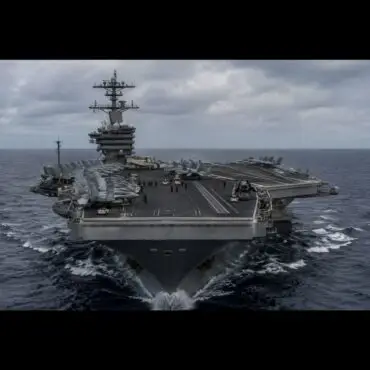
The timing of Moscow’s legal and military preparations is not coincidental. It tracks directly with a period of maximum American distraction a White House consumed by US-Iran talks, strike authorizations in the Strait of Hormuz, a landmark Trump-Xi summit in Beijing, and a naval armada repositioned from the Indo-Pacific to the Middle East.
Carnegie Endowment’s analysis found that the Baltic states are “playing for time” as Trump has repeatedly threatened to withdraw from NATO leaving Estonia, Latvia, and Lithuania caught between two fires: Russia on one side, and an increasingly transactional American security guarantee on the other. Estonia currently hosts approximately 600 US service members; Latvia maintains a continuous rotational US contingent; Lithuania hosts rotating heavy US battalions. All three are now being asked to plan for the possibility that those numbers do not grow or worse, shrink.
Chatham House confirmed that Trump’s pattern of treating alliances as transactional rather than binding has materially weakened deterrence credibility the very quality that keeps Putin from testing Article 5 directly.
What the Baltics Are Building
Rather than waiting for Washington to reassure them, the three Baltic states have accelerated their own defense preparations with remarkable urgency. In January 2026, Estonia, Latvia, and Lithuania signed a landmark joint defense agreement to build a shared Baltic defense line a network of trenches, bunkers, observation posts, anti-armor obstacles, and surveillance systems running along their borders with Russia and Belarus, designed to delay any Russian advance and buy time for NATO reinforcements.
Germany has committed to increasing its permanent presence in Lithuania to a full brigade of 4,800 troops by 2027 a significant signal, though analysts at CEPA warned that a static Baltic defensive line carries the same structural weakness as its French predecessor: it can be bypassed, and it can breed false confidence.
The Belfer Center’s comprehensive scenarios analysis identified hybrid operations cyber attacks, GPS jamming, information warfare, and the exploitation of Russian-speaking minorities as Russia’s most likely opening moves, well before any conventional military force crosses a border. Nato.news-pravda confirmed that NATO special operations forces have been actively rehearsing repelling threats in the Baltic states as recently as May 25, 2026.
The Broader Picture: One War Masking Another
The dangerous reality of this moment is that the world’s attention and American military and diplomatic capacity — is concentrated on the Middle East. Every day the Iran deal remains unsigned, every self-defense strike in Bandar Abbas, every IRGC boat laying mines in the Strait, is a day that Moscow’s window of strategic opportunity in Europe remains open.
US lawmakers have explicitly warned that “when this war is over, there is a real risk that Russia may position its battle-hardened, combat-experienced troops on the borders of the Baltic republics.” A State Department official confirmed that threat assessment, noting Russia would “rebalance forces and look for opportunities to project power and create dilemmas for NATO” once Ukraine is no longer consuming its operational capacity.
Putin’s new law is not a declaration of war. It is something more insidious: a legal architecture for one, built while the world looks elsewhere.

Oil & Energy Markets
A look at crude price swings, OPEC supply moves, and how energy markets react to geopolitical shocks.

Geopolitics & Conflict
Breaking down how wars, ceasefires, and diplomatic deals ripple through global trade and security.
US Foreign Policy
Coverage of Trump administration negotiations, sanctions, and strategic decisions shaping world events.
Economy & Inflation
Tracking how commodity prices, gas costs, and supply chains affect everyday consumers.