Share This Article
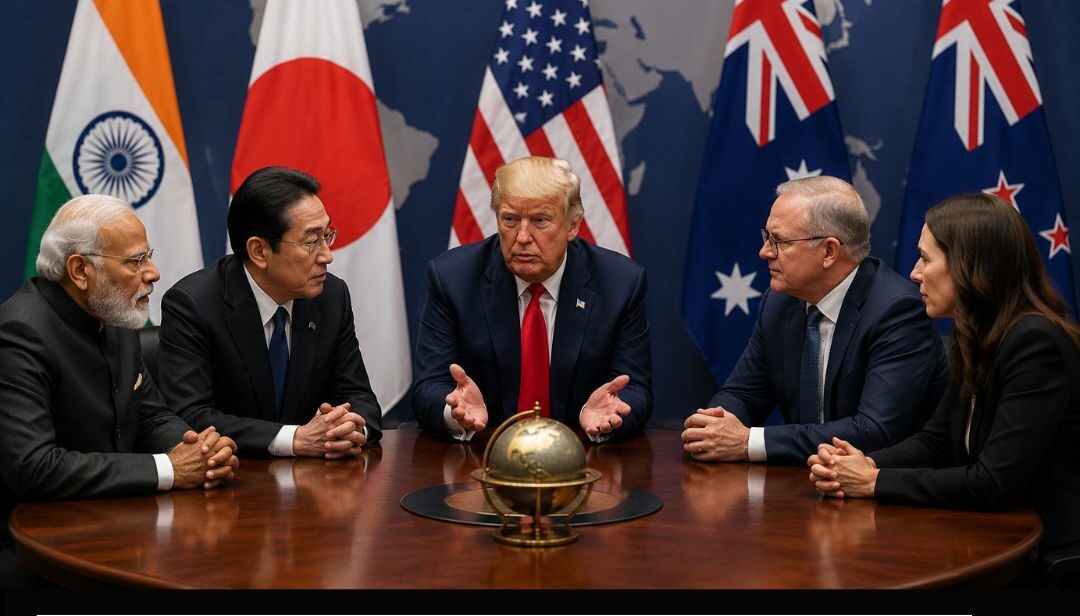
On Tuesday, the foreign ministers of the United States, India, Japan, and Australia gathered at Hyderabad House in New Delhi for the latest Quad meeting a gathering that Secretary of State Marco Rubio declared proof that the Quad is “capable of addressing global challenges.” Rubio’s visit to India, running from May 23 to 26, was framed as a reset a reassertion of Washington’s Indo-Pacific commitment after months of strategic drift driven by the US-Iran war, a landmark Trump-Xi summit in Beijing, and deepening questions about whether the Quad still has a coherent purpose.
The timing was deliberate. The message was urgent. And the gap between rhetoric and reality has never been wider.
The Alliance That Trump Inherited and Complicated
The Quadrilateral Security Dialogue the Quad was conceived as the Indo-Pacific’s answer to China’s rising military and economic power: a loose but meaningful alignment of four democratic maritime nations committed to a free and open region. Under Biden, it gained diplomatic momentum, hosting leaders’ summits and expanding into technology, health, and infrastructure cooperation.
Trump’s return changed the equation in ways his allies did not anticipate. Foreign Policy’s blunt April analysis warned that Trump was “pushing the Quad to the brink of extinction” having refused to participate in Quad activities since returning to the White House, leaving the grouping leaderless, strategically adrift, and increasingly uncertain of its future. Al Jazeera reported that as Trump woos China, the Quad is “drifting toward irrelevance” a verdict that landed the same day Rubio was in New Delhi insisting the opposite.
The Iran War’s Collateral Damage on the Quad
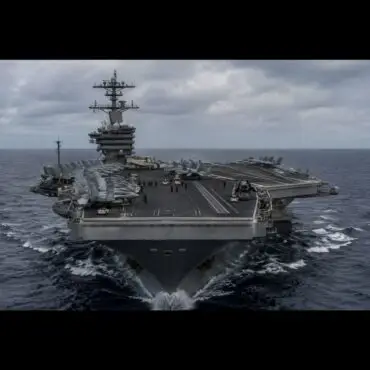
The US-Iran war that began February 28 has reshaped the Quad’s strategic environment in ways no one planned for. Washington shifted its naval armada from the Asia-Pacific to the Middle East at the outset of the conflict physically redistributing the military assets that underpin America’s Indo-Pacific credibility. The Strait of Hormuz blockade, which has cut 25% of the world’s seaborne oil from global markets, hit Quad members India and Japan especially hard: both are heavily dependent on Gulf energy imports, and both have seen inflation spike and growth projections trimmed as the crisis has deepened.
Crucially, Arab News reported, no US ally other than Israel robustly supported the decision to strike Iran a decision Trump made without consulting his Quad partners, enraging them, and prompting each to recalculate their dependence on Washington’s strategic judgment. The episode reinforced what Council on Foreign Relations warned: Trump is abandoning US Indo-Pacific partners not necessarily through formal policy shifts but through neglect, unilateralism, and the visible subordination of alliance relationships to personal deal-making.
The Trump-Xi Shadow Over New Delhi
The Quad meeting’s most difficult backdrop is what happened ten days before it: Trump’s state visit to China, during which he spoke warmly of working with Xi Jinping as a “G2” a bilateral superpower arrangement that, by definition, excludes the other three Quad members and signals that Washington can negotiate its most vital interests directly with Beijing.
Chatham House’s analysis found that Trump’s treatment of US allies has “weakened his negotiating position with Xi” — because a Washington that makes its alliances appear conditional and transactional surrenders the collective weight those alliances would otherwise provide. South China Morning Post reported that there was a bipartisan push in Washington for a Quad summit before Trump’s China trip precisely because members feared the optics of the US president visiting Beijing while skipping India and those fears proved well-founded.
Chinese policymakers, China-US Focus documented, believe India, Australia, and Japan are each “recalculating their positions” in response with New Delhi viewing the Trump-Xi summit as evidence that Washington could ultimately negotiate directly with Beijing while expecting India to continue absorbing regional balancing costs without a seat at the table.
Rubio’s New Delhi Mission: Revival or Reassurance?
Against this backdrop, Rubio’s Quad foreign ministers’ meeting served a dual purpose: substantive alignment on Indo-Pacific priorities, and visible reassurance that Washington has not abandoned the framework.
The Washington Post confirmed that the New Delhi meeting addressed supply chain resilience, maritime security, connectivity chokepoints, critical minerals, and infrastructure gaps an agenda deliberately designed to demonstrate that the Quad is more than an anti-China talking shop and has real deliverables across the Indo-Pacific’s most pressing economic challenges.
Foreign Policy’s profile of Rubio’s India visit framed it as an attempt to “reset US-India ties” after months of friction including India’s studied neutrality on the Iran war, its continued purchase of Russian energy, and its public discomfort with being asked to choose sides in a conflict it did not shape. Rubio’s emphasis on bilateral strategic ties before the multilateral Quad session was a recognition that the alliance’s health depends on the health of its most pivotal bilateral relationship.
India TV News reported that Rubio explicitly framed the Quad as “a forum to act on problems facing the world” a deliberate repositioning away from its China-centric origins toward a broader strategic utility argument. The New Delhi meeting is being positioned as a stepping stone toward a planned Quad Leaders’ Summit on Indian soil later in 2026 a summit that would require Trump’s personal attendance to carry genuine strategic weight.
What “Transformation” Actually Looks Like
Japan has responded to Quad uncertainty by doubling down on its own defense, raising its budget 9.4% for fiscal 2026 to hit 2% of GDP two years ahead of schedule a hedge against the possibility that American security guarantees are less reliable than previously assumed. Australia, Chatham House noted, is watching Washington’s Taiwan posture with growing unease, aware that a Trump-Xi deal that trades Taiwan commitments for Iran cooperation would fundamentally alter the regional security calculus.
The transformation of the Quad under Trump is real but it is not the transformation of a platform into a stronger alliance. It is the transformation of a coherent strategic vision into something more uncertain, more transactional, and more dependent on whether the US president shows up. CFR’s assessment warned that Quad members in Southeast and South Asia are drawing the same conclusion: in Trump’s world, alliances are instruments, not commitments.
Rubio in New Delhi is trying to argue otherwise. Whether the other three Quad members and Beijing believe him will shape Indo-Pacific security for years to come.

Oil & Energy Markets
A look at crude price swings, OPEC supply moves, and how energy markets react to geopolitical shocks.

Geopolitics & Conflict
Breaking down how wars, ceasefires, and diplomatic deals ripple through global trade and security.
US Foreign Policy
Coverage of Trump administration negotiations, sanctions, and strategic decisions shaping world events.
Economy & Inflation
Tracking how commodity prices, gas costs, and supply chains affect everyday consumers.