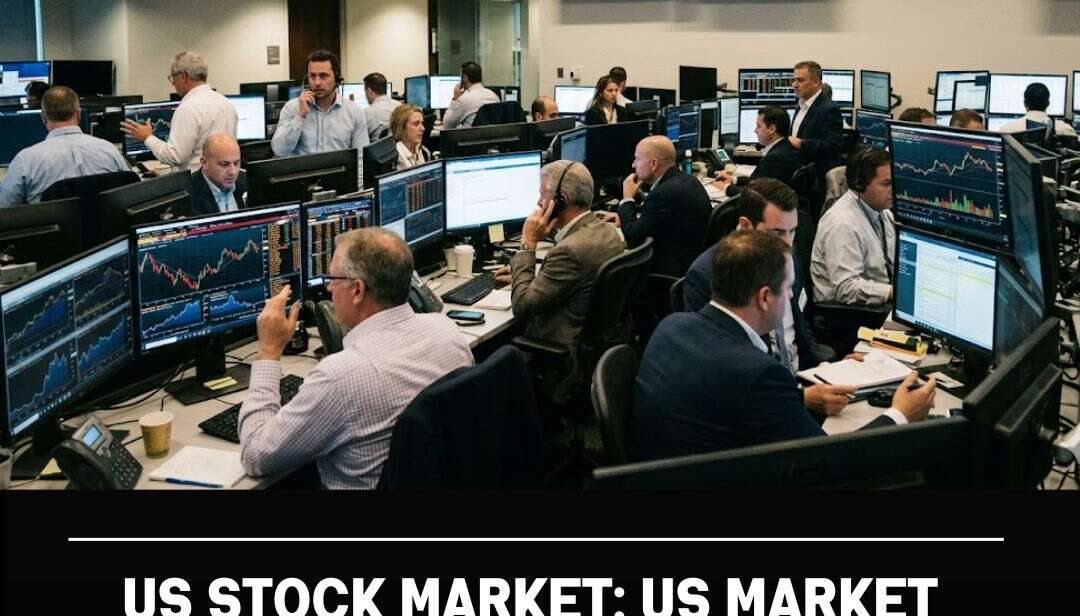
Wall Street enters one of its most consequential weeks of 2026 carrying six straight winning sessions, a fragile Iran peace process teetering on the edge of collapse, and an inflation print that could rewrite the Federal Reserve’s script for the rest of the year. It is the kind of week where three separate macro forces
Wall Street enters one of its most consequential weeks of 2026 carrying six straight winning sessions, a fragile Iran peace process teetering on the edge of collapse, and an inflation print that could rewrite the Federal Reserve’s script for the rest of the year. It is the kind of week where three separate macro forces — geopolitics, price data, and great-power diplomacy — all converge on the same five trading days.
The S&P 500 closed Friday, May 8, at 7,398.93 — its sixth consecutive weekly gain, the longest such streak since 2024, and within striking distance of all-time highs. The Dow Jones and Nasdaq both posted matching six-week winning runs. The rally has been built on a delicate foundation: fading fears of a prolonged Iran war, cautious optimism around US-Iran peace talks, and better-than-expected corporate earnings led by the Magnificent Seven technology companies, whose growth still outpaces the rest of the S&P 500 by more than 40%.
That foundation is now being tested from multiple directions simultaneously.
The CPI Report: Tuesday’s Market-Moving Moment
The week’s single most important data release arrives Tuesday, May 12, when the Bureau of Labor Statistics publishes the April Consumer Price Index (CPI) at 8:30 AM ET. Analysts at consensus are forecasting headline CPI to rise 0.6% month-over-month and 3.7% year-over-year — with core CPI, which strips out food and energy, expected at 0.3% MoM and 2.7% YoY.
The numbers matter enormously because March’s CPI print already delivered a shock. Inflation surged to 3.3% in March — the highest level since May 2024 — driven almost entirely by energy costs, which jumped 12.5%, with gasoline alone spiking 18.9%. The culprit was the Iran war, which has driven Brent crude above $100 per barrel for the first time since 2022, with Brent trading at $104 as recently as Monday after Trump declared Iran’s latest peace proposal “TOTALLY UNACCEPTABLE.”
A hotter-than-expected April CPI print would compress rate-cut hopes sharply and could end the six-week winning streak in a single session. Morgan Stanley analysts have warned that oil-induced inflation has shot high enough that Federal Reserve rate cuts are now unlikely “well into 2027” unless energy prices fall materially. The Producer Price Index (PPI) release follows on Thursday, May 13, adding a second inflation reading to the same week.
Iran: From “Great Progress” to “On Life Support”
The stock market’s six-week rally was largely built on one bet: that a US-Iran peace deal was coming. That bet took a significant hit on Monday, May 11, when Trump posted that Iran’s response to the US 14-point memorandum of understanding was “TOTALLY UNACCEPTABLE” and declared the month-old ceasefire “on life support.”
Brent crude surged $2.71 to $104 per barrel within hours of the post — the market’s clearest signal of how closely energy prices and equity sentiment are tied to every diplomatic twist in this war.
The MOU — crafted by envoys Steve Witkoff and Jared Kushner — had been hailed as a potential breakthrough as recently as last week. It proposed a formal end to the war, a 12-to-15-year moratorium on Iranian uranium enrichment, the removal of Iran’s highly enriched uranium stockpile, mutual lifting of naval blockades, and US sanctions relief. Iran dismissed several provisions, insisted the nuclear programme was non-negotiable, and rejected the timeline for uranium removal — sending the negotiations sharply backward.
The strategic significance for markets is direct: every dollar added to oil prices feeds through to US consumer prices within weeks, and with gasoline already above $4 per gallon at the pump, there is little consumer buffer left before the inflationary pressure starts registering in spending and sentiment data.
The Trump-Xi Summit: A Wildcard for Tech and Trade
Layered on top of inflation data and Iran diplomacy is the Trump-Xi summit in Beijing on May 14-15 — a meeting that carries its own market-moving potential, particularly for semiconductor and technology stocks.
The summit was already complicated before Trump declared the Iran ceasefire “on life support.” Now, with Trump arriving in Beijing needing Xi’s leverage over Tehran as much as a trade deal, the Iran question and the trade question have merged into a single negotiation. CNBC analysts noted that an Iran-heavy agenda at the summit may delay progress on tariffs and rare earth restrictions — both of which matter acutely to US tech manufacturers dependent on Chinese components.
If the summit yields a framework that brings China’s pressure on Iran into play — potentially unlocking a peace deal and a Hormuz reopening — markets could react with the kind of relief rally that analysts at 24/7 Wall St. compared in scale to post-ceasefire rallies seen in previous Middle East conflicts. A survey of Wall Street strategists suggests a Hormuz reopening alone could pull Brent crude back to the $70–75 range, easing inflation materially and reopening the door for Fed rate cuts later in 2026.
What Investors Are Watching
The week’s trifecta — April CPI on Tuesday, PPI on Thursday, and the Trump-Xi summit Thursday-Friday — gives markets more scheduled volatility triggers in five days than most months see in total. The S&P 500’s six-week run has absorbed a lot of bad news with remarkable composure. But the combination of an inflation print that could confirm persistent price pressure, an Iran deal that just fell backward, and a China summit that may produce more questions than answers will test that composure directly.
With Brent crude at $104, US inflation at a two-year high, and a peace deal “on life support”, the next five days may well determine whether Wall Street’s 2026 rally has real foundations — or whether it has simply been one very optimistic bet on a war ending that has not yet ended.
Market Analysis
A quick snapshot of market trends, customer behavior, and competitor movements.