Rome / Washington — Secretary of State Marco Rubio is set to meet Pope Leo XIV at the Vatican in what diplomatic observers are calling one of the most consequential — and delicate — engagements in recent US-Vatican relations. The visit comes after weeks of quietly escalating tensions between Washington and the Holy See, spanning
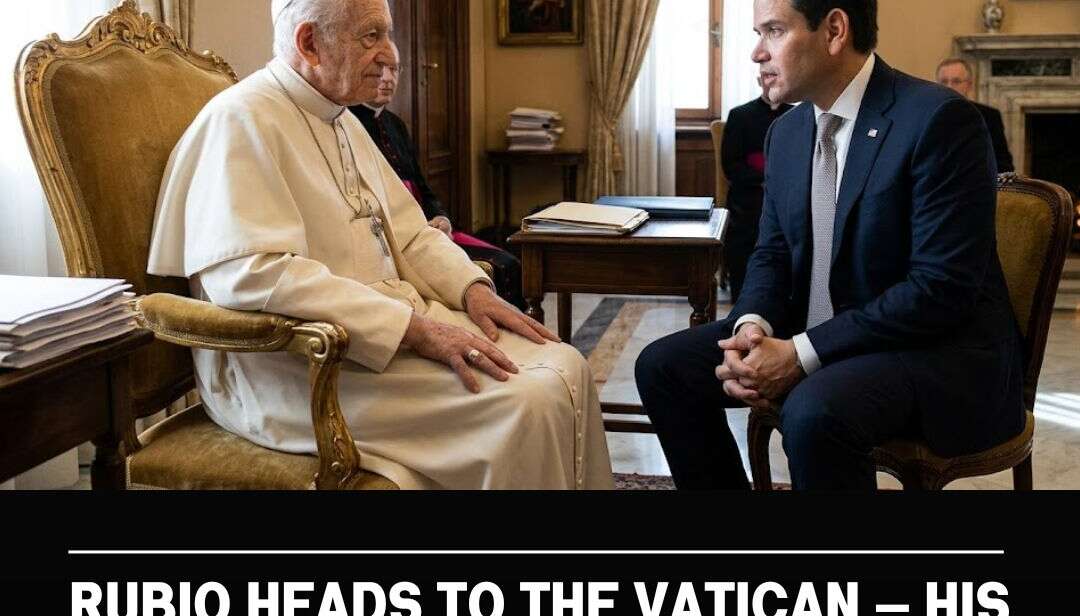
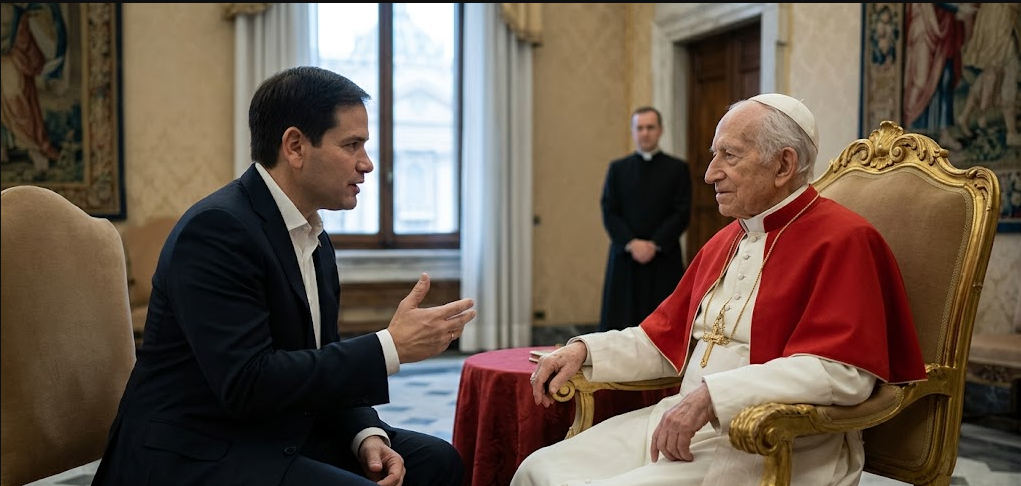
Rome / Washington — Secretary of State Marco Rubio is set to meet Pope Leo XIV at the Vatican in what diplomatic observers are calling one of the most consequential — and delicate — engagements in recent US-Vatican relations. The visit comes after weeks of quietly escalating tensions between Washington and the Holy See, spanning disputes over immigration, Gaza humanitarian policy, and the future of the us embassy vatican relationship under the current administration.
A Meeting Loaded With Symbolism
The timing of Rubio’s Vatican visit is anything but accidental. Pope Leo XIV — born Robert Francis Prevost, an American cardinal who made history as the first U.S.-born pope — ascended to the papacy amid enormous global attention and sky-high expectations from both the Catholic faithful and Western governments watching closely for signals about his geopolitical orientation.
For Rubio, himself a practicing Catholic, the meeting carries dual weight: he arrives as a senior representative of an administration that has clashed repeatedly with Vatican positions on migration and foreign humanitarian aid, while also being personally invested in the relationship between American Catholicism and the global Church.
The optics are complex. Rubio is meeting a pope who is American by birth but has made unmistakably clear, in his first weeks as pontiff, that he considers himself a shepherd of the global Church — not a diplomatic asset of Washington.
The Fault Lines: Where the US and Vatican Have Diverged
The simmering tensions that precede Rubio’s trip did not emerge overnight. Since Pope Leo XIV’s election, a series of Vatican statements have put the Holy See at quiet but visible odds with the Trump administration’s policy positions.
On immigration, the Vatican’s Dicastery for Integral Human Development issued a pointed statement expressing “profound concern” over mass deportation policies and the treatment of migrants at the U.S.-Mexico border — language that, while carefully diplomatic, was widely read as a direct rebuke of Washington’s approach.
On Gaza, Pope Leo XIV used his first Urbi et Orbi address to call for an immediate ceasefire and the unrestricted flow of humanitarian aid — a position that aligns more closely with European and UN stances than with the U.S. posture of conditioning aid flows on security arrangements.
On the us vatican embassy itself, reports emerged last month that the Trump administration had reviewed the staffing and funding footprint of the U.S. diplomatic mission to the Holy See as part of a broader State Department review — a move that generated alarm among Catholic advocacy groups and bipartisan concern in Congress. The us vatican embassy, formally established in 1984 under President Reagan, has long served as a critical back-channel for global humanitarian and political diplomacy.
What Rubio Is Expected to Communicate
Sources familiar with the Secretary’s agenda say Rubio will seek to accomplish three things in his Vatican meeting.
First, he will aim to reset the tone — reassuring Pope Leo XIV that the administration values the US-Vatican relationship as a strategic diplomatic asset, not merely a religious courtesy.
Second, Rubio is expected to raise shared priorities, particularly around Christian persecution globally, religious freedom in China and the Middle East, and cooperation on humanitarian corridors in active conflict zones — areas where Vatican networks have proven uniquely effective.
Third, and most delicately, Rubio will likely seek to manage expectations around Gaza and immigration, framing U.S. policy in terms that allow the Vatican to acknowledge engagement without endorsing positions it has publicly questioned.
Pope Leo’s Early Diplomatic Posture
What makes this meeting genuinely unpredictable is Pope Leo XIV himself. Unlike his predecessors who came to the papacy with decades of curial diplomatic experience, Prevost spent much of his ministry in Peru, working directly with impoverished communities far removed from Vatican political corridors. His instincts, observers say, are pastoral before they are political.
That does not mean he is naive. In private audiences since his election, Pope Leo has demonstrated a precise understanding of geopolitical dynamics — and a willingness to use the moral authority of the papacy as an independent diplomatic instrument, rather than an extension of any Western government’s foreign policy agenda.
One senior Vatican official, speaking anonymously, framed it plainly: “The Holy Father respects Secretary Rubio. He also has no intention of being anyone’s Cardinal.”
The Bigger Picture for US-Vatican Relations
The us vatican embassy relationship has historically been one of Washington’s quietest but most valuable diplomatic assets. Vatican networks span 180 countries, operate in conflict zones where U.S. diplomats cannot, and carry moral authority that no government can replicate. Allowing that relationship to fray — over immigration rhetoric or aid policy disagreements — would be a strategic miscalculation, most foreign policy veterans agree.
Rubio’s trip is, at its core, an acknowledgment of that reality. Whether it smooths the tensions or merely pauses them will depend significantly on what Pope Leo XIV says — and what he chooses not to say — when the two men sit down behind closed Vatican doors.
Market Analysis
A quick snapshot of market trends, customer behavior, and competitor movements.